

If you are paying attention to AI right now, you have probably noticed the same pattern many creators and marketers are noticing: the conversation is no longer about whether generative AI matters. It is about where it becomes useful first. Recent data points point in one direction: content production. Stanford’s 2025 AI Index notes that enterprise use of generative AI has accelerated sharply, while Adobe’s latest creator research shows that creators are using AI less as a curiosity and more as a workflow layer. In other words, AI is no longer just making headlines. It is entering normal production systems.
That shift helps explain why synthetic presenters, virtual spokespeople, and creator-style avatars are getting more attention from growth teams. The pressure on marketers is simple enough: produce more variants, test more hooks, and move faster across short-form channels without rebuilding every ad from scratch. For readers interested in AI creation or AI-powered income opportunities, this matters because the tools that save brands time often become the same tools that open up freelance, agency, and creator-side opportunities.
That is where an AI avatar platform starts to look commercially useful. The strongest products in this category do not simply generate a polished face. They create a reusable identity that can be carried across product explainers, paid social assets, creator-style promos, and campaign variants.
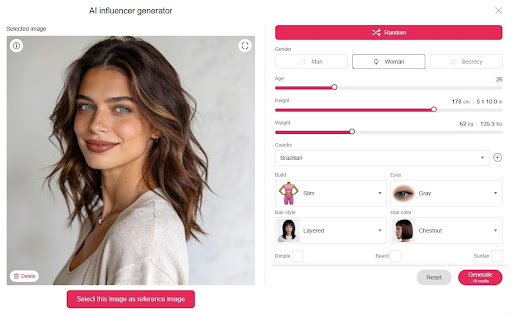
The operational value becomes even clearer once video enters the picture. A fictional presenter is interesting. A fictional presenter that can be turned into multiple ad concepts in a single workflow is much more valuable. That is the business case behind an AI ad video generator: not flashy output for its own sake, but lower-friction creative testing.
For marketing teams, three practical advantages stand out.
- It becomes easier to test multiple spokesperson angles without booking fresh shoots.
- A single synthetic persona can support several product narratives across channels.
- More of the creative budget can go toward experimentation instead of production overhead.
That does not mean every brand should rush into synthetic advertising. Trust still matters. Disclosure still matters. Weak copy and poor creative judgment still fail, no matter how efficient the toolchain becomes. But the category is maturing for a reason: it solves a very real production bottleneck, and bottlenecks are often where new money-making workflows appear.
For a long time, AI avatars were discussed as visual novelties. That framing now feels outdated. The more accurate framing is infrastructure. They are becoming part of the way modern teams generate, test, and distribute marketing content at scale.
That is why the conversation around AI avatars has become more serious. It is no longer about whether they look futuristic. It is about whether they can reduce the cost of iteration in environments where iteration decides performance.
The shift is easiest to understand inside the daily reality of paid social. Most teams are not waiting around for one “perfect” piece of creative anymore. They are testing multiple openings, multiple scripts, multiple product angles, and multiple audience variants in parallel. In that kind of environment, production friction becomes one of the most expensive hidden costs in the system.
That is why synthetic presenters are finding traction first in practical marketing workflows rather than in prestige brand campaigns. They are useful where speed matters more than cinematic perfection. They help when the job is not to create one unforgettable hero asset, but to produce a larger number of usable, testable assets without expanding the team at the same pace.
There is also a more strategic layer to this. A reusable synthetic persona gives a team a controlled on-screen identity. That means the spokesperson does not change every time the script changes. It becomes easier to maintain continuity across a product launch, a seasonal campaign, a multilingual rollout, or a sequence of short-form paid assets built around the same offer.
This does not mean human creators become irrelevant. If anything, it suggests a clearer split in roles. Real creators will remain strong where trust, taste, and cultural nuance matter most. Synthetic creators will become useful where control, repetition, and speed matter most. Those are different production jobs, and treating them as different jobs leads to better decisions.
The brands that benefit most from avatar-based workflows will likely be the ones that approach them with discipline. They will define where synthetic talent is appropriate, what kind of disclosure is needed, what content formats it supports best, and how it fits inside their testing process. In other words, they will treat the technology as production infrastructure rather than as a novelty effect. That is also a useful mindset for solo creators: the more you think in terms of workflow and repeatability, the easier it becomes to turn experimentation into something marketable.
That is what makes the category more credible now than it was a year ago. The strongest use cases are no longer speculative. They are tied to a very real business need: making more content, in more versions, under more time pressure, without letting production complexity consume the entire budget.