
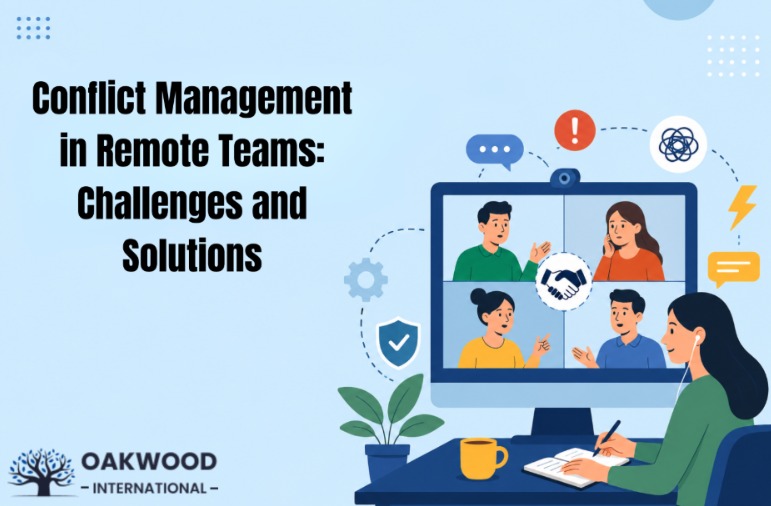
Have you ever noticed how a simple message can create confusion when teams work remotely? As more businesses adopt flexible working models, managing employees across different locations has become increasingly challenging. Studying CIPD Level 7, helps professionals develop the communication, leadership, and people management skills needed to handle modern workplace challenges effectively.
Strong Conflict Management skills have now become essential for managers working with remote teams. Misunderstandings, delayed responses, and limited interaction can easily affect collaboration and workplace productivity. In this blog, you will explore the common challenges remote teams face and the practical solutions to those challenges.
Common Conflict Challenges in Remote Teams
Remote teams often experience communication and collaboration challenges that can impact their teamwork and productivity. Here are some of the most typical issues organisations face:
Communication Gaps Between Team Members
Video calls, chats and emails are the most common modes of communication for remote employees. There are occasions when messages can come across as unclear and confused, which can lead to uncertainty among the members of the team.
Delayed Responses Affect Productivity
Late responses can delay projects and irritate personnel. Poor communication might be seen as a lack of respect for the team members.
Lack of Personal Interaction
There is less face-to-face communication when people operate remotely. Building trust and great connections with team members can be difficult for employees.
Different Time Zones Create Conflicts
Due to the fact that employees reside in different time zones, global remote teams frequently experience difficulties with scheduling. The postponement of important conversations is another possibility.
Technology Issues Cause Stress
The disruption of meetings and the disruption of workflow can be caused by poor internet connections and software difficulties. Employees frequently experience frustration as a result of this.
Unclear Roles and Responsibilities
In the event that tasks and responsibilities are not clearly specified, it is possible for employees to become confused. It is possible that this will result in missed deadlines or duplicated work.
Difficulty in Managing Emotions Online
Online interaction has a number of obstacles when it comes to dealing with emotionally intense conversations as body language and facial expressions are less obvious.
Cultural Differences in Remote Teams
Remote team members may be in various countries and have different backgrounds. Different workplaces may communicate extremely differently, and have very different expectations.
Smart Solutions for Managing Remote Team Conflicts
The following solutions can help remote teams handle conflicts and improve collaboration in the workplace:
Encourage Clear Communication
They must promote direct and effortless communication. Team members need to be comfortable asking questions and be free to voice their concerns freely.
Set Communication Timelines
Employees maintain their organisation with the support of clear response expectations. It is important for teams to have a consensus on appropriate deadlines for responding to messages and updates.
Organise Regular Video Meetings
Video calls allow employees to connect with one another on a more intimate level. Holding regular meetings of the team helps to build trust and establish relationships in the workplace.
Use Shared Calendars for Better Coordination
The ability to efficiently manage time zone differences is facilitated for multinational teams by the utilisation of shared calendars and flexible timetables.
Provide Reliable Digital Tools
For the purpose of reducing the stress that is produced by technological challenges in the workplace, businesses should make investments in dependable communication platforms and technical support.
Define Roles Clearly
Improving responsibility and reducing misunderstanding are two benefits of having clear work responsibilities. Tools for managing projects can also assist teams in maintaining their organisation.
Develop Emotional Intelligence Skills
A prevalent theme across discussions by managers working towards CIPD Level 7 is the ways in which emotional intelligence may strengthen leadership, communication and Conflict Management in distributed teams.
Promote Inclusive Workplace Communication
Employees are able to cooperate more successfully and create a better culture of remote work when they are encouraged to respect the cultural differences that affect them.
Conclusion
Successful remote teamwork is all about communication and leadership. Effective Conflict Management helps organisations minimise misunderstandings, enhance collaboration and build great relationships in the workplace.
If you are studying for the CIPD Level 7, knowing the types of conflict in the workplace can boost your leadership skills and career progression. With the guidance of Oakwood International, professionals may learn practical ways to handle conflicts in remote teams and promote a more productive work environment.