
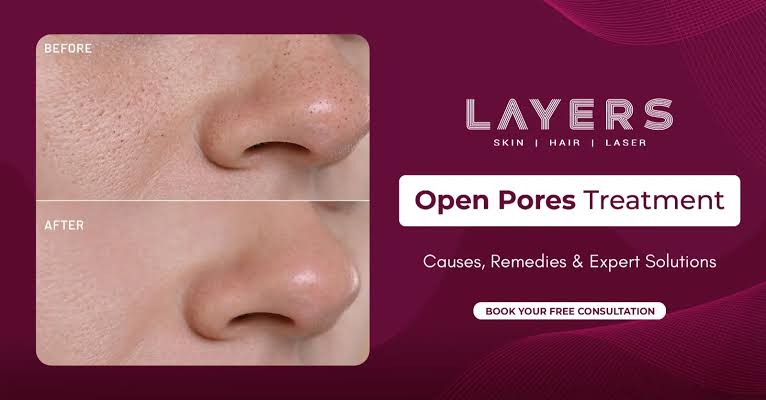
Most people who explore skin resurfacing procedures do so after years of trying topical products that deliver inconsistent results. Enlarged pores are one of the more persistent cosmetic concerns because they sit at the intersection of genetics, skin type, and cumulative sun exposure — none of which can be meaningfully addressed with a cleanser or serum alone. The decision to pursue a clinical procedure is rarely impulsive. It typically comes after someone has spent real time and money on alternatives that worked poorly, inconsistently, or not at all.
What makes candidacy for laser-based pore treatment different from other cosmetic decisions is that it involves both skin biology and personal health history. Not everyone who wants this treatment is in a position to benefit from it safely. And not everyone who assumes they are a poor candidate has actually been properly assessed. The gap between assumption and clinical reality is where most people make avoidable mistakes — either pursuing a procedure they are not suited for, or ruling out one that could have genuinely helped them.
This article is not a promotional guide. It is a structured breakdown of the clinical and lifestyle indicators that tend to predict good outcomes — and the conditions that make this category of treatment inadvisable. The intent is to give prospective patients a more grounded basis for their initial consultation.
What Good Candidacy Actually Means in Skin Treatment
Candidacy in aesthetic medicine is not simply about wanting a procedure or being able to afford it. It reflects a clinical assessment of whether a person’s skin condition, health background, and lifestyle are compatible with a given treatment’s mechanism of action and recovery demands. For open pores laser treatment, this means evaluating how the skin responds to controlled heat energy, how well it heals, and whether any underlying factors might interfere with results or create risk. Understanding candidacy properly helps patients enter consultations with realistic expectations and relevant information already prepared.
The skin’s pore structure is influenced by sebaceous gland activity, collagen density around the follicle, and the cumulative effect of UV exposure over time. Laser treatments work by delivering controlled energy to the dermis, which stimulates collagen remodeling and tightens the tissue surrounding pores. This is not a one-size-fits-all mechanism — its effectiveness depends heavily on the individual’s skin characteristics and how those characteristics interact with the energy delivery. Reviewing what open pores laser treatment involves in clinical terms is useful preparation before any consultation.
10 Signs You Are Likely a Good Candidate
1. Your Pores Are Visibly Enlarged Across a Consistent Area
Diffuse pore enlargement — particularly across the nose, cheeks, and forehead — tends to respond well to resurfacing treatments because the mechanism addresses collagen laxity broadly rather than targeting individual follicles. Scattered or isolated pores caused by prior scarring require a different clinical approach. Consistent distribution is a practical indicator that the underlying cause is systemic skin aging or chronic oiliness rather than localized damage.
2. Your Skin Type Falls Within a Moderate Range
Skin that is neither extremely dry nor severely oily tends to tolerate laser energy more predictably. Very dry skin may be more reactive to heat, while very oily or acne-prone skin introduces variables around post-treatment congestion. Moderate skin types tend to heal within expected timeframes and show collagen response without excessive inflammation. This is not a disqualifier for other types, but it is a favorable condition.
3. You Have No Active Acne Breakouts in the Treatment Area
Active inflammation in the skin is a contraindication for most energy-based treatments. When acne lesions are present, introducing heat to the area can worsen inflammation, spread bacterial activity, and complicate healing. People who have cleared their acne — or whose pore concerns are not acne-related — are in a much better starting position for treatment planning.
4. You Have Realistic Expectations About Outcome and Timeline
Candidacy is partly psychological. Patients who understand that collagen remodeling takes weeks to months, that multiple sessions may be needed, and that results vary with age and skin condition tend to report higher satisfaction. Those who expect immediate and dramatic transformation often perceive the same results as a failure. Entering treatment with calibrated expectations is a genuine clinical advantage.
5. You Are Not Currently Pregnant or Breastfeeding
Hormonal changes during pregnancy and breastfeeding affect skin sensitivity, healing capacity, and the risk of pigmentation irregularities following any thermal treatment. Most clinical guidelines advise against elective aesthetic procedures during these periods. This is a standard precaution rather than a reflection of the treatment’s general safety profile.
6. Your Sun Exposure Has Been Managed in the Weeks Before Consultation
Recent heavy sun exposure increases melanin activity in the skin, which makes it more reactive to laser energy. Patients who have been consistent about sun protection and have not had significant UV exposure in the weeks prior to treatment are starting from a more stable baseline. This matters both for treatment safety and for the clarity of post-treatment results.
7. You Have No History of Keloid Scarring
Keloid formation is a hereditary tendency that affects wound healing. Patients with a documented history of keloids carry a meaningful risk that any procedure involving skin disruption could trigger abnormal scar tissue. This includes laser treatments that penetrate beyond the surface layer. A history of keloids is not automatically disqualifying, but it changes the risk-benefit calculation substantially and requires detailed clinical discussion.
8. You Are Not on Photosensitizing Medications
Certain medications — including some antibiotics, retinoids, and diuretics — increase the skin’s sensitivity to light and heat. Patients taking these medications may experience exaggerated reactions to laser energy, including prolonged redness, blistering, or uneven pigmentation. A complete medication review before treatment is standard practice for this reason. Patients who are not on photosensitizing agents have fewer variables affecting their healing response.
9. You Have Had a Professional Skin Assessment, Not Just a Self-Assessment
Many people research candidacy based on photographs or symptom descriptions online. This often leads to either over-confidence or unnecessary self-exclusion. A trained clinician assesses skin thickness, tone, texture, vascular activity, and elasticity in ways that no self-assessment can replicate. Patients who have already had this kind of baseline evaluation are better positioned to make an informed decision about whether to proceed.
10. You Can Commit to the Post-Treatment Protocol
Laser treatments require a recovery period during which the skin is vulnerable. This includes avoiding direct sun exposure, refraining from certain skincare actives, and following specific cleansing and moisturizing routines. Patients who have the schedule flexibility and lifestyle discipline to follow post-care instructions consistently tend to see better outcomes and fewer complications. The treatment itself is only one part of the process.
3 Signs You Are Likely Not a Good Candidate Right Now
1. You Have an Active Skin Infection or Open Wound in the Area
Any active infection — bacterial, viral, or fungal — in or near the treatment area is a firm contraindication. Introducing laser energy into compromised skin can accelerate infection spread, delay healing, and cause complications that extend well beyond the original concern. This includes active cold sores, which are caused by herpes simplex virus and can be triggered by thermal stimulation. Patients with a history of cold sores should discuss antiviral pretreatment with their clinician before any procedure in the face region.
2. Your Fitzpatrick Skin Type Is at the Higher End of the Scale Without Specialized Assessment
The Fitzpatrick scale, developed as a tool to classify human skin color and its response to UV radiation, is widely used in aesthetic medicine to assess laser treatment risk. Darker skin tones carry a higher risk of post-inflammatory hyperpigmentation when exposed to certain laser wavelengths. This does not mean treatment is impossible for darker skin — it means that treatment selection, energy settings, and clinician experience are significantly more important. Patients with deeper skin tones who have not specifically consulted a clinician experienced with their skin type may be moving too quickly toward treatment decisions.
3. You Are Seeking a Permanent or Complete Correction
Pore size has a strong genetic component. While laser treatment can meaningfully reduce the appearance of enlarged pores and improve overall skin texture, it does not permanently alter follicle structure. Patients who approach the procedure expecting a one-time, permanent fix are likely to be disappointed regardless of how well the procedure goes clinically. The expectation of permanence, when it drives the decision, is itself a form of poor candidacy — not because the treatment will fail, but because the patient’s frame of reference is not aligned with what the procedure can realistically deliver.
The Role of a Consultation in Resolving Uncertainty
Most of the signs described above — both favorable and unfavorable — are assessable within a thorough clinical consultation. The purpose of that consultation is not simply to confirm what a patient has already decided. It is to surface information that changes or refines the decision. A good consultation will cover personal health history, current medications, skin type, previous procedures, and lifestyle factors that influence healing. It should also involve a direct examination of the skin in the treatment area.
Patients who arrive at consultations having done serious research — including understanding the mechanisms behind the treatment and the realistic recovery demands — tend to use that time more productively. They ask better questions, provide more relevant history, and leave with clearer guidance. Preparation does not replace clinical judgment, but it makes clinical judgment easier to apply accurately.
Conclusion
Determining whether you are a suitable candidate for open pores laser treatment is not a simple checklist exercise. It involves an honest look at your skin’s current state, your health history, your lifestyle, and your expectations about what a procedure can and cannot do. The ten favorable signs outlined here are not guarantees of a perfect outcome — they are indicators that the foundational conditions for a safe and effective treatment are more likely to be in place. The three unfavorable signs are not permanent barriers, but they are meaningful reasons to pause, gather more information, and consult a qualified clinician before committing.
Skin treatment decisions made with accurate information tend to produce better outcomes — not because good information changes the procedure, but because it changes the patient’s readiness for everything that surrounds it. That includes the recovery, the follow-up, and the realistic interpretation of results over time. If several of the favorable indicators apply to you and none of the contraindications do, a professional consultation is a sensible and low-risk next step.