
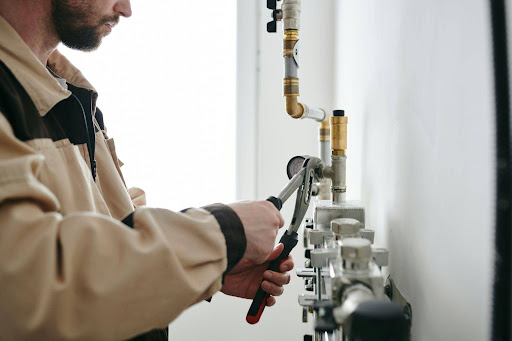
A plumber who is excellent at residential work is not automatically a plumber who is excellent at strata work. The technical skills overlap significantly, but the context in which those skills are applied in a strata building is different enough that experience in one doesn’t fully prepare a tradesperson for the other. The strata manager who learns this by engaging a residential plumber for a complex strata job discovers the difference in the quality of the outcome rather than in the tradesperson’s credentials.
Understanding what makes strata plumbing work different from standard residential work is useful for anyone responsible for managing a strata property, because it explains why the plumber selection decision for strata work deserves more consideration than the nearest available tradesperson, and what specific qualities and experience to look for before the job is awarded.
The Complexity That Shared Infrastructure Creates
The fundamental difference between a single residential dwelling’s plumbing and a strata building’s plumbing is the shared infrastructure that connects multiple independent dwellings to common supply and waste systems. In a house, the plumbing system serves one set of occupants, the failure points are confined to that system, and the diagnosis of any problem involves a single set of fixtures and connections. In a strata building, the main supply lines, the drainage stack, and in many buildings the hot water system serve multiple lots whose individual plumbing connections run from common infrastructure.
This shared infrastructure creates diagnostic complexity that single-dwelling work doesn’t involve. A blocked drain in a strata building may originate in the lot reporting the problem, in a lot above it on the same drainage stack, or in the common area infrastructure that the stack connects to. Identifying which is the case requires an understanding of how the building’s drainage system is configured, which lot connections run to which stack, and what the building’s drainage history looks like. A plumber without strata experience may address the symptom in the reporting lot without identifying the origin of the problem, which produces a repair that doesn’t last because the underlying cause is elsewhere in the system.
Shared hot water systems present a different category of complexity. A centralised hot water system serving multiple lots requires maintenance and repair decisions that affect every connected lot, and the timing, duration, and communication of hot water outages needs to be managed in a way that a single-dwelling hot water system failure doesn’t. An experienced strata plumber understands that a hot water system outage in a residential strata building affects tenants who have no context for the work being done and who need to be informed, and manages the work accordingly rather than treating it as a standard system repair.
Water pressure issues in strata buildings involve the interaction between the main supply, the building’s pressure regulation system, and the individual lot connections in ways that a single-dwelling pressure issue doesn’t. A lot reporting low water pressure may be experiencing a problem at the lot level, at the floor level, or at the building’s main pressure regulation system, and distinguishing between these requires both the diagnostic knowledge and the building access that strata work specifically involves.
The Accountability and Communication Dimension
The stakeholder environment of strata plumbing work is more complex than that of residential work, and navigating it effectively is as much a part of the strata plumber’s competence as the technical work itself.
A standard residential plumbing job involves one client relationship: the homeowner who engaged the work, who is present or reachable during the job, and who makes the decisions about scope and authorisation in real time. A strata plumbing job potentially involves a strata manager authorising the work on behalf of an owners corporation, individual lot owners whose property is being accessed, tenants who are occupying the affected lots, and in some cases a building manager who coordinates the access arrangements.
Each of these parties has a different relationship to the work and different information needs. The strata manager needs to know the scope, the cost, and the timeline. The lot owner whose property is being accessed needs to be notified and may need to provide consent. The tenant needs to know when access is required and what disruption to expect. The owners corporation may need documentation of the work for its records and for insurance purposes. A plumber who manages all of these communication requirements as part of the job, rather than treating them as the strata manager’s problem to handle, is a plumber who makes the strata manager’s job significantly easier.
For strata managers across Sydney looking for a plumbing provider who understands this environment, strata plumbing services from Hydro City Plumbing are specifically structured around the communication and coordination requirements of strata work, with responsive scheduling, clear documentation of work completed, and the professional approach that strata buildings and their managers require from the tradespeople they engage.
The authorisation dimension of strata plumbing work requires a plumber who understands what can be authorised at the strata manager level and what requires owners corporation approval. Work within a lot that affects only that lot’s private plumbing may be straightforward to authorise. Work on common infrastructure that affects multiple lots or involves significant expenditure may require a committee decision or a general meeting resolution. A plumber who recommends work that exceeds the strata manager’s authorisation threshold without flagging this creates an administrative problem that a more experienced strata plumber would have identified before the recommendation was made.
The Maintenance Approach That Reduces Emergency Callouts
Emergency plumbing callouts in strata buildings are more disruptive and more expensive than in single residential dwellings, because the shared infrastructure means a failure in one system potentially affects multiple lots and requires coordination across multiple stakeholders simultaneously. The maintenance approach that reduces emergency callouts is therefore more valuable in a strata context than in a residential one, and the difference in total cost between a planned maintenance programme and a reactive approach is more significant at strata scale.
The plumbing systems that benefit most from planned maintenance in a strata context are the ones whose failure has the widest impact. The main drainage stack that serves multiple lots, the centralised hot water system, the roof drainage that protects the common areas, and the water supply infrastructure are all systems whose failure produces building-wide consequences rather than lot-specific ones.
A scheduled inspection programme that checks these systems at defined intervals identifies developing problems at the early stage rather than discovering them when they’ve become failures. A drainage stack inspection that identifies partial blockage or root intrusion treats the problem while it’s a maintenance task. The same condition discovered when the stack blocks completely is an emergency repair that affects every lot connected to that stack, requiring immediate attendance, after-hours callout rates, and the tenant disruption that accompanies a building-wide drainage failure.
The documentation that a planned maintenance programme generates is a secondary benefit that strata managers value independently of the maintenance itself. A building whose plumbing maintenance history is documented produces better outcomes in insurance assessments, in due diligence processes during property transactions, and in the owners corporation governance context where the committee needs evidence that the building’s infrastructure is being maintained to an appropriate standard.
Hot water system maintenance in a strata building follows the same principles as in a single dwelling but with higher stakes. An anode replacement programme for a centralised hot water system that serves twenty lots is a maintenance task whose cost is modest relative to the replacement cost of the system and the disruption of a complete hot water outage affecting every connected lot. The owners corporation that defers hot water system maintenance on cost grounds discovers the false economy of that decision when the system fails at scale.
Why Strata Managers Choose Plumbers Differently
The strata manager who has worked with both general residential plumbers and specialist strata plumbers on strata building jobs has a clear basis for comparison, and the comparison almost always favours the specialist. The technical work may be equivalent. The context management, the communication, the documentation, and the understanding of how strata work needs to be coordinated are not.
The qualities that strata managers most consistently describe as the basis of their preference for a specific plumbing provider are reliability, communication, and documentation rather than price. A plumber who attends on the day agreed, communicates proactively when scope changes are identified, documents the work completed in a format that serves the strata record, and understands the multi-stakeholder environment well enough to manage it without requiring the strata manager to mediate between the tradesperson and the building’s occupants is a plumber who makes the strata manager’s job easier rather than harder.