
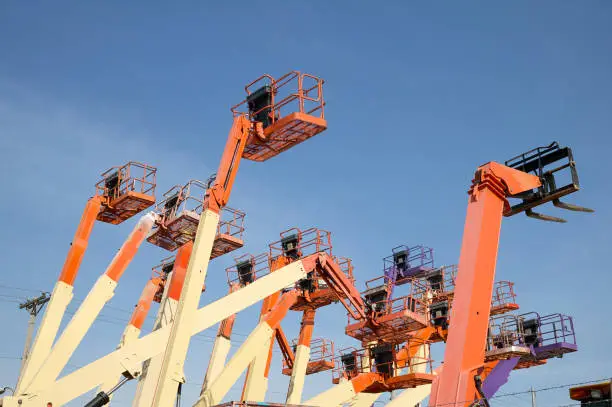
When a warehouse operation depends on moving heavy equipment precisely and safely, the tools used to do that work carry real consequences. A forklift can move a pallet, but it cannot always position a heavy machine, server rack, or industrial cabinet with the control required to avoid damage or injury. That gap in capability is exactly where equipment like Versa-Lifts has earned a consistent role across industries.
The challenge for buyers is not understanding what a Versa-Lift does. Most facility managers and equipment procurement teams already know the operational context. The challenge is finding reliable sources to purchase them in the United States, understanding the difference between buying new versus used, and knowing what conditions affect long-term value. That information is scattered, inconsistently presented, and rarely written for the people who actually make purchasing decisions.
This guide consolidates what a US-based buyer needs to know when looking for this type of equipment — from where inventory exists to what sourcing decisions mean for operations over time.
Understanding Where Versa-Lifts for Sale Actually Appear in the US Market
Versa-Lifts are specialized pieces of material handling equipment. They are not stocked in the same volume as general-purpose warehouse machinery, which means they do not appear in all the same places. Knowing where the market for these machines exists helps buyers avoid wasted time and poor purchasing decisions.
For buyers researching current inventory, a useful starting point is browsing versa-lifts for sale through specialty equipment platforms that aggregate listings specifically for heavy-duty and precision-lift machinery. These platforms are distinct from general industrial marketplaces and tend to carry more relevant inventory with appropriate condition disclosures.
The US market for these machines generally exists across three distinct channels:
- Specialty equipment dealers who focus on material handling and precision lift equipment as their primary inventory category, rather than general warehouse surplus
- Industrial auction platforms where decommissioned or surplus equipment from manufacturing facilities, data centers, and distribution operations becomes available periodically
- Direct manufacturer channels or authorized reseller networks, which are more relevant for buyers seeking new or certified-refurbished units
Each channel carries different implications for pricing, condition transparency, and post-purchase support. Buyers who understand these distinctions avoid common sourcing mistakes, particularly the assumption that a lower-priced listing from an unqualified source represents equivalent value to a properly serviced unit from a known dealer.
Why Specialty Platforms Outperform General Marketplaces for This Equipment
General industrial resale platforms serve a wide range of categories — from office furniture to CNC machinery. Their breadth is a strength for common equipment but becomes a limitation when searching for machines that require technical familiarity to list, evaluate, and describe accurately. A Versa-Lift listed by a generalist seller may have incomplete service history, vague condition descriptions, or missing information about load capacity configurations.
Specialty platforms, by contrast, tend to attract sellers who understand the equipment they are listing. Descriptions are more detailed, condition categories are more precise, and the buyer is less likely to encounter a machine that has been misrepresented. For procurement teams where a poor purchase creates downtime or operational disruption, this distinction matters considerably.
New Versus Used: How to Frame the Decision Operationally
The decision between purchasing new or used equipment is not purely a budget question. It is an operational risk question. Both categories of versa-lifts for sale can serve a buyer well, but each carries a different risk profile depending on how the machine will be used, how frequently, and in what environment.
New units carry predictable maintenance timelines, manufacturer warranties, and full documentation. For operations where the equipment will be used daily or in safety-critical applications — moving heavy medical imaging equipment, data center hardware, or precision manufacturing components — the certainty that comes with new equipment often justifies the higher upfront cost.
Used units, particularly those from low-cycle or well-documented sources, can deliver strong value in environments where frequency of use is moderate or where the buyer has internal capability to assess and maintain mechanical equipment. The risk is not the age of the machine; it is the quality of information available about how it was used and serviced.
What Condition Disclosures Should Actually Tell You
When evaluating used versa-lifts for sale, condition disclosures vary widely in their usefulness. A listing that describes a unit as “good working condition” provides almost no actionable information. What matters operationally is the service history, the number of hours or cycles on key mechanical components, whether any hydraulic systems have been rebuilt or replaced, and whether the machine has been stored appropriately.
Buyers who skip due diligence on these points often encounter unexpected repair costs within the first year of ownership. In a facility where the Versa-Lift is a critical handling tool, an unplanned mechanical failure disrupts scheduling and forces manual workarounds that carry their own safety and productivity costs. The condition disclosure is not a formality — it is the foundation for estimating total cost of ownership.
Certified Refurbished as a Middle-Ground Option
Some dealers offer certified refurbished units that occupy the space between new and general used. These machines have been inspected, repaired where necessary, and tested against defined performance standards before resale. For buyers who need reliability comparable to new equipment but cannot justify the full cost of a new unit, certified refurbished inventory often represents the most rational choice.
The key is confirming what the certification actually entails. A reputable dealer will specify what systems were inspected, what was replaced, and what the unit was tested against. If that documentation is not available, the “certified” label carries limited meaning.
Geographic Availability and Shipping Considerations in the US
Versa-Lifts are not evenly distributed across the country. Inventory tends to cluster near major industrial corridors — the Midwest, the Southeast, and parts of the Mid-Atlantic and Pacific Coast where manufacturing, logistics, and data center operations are concentrated. Buyers in regions without nearby inventory will almost always face freight decisions that add cost and complexity to the purchase.
Freight for heavy equipment like a Versa-Lift is not equivalent to standard LTL shipping. These machines require flatbed or specialized ground transport, proper blocking and bracing, and in some cases, lift-gate delivery. The logistics of getting the machine to the facility safely are a legitimate part of the purchase evaluation, not an afterthought. Buyers who do not account for freight costs early in the process often find that a competitively priced unit becomes less attractive once shipping is added.
When Local Pickup Is the Better Option
For buyers within reasonable distance of available inventory, local pickup removes freight complexity and allows for direct inspection before the transaction is finalized. The ability to physically inspect a unit before purchase — to test its hydraulics, check for wear on load rollers, and confirm that controls are responsive — is a significant advantage. Remote purchases require a higher level of trust in the seller’s documentation and disclosures, which introduces risk that in-person inspection would eliminate.
If local inventory does not match the buyer’s specifications, working with a dealer who can source from multiple locations or manage the freight process on the buyer’s behalf reduces the operational burden significantly.
Timing the Purchase Around Operational Needs
Equipment procurement decisions made under pressure produce worse outcomes than those made with appropriate lead time. Buyers who begin looking for versa-lifts for sale only after a current machine fails, or after a project with specific handling requirements has already been contracted, often make concessions on condition, price, or fit that they would not otherwise accept.
The better approach is to treat Versa-Lift sourcing as a planned procurement activity. Understanding the current market, tracking available inventory over time, and building relationships with dealers who carry this equipment positions a buyer to act decisively when the right unit becomes available — rather than accepting an imperfect option under deadline pressure.
For operations where handling requirements are recurring and predictable, maintaining a qualified spare or tracking the depreciation curve of existing equipment allows for replacement to be planned rather than reactive. This is consistent with how well-run facilities manage capital equipment generally, and the principles are no different for precision-lift machinery.
Market Timing and Inventory Cycles
Inventory availability for specialized equipment like Versa-Lifts fluctuates based on broader industrial cycles. When large-scale facility decommissions, manufacturing relocations, or data center consolidations occur, the secondary market often sees a temporary increase in available units. Buyers who are already engaged with the market — watching listings, communicating with dealers — are positioned to benefit from these moments. Those who enter the market only when need arises may find inventory limited or pricing elevated due to competing demand.
Closing Thoughts
Finding versa-lifts for sale in the US is not a complicated process if the buyer approaches it with the right framework. The equipment is specialized, which means the sourcing process requires more deliberate effort than purchasing commodity warehouse tools, but it also means the market is more defined and the relevant channels are fewer. Buyers who focus on specialty platforms, evaluate condition information rigorously, account for freight logistics, and plan purchases proactively will consistently make better decisions than those who approach the process casually.
The precision and reliability that make Versa-Lifts valuable in heavy-handling applications are the same qualities that should guide how buyers approach acquiring them. A machine used to move expensive, sensitive, or safety-critical equipment deserves a sourcing process that reflects the weight of that responsibility. According to the Occupational Safety and Health Administration, powered industrial trucks — including specialty lift equipment — require careful selection and maintenance to protect workers and maintain safe operations.
For operations that depend on this type of equipment, getting the purchase right the first time is not just a cost consideration — it is a foundation for consistent, safe, and productive work going forward.