

“Sustainable,” “biodegradable,” “eco-friendly,” and “compostable” get used in takeaway packaging conversations as if they’re interchangeable. They aren’t, and treating them that way is about to carry real legal risk — starting August 2026, EU regulation will require packaging claims to be backed by actual evidence, not marketing language.
But the regulatory deadline isn’t even the most useful part of this story for a buyer trying to make a real decision today. The question “which material is most sustainable” is the wrong question. The right one is: does my actual disposal infrastructure know what to do with this material once a customer is done with it? A perfectly engineered industrial-compostable bowl that ends up in a general waste bin behaves exactly like a plastic one. This guide works through what each term actually means, what’s changing in 2026, and how to choose packaging based on what will actually happen to it — not what the label promises.
Why “biodegradable,” “compostable,” and “eco-friendly” aren’t interchangeable
These four words get used as if they describe the same quality at different intensities. They don’t — they describe different mechanisms, different timeframes, and in some cases, no defined standard at all.
Biodegradable means a material will eventually break down through microbial action into water, CO₂, and biomass. The problem is the word “eventually.” There is no universally enforced timeframe attached to it — a material can be technically biodegradable and still take years to break down under real disposal conditions, and misleading marketing around the term has created significant consumer confusion, since “biodegradable” plastic does not necessarily mean it’s compostable.
Compostable is a narrower, certified subset of biodegradable. To carry the term legitimately, a product must meet a specific tested standard — ASTM D6400 in the US, EN 13432 in the EU — that defines disintegration rate, biodegradation percentage, and ecotoxicity within a fixed timeframe. Compostable packaging is a subset of biodegradable packaging specifically designed to decompose into nutrient-rich soil under composting conditions, which is why a certified compostable label carries more practical weight than an uncertified “biodegradable” one.
Recyclable is a different category entirely, and it carries no biodegradation claim at all. A recyclable container can sit in a landfill indefinitely without breaking down — its value lies in being reprocessed into new material, not in returning to nature. Not all plastics are recyclable due to sorting limitations, and food-contaminated packaging frequently gets rejected from recycling streams regardless of the material’s theoretical recyclability.
“Eco-friendly” has no technical definition at all. It’s a marketing term, not a certification, and it can legitimately be applied to any of the above — or to nothing verifiable whatsoever.
The real reason your “eco-friendly” packaging might not actually help
Here’s the detail almost no comparison guide gets to: the environmental performance of a packaging material isn’t fixed. It depends entirely on what happens to it after disposal — and that’s a function of local infrastructure, not material chemistry.
A certified compostable PLA-lined bowl is a genuine technical achievement when it ends up in an industrial composting facility designed to process it. The same bowl, thrown into a standard household waste bin in a city without industrial composting access, will not compost. It will sit in a landfill, behaving essentially the same as conventional plastic, except now your brand has made an environmental claim that didn’t deliver. The PLA symbol indicates that an item is not recyclable but is compostable in industrial settings — and critically, “biodegradable packaging without clear icons or certification should not be composted” at all, because there’s no way to verify what conditions it actually requires.
The National Restaurant Association’s guidance on this point is the most direct framing available: not all packaging solutions will work well in all locations, and operators need to evaluate “local sustainability infrastructure” as a core decision factor — not an afterthought. A material choice that’s genuinely sustainable in Amsterdam can be functionally identical to ordinary trash in a city with no commercial composting program. This is the single most overlooked variable in takeaway packaging decisions, and it’s also why “which material is the most sustainable” is the wrong starting question.
What’s changing in 2026 — and why vague claims won’t survive it
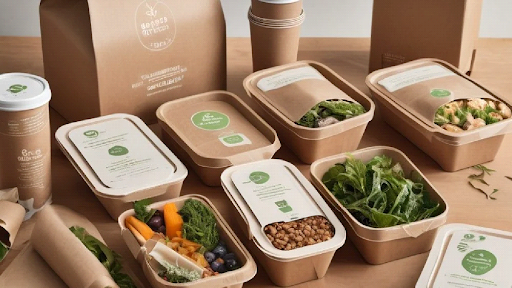
This is where the terminology confusion stops being merely inconvenient and starts becoming a compliance issue. The EU’s Packaging and Packaging Waste Regulation (PPWR) enters into force on August 12, 2026, and it directly targets the exact ambiguity this article has been describing.
Under Article 12.1 of the PPWR, packaging placed on the EU market must carry a harmonised label with easily understandable pictograms detailing material composition — replacing the fragmented, inconsistent labeling rules that previously varied country by country. Just as significantly, the regulation explicitly addresses “environmental claims,” defined as statements that packaging has a positive or no impact on the environment, or is less harmful to the environment than alternatives — language that covers almost every “eco-friendly” or “sustainable” claim currently used in takeaway packaging marketing.
The practical effect is that vague environmental language is moving from a marketing choice to a legal liability. Words like “eco-friendly,” used without a specific, evidenced basis, fall squarely into the territory the PPWR and the EU’s parallel Empower Consumers Directive on greenwashing are designed to police.
What a Declaration of Conformity actually requires
The mechanism behind this shift is the Declaration of Conformity (DoC), and understanding what it requires is useful even for buyers outside the EU, because it’s the clearest existing model for what “proving” a sustainability claim actually looks like in practice. The manufacturer holds compliance responsibility — signing the declaration, maintaining technical documentation, and remaining auditable by authorities — and critically, technical documentation must back every claim, and the person who signs is personally liable.
That documentation isn’t a one-time formality either. Retention limits for the DoC are five years for single-use packaging and ten years for reusable packaging — meaning a supplier making a sustainability claim today needs to be able to substantiate it years from now, not just at the point of sale. This is precisely the standard of proof that’s been missing from “eco-friendly” as a marketing term for the past decade, and it’s the model worth holding any supplier to, regardless of which market you’re sourcing for.
A 3-question test to spot greenwashing before you order
Most “is this packaging really sustainable” guides stop at definitions. The more useful question is what to actually ask a supplier before placing an order — and the test below isn’t tied to any single material or certification body, which makes it usable regardless of what a supplier is trying to sell you.
- What specific standard or certification backs this claim? “Biodegradable” and “eco-friendly” on their own are not standards — they’re descriptions. A supplier should be able to name a specific certification (BPI, EN 13432, OK Compost Industrial or Home) or admit the claim is uncertified. An uncertified claim isn’t automatically false, but it carries no third-party verification behind it.
- If it’s compostable, compostable under what conditions? Industrial composting and home composting are different processes with different temperature and timeframe requirements. A product certified for industrial composting will very likely not break down in a backyard compost bin, and a supplier who can’t specify which one they mean hasn’t actually verified the claim themselves.
- What happens to this material in the disposal stream my customers actually use? This is the question almost no comparison guide asks, and it’s the one that matters most given the infrastructure-dependency problem described earlier. A technically excellent compostable container is only as useful as the composting infrastructure available to the people throwing it away.
Sustainability claims at a glance: what to verify before you trust the label
| Claim | Governed by a Standard? | What to Ask For | Common Misuse |
| Biodegradable | No universal timeframe standard | A specific breakdown timeframe and conditions, in writing | Used without certification to imply compostable-level performance |
| Compostable | Yes — ASTM D6400 (US) / EN 13432 (EU) | Certification body name and license/certificate number | Industrial-only certification implied as home-compostable |
| Recyclable | Yes, but locally variable | Confirmation it’s accepted by your specific local recycling stream | “Technically recyclable” materials rejected by actual local facilities |
| Eco-friendly / Sustainable | No standard — marketing term only | Whichever underlying certification (if any) the claim is based on | Applied with no certification, no documentation, no specificity |
So which takeaway packaging material should you actually choose?
Once the infrastructure-dependency point lands, the decision sequence flips. Instead of starting with “which material is greenest,” start with “what does my disposal stream actually support” — then work backward to the material.
If your customers have access to industrial composting infrastructure (increasingly common in EU urban centers, less consistent in much of North America), certified compostable options like bagasse or PLA-lined paperboard deliver on their promise. If they don’t, a certified recyclable material — uncoated kraft paper, or a mono-material plastic your local facility actually processes — will outperform an uncomposted “compostable” item every time, because it has a real path to being reprocessed rather than simply landfilled. Recyclable single-use foodservice packaging includes cardboard, unlined paper, aluminum, and some types of plastic — all of which depend on local processing capability to actually deliver the environmental benefit they’re marketed for.
The practical takeaway for any buyer evaluating takeaway packaging: ask your supplier what’s certified, ask what conditions that certification assumes, and then check that against what your actual market can process. Material choice without that last step is a guess dressed up as a sustainability strategy.