
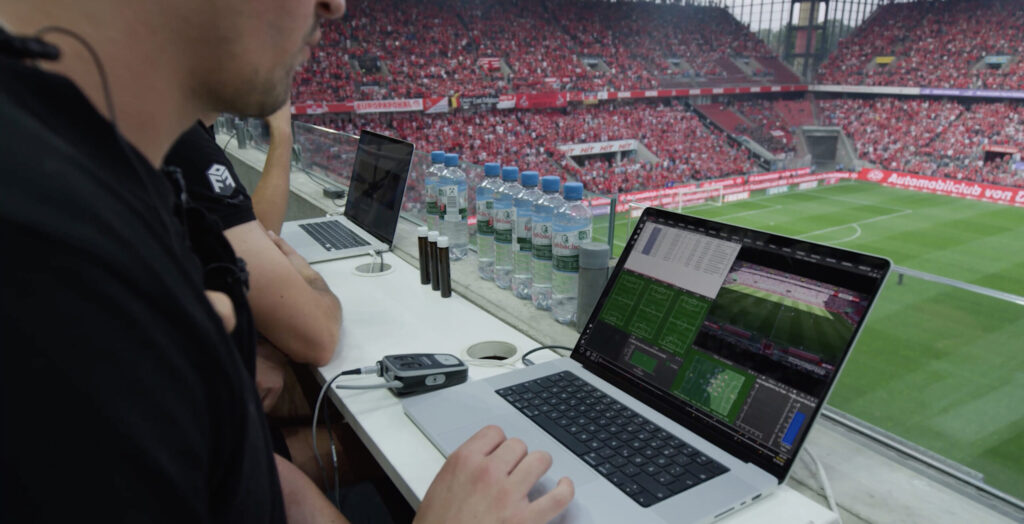
Coaching staffs at every level of organized football have always relied on film review as a core part of game preparation. The process of watching recorded footage, identifying tendencies, and translating those observations into practice plans and game-week adjustments has been standard practice for decades. What has changed is the volume of information available, the speed at which it needs to be processed, and the tools coaches now have access to to do that work.
Over the past several years, automated systems have entered the preparation workflow at collegiate and professional programs, and increasingly at well-resourced high school programs. These platforms offer the ability to sort, tag, and organize play data at a pace no staff of human analysts can match. The question is not whether technology has a role in modern preparation. The question is where human judgment remains essential, where automation offers a genuine operational advantage, and whether one approach actually produces better outcomes than the other when it matters most — on the field, in competitive games.
Understanding that distinction requires a clear-eyed look at what each method actually does, where each breaks down, and what coaching staffs are realistically working with when they sit down to prepare for an opponent.
What Football Play Analysis Actually Involves at the Operational Level
Structured football play analysis is not simply watching tape. It involves categorizing plays by formation, personnel grouping, down and distance, field zone, and situational context. A coordinator reviewing an opponent’s tendency to run a specific route combination out of a particular alignment on second-and-medium is doing something far more specific than general film review. The goal is to find patterns that are reliable enough to affect decision-making during the game itself.
This kind of structured work is what separates preparation from observation. Coaches who have adopted systematic approaches to reviewing opponent data — whether manually or through software — are working from the same fundamental need: to build a picture of what an opponent is likely to do before they do it. Resources like football play analysis platforms have formalized this process, giving staffs a structured way to work through large volumes of play data without relying entirely on individual memory or hand-coded spreadsheets.
The operational pressure behind this work is real. Most programs prepare for an opponent within a window of four to six days. Within that window, a full coaching staff is also running practice, managing personnel, conducting meetings, and handling the administrative functions of a program. The time available for deep film work is always compressed, which means the efficiency of whatever method a staff uses directly affects the quality of preparation that reaches the players.
The Role of Context in Meaningful Pattern Recognition
One of the underlying challenges in play analysis is that raw frequency data does not tell the whole story. An opponent may run a specific play formation thirty percent of the time, but that number only becomes meaningful when you understand the situational context in which they use it. Is it a first-down tendency? Does it appear primarily in the red zone? Does it change in the fourth quarter when they’re protecting a lead?
Human analysts who have watched an opponent’s full body of work carry an understanding of these contextual layers that is difficult to encode automatically. A coordinator who has spent eight hours with a team’s film develops an intuitive sense of rhythm — the kind of insight that comes from watching how a play develops visually, not just tracking its outcome in a database. That intuitive layer has real value, and it is something automated systems have not fully replaced.
Where Manual Film Study Holds Its Ground
Manual film study remains the foundation of preparation for most coaching staffs, even those with access to automated tools. The reason is straightforward: watching footage in real time allows coaches to observe details that are not captured in structured data. Offensive line communication, pre-snap reads, receiver leverage at the top of routes, defensive back positioning — these are visual cues that inform game planning in ways that tagging systems do not always record.
Experienced position coaches often describe manual film work as a process of building a mental model of how an opponent plays the game, not just cataloging what plays they run. That mental model informs how they teach their own players to respond. A cornerbacks coach watching an opposing receiver’s release tendencies is doing work that no automated tagging system fully replicates, because the insight lives in the visual detail of each individual rep, not in the summarized data attached to it.
The Limitation of Hours in a Preparation Week
The practical constraint with manual film study is time. A thorough, contextually rich review of an opponent’s offense — covering multiple games, situational tendencies, and individual personnel matchups — can require significant hours of focused attention. When that work is distributed across a staff where each coordinator is also responsible for practice installation, player communication, and scheme adjustment, the depth of analysis any single person can achieve in a week is genuinely limited.
This is not a criticism of the method. It is a recognition that manual film study, at its best, requires sustained concentration over time. When preparation windows are short and staff resources are stretched, the depth of manual analysis is often the first thing that gets compressed. The game plan gets built on a smaller sample of reviewed footage than the staff would prefer, and tendencies that require longer observation to surface may not be identified in time to affect the week’s preparation.
What Automated Systems Do Well and Where They Fall Short
Automated play analysis platforms are most effective at tasks that require processing large volumes of data consistently and quickly. Sorting plays by down and distance, generating tendency reports by formation, identifying frequency patterns across multiple games — these are operations that software can perform in minutes rather than hours. For a staff trying to build a broad picture of an opponent’s tendencies across an entire season of film, that speed is a genuine operational advantage.
The consistency of automated systems also matters. Human analysts reviewing long stretches of film are subject to fatigue, attention drift, and the selective emphasis that comes with prior expectations about an opponent. An automated system tags every play by the same criteria regardless of the hour or the analyst’s familiarity with the team. That consistency reduces the risk of overlooking patterns simply because the film was reviewed late in the week when attention was compromised.
The Gap Between Data and Decision
Where automated systems encounter their limits is in the space between organized data and coaching decisions. A tendency report showing that an opponent uses a specific personnel grouping in short-yardage situations is a useful starting point. But deciding how to defend it — what the line of scrimmage alignments look like, how the offense blocks it, what the ball carrier’s tendencies are within the play — still requires a coach to go back to the film and watch.
Data without visual context can also mislead. A statistically common play that an opponent has stopped running because of injury or scheme adjustment may appear prominent in a tendency report while being effectively irrelevant to the upcoming week. The coach who has watched the film recognizes that shift. The system reporting frequency data may not reflect it without significant manual input to update the relevant tags.
According to research on decision-making in complex environments, such as that discussed by the NFL’s own coaching education resources, the integration of analytical tools with experienced human judgment consistently outperforms either approach used in isolation. That principle applies across the preparation spectrum.
How Programs Are Combining Both Methods
The programs that appear to use preparation time most effectively are those that treat automated analysis and manual film study as complementary parts of a single workflow rather than competing alternatives. Automated tools handle the volume work — organizing play data, generating tendency reports, flagging situational patterns across multiple games of film. Manual review then focuses on the specific situations, matchups, and visual details that the data has identified as worth deeper attention.
This approach reduces the time coordinators spend doing organizational work that software can handle and preserves their hours for the interpretive work that only experienced coaches can do well. A defensive coordinator who would otherwise spend six hours sorting plays by formation and building tendency charts manually can instead spend that time watching the specific situations the system has already flagged as significant.
Staff Structure and the Division of Analytical Labor
Programs that integrate automated football play analysis into their workflows also tend to restructure how analytical responsibility is distributed across the staff. Graduate assistants and quality control staff who previously spent most of their time on organizational film work can shift toward more substantive analytical contributions when software handles the sorting and tagging functions. The overall analytical output of the staff increases without requiring additional hiring.
That shift matters operationally because it affects not just efficiency but the depth and accuracy of the game plan that reaches players. When coordinators have access to better-organized, more comprehensive data earlier in the week, they have more time to refine their approach, adjust for injury reports, and communicate the plan with clarity. The preparation window does not get longer, but what happens within it improves.
Concluding Thoughts
The framing of manual film study versus automated analysis as a competitive choice misses the operational reality that most well-run programs are already working within. Neither method alone produces the depth and efficiency that modern preparation requires. Manual film study provides the visual nuance and contextual understanding that experienced coaches build through direct observation. Automated systems provide the organizational speed and consistency that make large volumes of data manageable within compressed time windows.
What determines preparation quality — and by extension, competitive outcomes — is not which method a staff chooses but how thoughtfully those methods are combined. Programs that use automation to clear the organizational burden and preserve human attention for interpretive work are extracting the real value from both. Those that treat the two as mutually exclusive are leaving something meaningful on the table, regardless of which direction they lean.
The question worth asking is not which approach wins more games in the abstract. It is whether a given staff is using its preparation time on the work that only experienced coaches can do, or whether significant hours are being spent on tasks that do not require that level of judgment. That distinction, more than any single tool or method, shapes what is actually possible within a week of preparation.