
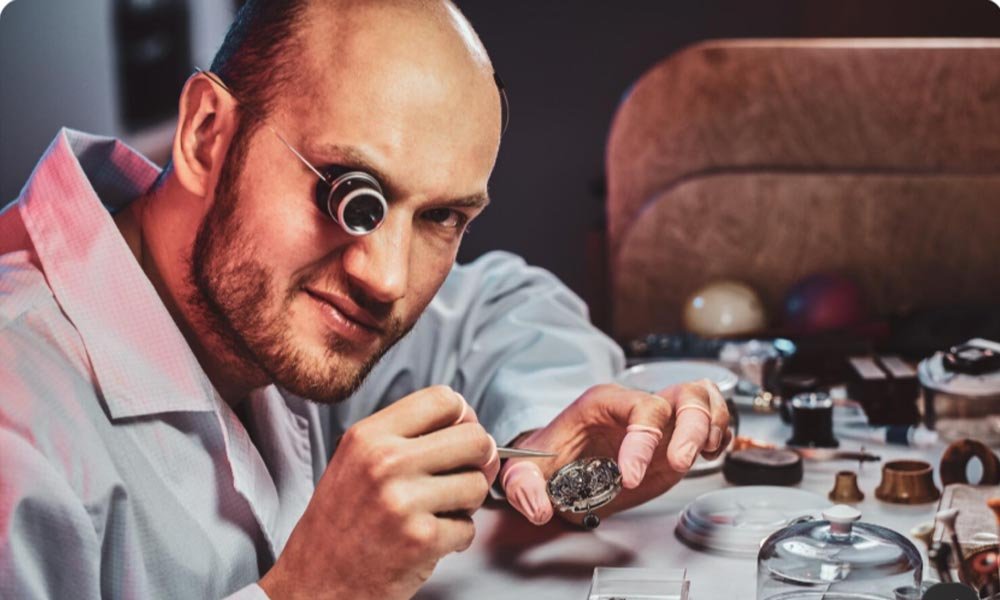
Personalised jewellery and watches occupy an interesting position in the gift and accessories market. Customers are not always looking for another mass-produced product. They often want something that carries a name, date, message, photograph, or design that makes the item personally meaningful. This creates an opportunity for entrepreneurs interested in starting a jewellery or watch customisation business.
With a fibre laser engraver, a small workshop can offer personalised metal products without requiring traditional engraving tools or a large manufacturing operation. You can customise jewellery, watches, accessories, and promotional items with names, logos, serial numbers, and decorative designs. The opportunity is not limited to individual customers. Jewellery retailers, watch shops, corporate gift suppliers, and independent designers may also need reliable engraving services.
However, success depends on choosing the right products, understanding metal engraving, pricing your services correctly, and investing in equipment suited to the work. Here is what you need to know.
1. Understand the Jewellery and Watch Customisation Market
Personalisation can add value to products that customers already intend to purchase. For example, someone buying a bracelet as an anniversary gift may be willing to pay extra to have a date or message engraved on it.
Similarly, a customer purchasing a watch may want initials, a special date, or a short message engraved on the case back. This means you do not necessarily need to manufacture jewellery or watches yourself. You can establish a customisation service that works with products supplied by customers, retailers, or wholesale suppliers.
Some promising product categories include:
Personalised Jewellery
You could offer engraving on:
- Stainless steel bracelets.
- Pendants and necklaces.
- Metal rings.
- Lockets.
- Earrings with suitable metal surfaces.
- Custom metal keyrings.
Popular designs include names, initials, short messages, dates, coordinates, and small decorative patterns.
Watch Customisation
Watch engraving can attract customers looking for personalised gifts or special keepsakes.
Potential services include:
- Engraving names and initials on case backs.
- Adding anniversary dates.
- Personalising metal watch accessories.
- Engraving business or institutional logos.
- Creating limited-edition branded accessories.
You must first determine which surfaces and materials can be safely engraved. Not every watch component is suitable for laser processing, particularly when coatings, delicate finishes, electronics, or heat-sensitive components are involved.
Corporate and Promotional Accessories
Corporate gifts offer another potential source of business. Companies often purchase metal accessories for employee recognition, promotional campaigns, and special events. You could produce or customise:
- Branded metal keyrings.
- Stainless steel business cards.
- Metal pens.
- Promotional badges.
- Engraved desk accessories.
- Personalised corporate gifts.
Business orders may involve larger quantities than individual jewellery purchases, making them useful for increasing production volume.
2. Learn the Difference Between Metal Engraving and Colour Marking
Before investing in a machine, understand what customers expect from the finished product. Traditional engraving removes material to create a recessed design. Laser marking can create visible contrasts on the surface without necessarily removing substantial material. The result depends on the laser source, material composition, settings, and processing method. For jewellery and watch customisation, this distinction matters because customers may request different finishes.
For example:
- A deep engraved name on a metal pendant.
- A dark logo on a stainless steel bracelet.
- A serial number on a metal watch component.
- A decorative pattern on an anodised aluminium accessory.
Fibre lasers are widely used for marking metals because their 1064 nm wavelength is well suited to processing many metal surfaces. However, different fibre laser technologies offer different levels of control.
What Makes MOPA Lasers Different?
MOPA stands for Master Oscillator Power Amplifier. Unlike conventional Q-switched fibre laser systems, a MOPA fibre laser allows users to adjust pulse duration as well as frequency. This additional control can help produce different marking effects on suitable materials.
For example, MOPA lasers can be used to create dark marks on anodised aluminium and controlled colour-marking effects on stainless steel and titanium. Colour marking occurs through controlled surface oxidation and interference effects. The final appearance depends on the material, pulse settings, surface condition, and processing parameters. It is important to understand that colour marking is not guaranteed on every metal or with every combination of settings. Testing is essential.
3. Calculate Your Startup Investment
A jewellery customisation business can be started from a relatively compact workspace. Unlike a business manufacturing jewellery from raw metal, you can begin by purchasing ready-made blanks or working with products supplied by customers. Your initial budget should include:
| Startup expense | Estimated budget |
| Compact fibre laser engraver | £1,500–£3,000 |
| Jewellery and metal blanks | £150–£400 |
| Rotary attachment and accessories | £100–£300 |
| Design software and computer setup | £0–£250 |
| Packaging and presentation materials | £75–£200 |
| Website and marketing | £100–£300 |
| Safety equipment and workspace preparation | £150–£400 |
These are indicative planning estimates rather than current supplier quotations.
You should also reserve money for sample products and material testing. Different metal grades and surface finishes can produce very different engraving results.
4. Register Your Business in the UK
A sole trader structure may be suitable when starting a small customisation business.
You can begin trading without forming a limited company, although you must register for Self Assessment with HMRC if your gross trading income exceeds the £1,000 trading allowance in a tax year.
Keep accurate records of sales, materials, machine purchases, software, and other business expenses.
VAT registration is generally required once taxable turnover exceeds £90,000 over a rolling 12-month period, or if you expect to exceed the threshold in the next 30 days.
You should also consider business insurance, particularly if customers send you valuable watches or jewellery for customisation.
Establish clear procedures for:
- Recording the condition of customer-owned products.
- Photographing items before processing.
- Confirming the engraving design before production.
- Protecting valuable customer property.
- Handling rejected or damaged items.
- Communicating turnaround times.
This is particularly important when working with expensive watches or sentimental jewellery.
5. Build a Portfolio Before Advertising Your Services
Customers want to see what your engraving service can actually achieve.
Before launching, prepare sample products featuring different materials, fonts, and engraving styles.
For example, you could create:
- A stainless steel bracelet with engraved initials.
- A pendant with a personalised date.
- A metal keyring with a company logo.
- A stainless steel tag with a dark engraved design.
- A titanium sample demonstrating colour-marking possibilities.
Photograph the finished products clearly and use close-up images to show the quality of the engraving.
You can then build a catalogue around different customer needs.
It is also worth developing a few fixed-price services. For example, offer basic initials engraving, personalised message engraving, and more complex custom artwork.
This makes it easier for customers to understand your services and reduces the time spent preparing individual quotations.
6. Choose an Affordable Fibre Laser for Your First Business
The machine you choose should match your target products, production volume, and budget.
For entrepreneurs starting with jewellery and watch accessories, a compact 30W fibre laser can provide a practical entry point.
The OMTech M-30 30W Fibre Laser Marking and Engraving Machine is worth considering for this type of business.
It uses a 30W fibre laser source and has a 175 × 175 mm marking area. Its maximum listed marking speed is 7,000 mm/s, making it suitable for a variety of small metal marking and engraving applications.
Some useful features include:
- 30W fibre laser power: Suitable for marking and engraving many compatible metal surfaces.
- 175 × 175 mm marking area: Provides room for jewellery, accessories, and small promotional products.
- Up to 7,000 mm/s marking speed: Supports efficient processing of suitable designs.
- High positioning accuracy: Helps produce consistent results on small workpieces.
- Compatibility with EzCad2 and LightBurn’s galvo functionality: Provides options for preparing and managing engraving designs.
For a new business, this combination offers a way to enter metal customisation without immediately investing in a higher-powered industrial laser. One important distinction: the linked M-30 specification identifies a Raycus fibre source with a 30–60 kHz frequency range. It should not be marketed as a MOPA machine or assumed to offer MOPA-specific pulse-width adjustment and colour-marking capabilities. If colour marking is a central part of your business model, choose a model explicitly identified as MOPA and verify its specifications before purchasing.
7. Find Customers and Generate Repeat Business
A jewellery customisation business can serve both individual customers and other businesses.
For individual customers, Instagram, Etsy, and your own website are useful platforms for displaying personalised products.
You can also approach:
- Independent jewellery shops.
- Watch retailers.
- Gift stores.
- Wedding suppliers.
- Corporate merchandise companies.
- Jewellery designers.
Consider offering wholesale or trade engraving services to retailers that already sell jewellery but do not have their own laser equipment.
For example, a jewellery shop could collect customer orders and send you the items for engraving. You handle production, while the retailer manages the customer relationship.
This arrangement can generate repeat orders without requiring you to attract every customer individually.
8. Price Your Services for Profitability
Do not price engraving services based only on the number of minutes the laser is running.
Your pricing should include design preparation, material testing, machine operation, handling, packaging, and customer communication.
For instance, a simple initials engraving may take only a few minutes to process, but you still need to account for the time required to position the item and prepare the design.
You can introduce tiered pricing:
- Basic text engraving.
- Personalised messages and dates.
- Custom logos and artwork.
- Complex decorative designs.
- Bulk corporate orders.
For watch and jewellery products, you should also consider the risk and handling requirements associated with customer-owned items.
Final Thoughts
Starting a jewellery or watch customisation business is an opportunity to combine personalisation, design, and small-scale manufacturing.
A compact fibre laser allows you to offer metal marking services without manufacturing the underlying products yourself. You can begin with simple jewellery engraving, expand into watch accessories, and gradually build relationships with retailers and corporate customers.
The OMTech M-30 30W is a practical model to consider for entrepreneurs entering the metal engraving market. Its compact marking area and 30W fibre source make it suitable for many small-product applications.
The key is to start with services you can deliver consistently, understand the materials you work with, and build a reputation for reliable results.