
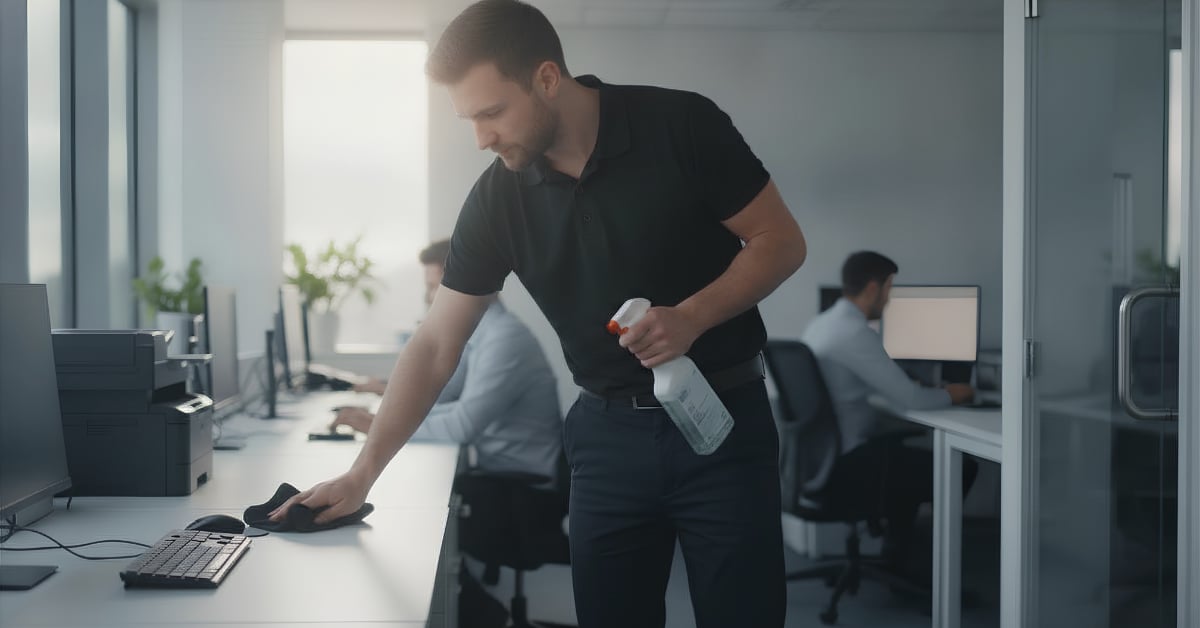
When business owners ask, ‘how often should an office be cleaned?’, the baseline answer is one to five times per week, depending on daily footfall, workplace size and your specific industry.
Whilst a small office might stay hygienic with a twice-weekly visit, larger offices with hot-desking setups require daily or at least weekly maintenance.
Keeping your workspace spotless preserves the lifespan of your commercial assets, protects staff health and builds a professional brand image.
This guide helps you to clarify the mess of commercial office cleaning frequency across THE UK for a productive and compliant environment.
The Standard Office Cleaning Checklist & Timing Guide
1. Daily Cleaning (Out-of-Hours: 6:00 PM – 10:00 PM)
- Priority 1: Client-Facing Areas
- Vacuum the carpeted hallways.
- Clean fingerprints from glass doors, partitions and corporate signage.
- Sanitise door handles, light switches and hand sanitiser stations.
- Straighten seating, fluff cushions and wipe down chair arms.
- Sanitise the entire tabletop after each meeting to remove rings, crumbs and bacteria.
- Wipe down the armrests and top rails of chairs.
- Disinfect shared remote controls, presentation pointers, touchscreens and AV cables.
- Erase boards, wipe frames and clean glass walls or windows.
- Priority 2: Transit & Infrastructure
- Clean and sanitise the buttons used to call the lifts.
- Disinfect the button panels inside the lifts.
- Sanitise the security gates at the reception.
- Polish the steel walls and doors inside the lifts.
- Disinfect the light switches.
- Priority 3: Workstations & Desks
- Hand-wipe desk surfaces using microfibre cloths.
- Clean monitors, keyboards and mice using anti-static, alcohol-free wipes.
- Wipe down clear desk surfaces only.
- Do not touch or lift any loose business documents or notebooks.
- Empty standard general waste and recycling bins.
- Never touch or empty secure shredding consoles.
- Priority 4: Hygiene Zones
- Disinfect toilet bowls, seats and flush plates.
- Wipe down sink basins, polish vanity mirrors and mop floors.
- Scrub shower trays, wipe down glass doors and remove daily soap scum.
- Restock hand soap, paper towels and toilet rolls.
- Ensure sanitary bins are emptied and replaced.
- Wipe down kitchen counters, breakroom tables and sinks.
- Clean the interior and exterior of microwaves to remove food splatters.
- Load or run dishwashers and wash stray communal mugs.
- Empty kitchen food waste and recycling bins.
2. Weekly Cleaning (Weekend Shift: Saturday Morning)
- Priority 1: Client-Facing Areas
- Polish all internal glass walls to remove smudges.
- Polish all boardroom doors.
- Priority 2: Transit & Infrastructure
- Vacuum the metal tracks at the bottom of the lift doors.
- Wipe out the grooves to prevent mechanical jams.
- Priority 3: Workstations & Floors
- Vacuum out dust that accumulates inside heavy cable management trays underneath office desks.
- Use commercial vacuums to clean tight carpet edges.
- Vacuum deep into corners and behind storage cabinets.
- Priority 4: Hygiene Zones (Washrooms & Kitchens)
- Apply descaling treatments to washroom taps, showerheads and toilet rims.
- Wipe down the splashback tiles behind sinks.
- Wipe down kitchen cupboard doors and the exterior of the fridge.
- Perform a weekly fridge clear-out to discard expired perishable food (typically Friday evening).
- Deep clean the office coffee machine, emptying grounds and washing drip trays.
3. Monthly Cleaning (Scheduled Based on the Operational Needs)
- Wash the inside faces of all perimeter windows and window frames.
- Dust architectural light fixtures and decorative wall panels.
- Machine-buff and polish stone, marble or vinyl floors in reception areas and lift lobbies.
- Wipe down the exterior grilles of the air conditioning units.
- Wipe down the ceiling return vents.
- Dust the top edges of lockers.
- Scrub the grout lines between washroom floor tiles.
- Pour enzyme drain maintainers down shower and sink drains to prevent blockages and stale odours.
- Deep clean and sanitise the interior shelves and drawers of the kitchen fridge.
- Descale kettles and commercial hot water dispensers to remove mineral buildup.
4. Deep Cleaning Schedule (Quarterly & Semi-Annually)
- Sonic-clean or meticulously wipe down all fabric roller blinds or window shutters.
- Vacuum out the deep duct grilles.
- Vacuum server room exterior ventilation slots to protect sensitive IT servers.
- Wash and extract all carpets to remove deep-set dirt and spilled coffee marks.
- Machine-scrub the washroom and shower floors.
- Vacuum and wipe down the washroom ceiling extraction vents.
- Pull out heavy kitchen appliances (fridges, vending machines) to vacuum and clean behind and underneath them.
- Deep clean and degrease kitchen extractor fans and ovens (if applicable).
Industry-Specific Office Cleaning Add-Ons
Whilst the checklist above covers the building’s infrastructure, specific industries require extra tasks, stricter rules or higher frequencies based on their daily operations.
Finance and Banking
- DailyIntense dry-dusting of specialised dealer boards (trading phones) and 4-to-6 screen monitor setups on trading floors.
- Stricter enforcement of FCA and GDPR data privacy. Cleaners will completely skip an executive desk rather than move a single piece of paper to clean underneath it.
Legal and Consulting
- WeeklyExtensive dusting of legal libraries, partner bookcases and high-end wooden boardroom furniture.
- MonthlyApplying professional leather feed and cleaner to expensive reception seating and boardroom chairs to prevent cracking.
Manufacturing and Engineering (Admin Offices)
- Daily Constant removal of grease, oil and metal shavings tracked in by boots walking from the factory floor into the management offices.
- Weekly Deep cleaning of transition zones (boot changing rooms) and heavy extraction of entrance mats to stop industrial grit from ruining office carpets.
Healthcare & Medical Offices (Admin & Waiting Rooms)
- DailyUpgrading standard wiping to medical-grade, CQC-compliant antiviral disinfectants on all waiting room chairs, reception counters and door handles.
- DailyEnsuring cleaners follow strict colour-coded waste removal to separate general office rubbish from clinical or hazardous waste bins.
Industrial and Logistics Offices
- DailySweeping mud, dust and warehouse dirt from logistics desks and site portacabins multiple times a day.
- QuarterlyResilient hard floors (like vinyl or lino) require machine stripping and resealing more frequently to maintain anti-slip safety ratings under heavy work-boot traffic, although it found in any UK office.
How Often Should an Office Be Cleaned Based on Size?
When figuring out how often should an office be cleaned, the physical square footage and the number of employees using the desks play a massive role. Large open-plan offices experience higher wear and tear than smaller, single-room workspaces.
Before booking a professional cleaner, assess your specific layout requirements:
- How many employees use the space on peak hybrid days?
- How many toilets and handbasins are on-site?
- Do employees eat meals at their desks or in a dedicated kitchen?
- What is the exact ratio of carpeted floors to hard surfaces?
- Is the elevator part of your office?
- The kind of assets and equipment integrated into your office?
Smaller Offices (Under 15 Employees)
Because foot traffic is low, daily tasks are typically performed on a “per visit” basis (1 to 2 times a week).
Daily (Per Visit) Cleaning
- Empty general rubbish and recycling bins.
- Hand-wipe clear desk surfaces using microfibre cloths.
- Vacuum main carpet lanes and walkways.
- Sanitise the kitchenette counters, sink and microwave handle.
- Disinfect the communal toilet bowl, seat and flush plate.
- Restock hand soap, paper towels and toilet rolls.
Weekly Cleaning
- Dust computer monitors, window sills and exposed skirting boards.
- Mop the kitchenette and washroom hard floors using antibacterial solutions.
- Disinfect shared office touchpoints, including door handles and light switches.
- Discard expired perishable food from the communal fridge (typically Friday).
- Wipe down the exterior of the fridge and kitchen cupboards.
Monthly Cleaning
- Deep clean and sanitise the interior of the fridge and microwave.
- Vacuum behind small furniture and tight carpet corners.
- Wash the inside faces of accessible perimeter windows.
- Descale the kitchen kettle and washroom taps.
- Dust architectural light fixtures and high shelves.
Medium Sized Offices (15 to 50 Employees)
With dozens of people sharing facilities, this environment requires structured daily commercial cleaning to manage high-touch points and prevent bacteria build-up.
Daily Cleaning
- Empty all office general waste and recycling bins to prevent overflow.
- Clean monitors, keyboards and mice using anti-static wipes.
- Wipe down clear desk surfaces and communal breakroom tables.
- Clean the interior and exterior of microwaves to remove daily food splatters.
- Load or run the office dishwasher and wash stray communal mugs.
- Disinfect multi-stall washrooms, including toilets, sinks and vanity mirrors.
- Clean and sanitise lift call buttons, door plates and security gates.
Weekly Cleaning
- Polish all internal glass walls and boardroom doors to remove smudges.
- Vacuum out dust inside heavy cable management trays underneath desks.
- Clean tight carpet edges using commercial vacuums.
- Apply descaling treatments to washroom taps, showerheads and toilet rims.
- Deep clean the office coffee machine, emptying grounds and washing drip trays.
Monthly Cleaning
- Scrub the grout lines between washroom floor tiles.
- Pour enzyme drain maintainers down shower and sink drains to prevent blockages.
- Deep clean and sanitise the interior shelves and drawers of the kitchen fridge.
- Wipe down the exterior grilles of the air conditioning units and ceiling return vents.
- Machine-buff and polish hard floors in the main reception area.
Large Offices (50+ Staff or Multi-Floor Layouts)
These high-footfall environments require a continuous strategy: daytime janitorial presence combined with deep after-hours cleaning.
Daily Cleaning
- Daytime:Monitor and continuously restock high-volume washrooms.
- Daytime:Keep kitchenettes tidy, manage spills and run dishwashers mid-shift.
- Evening:Vacuum all carpeted floors, hallways and workstation areas.
- Evening:Polish the steel walls and doors inside the lifts.
- Evening:Hand-wipe all clear desk surfaces across the floor plan.
- Evening:Disinfect all large washroom blocks and scrub shower trays.
- Evening:Securely empty all general and sanitary bins across all floors.
Weekly Cleaning
- Vacuum the metal tracks at the bottom of the lift doors to prevent mechanical jams.
- Descale large-scale washroom facilities, shower blocks and locker rooms.
- Wipe down the splashback tiles behind all washroom and kitchen sinks.
- Perform a full floor-wide fridge clear-out to discard expired items.
- Polish all internal glass partitions and multi-floor boardroom doors.
Monthly Cleaning
- Machine-buff and polish stone, marble or vinyl floors across all lift lobbies.
- Dust the top edges of employee lockers and decorative wall panels.
- Descale commercial hot water dispensers and large coffee machine boilers.
- Wash the inside faces of all perimeter windows and multi-floor window frames.
- Wipe down all server room exterior ventilation slots to protect IT equipment.
Whilst foot traffic may be low, office size is not the only determining factor for cleaning frequency. A compact office may still require a rigorous, highly frequent cleaning schedule if it is luxurious or equipment-heavy.
Small spaces featuring premium assets (such as bespoke architectural lighting, delicate high-end carpets, or leather furnishings) or critical infrastructure (like sensitive IT server rooms requiring strict dust control) demand meticulous maintenance to preserve their value.
When Do You Need In-House Cleaning, Outsourcing or Both?
Once you have determined how often should an office be cleaned, deciding how to manage the process impacts your operational overhead, staff management time and hygiene standards. Businesses can choose between managing an internal cleaner, outsourcing to a provider or using a blended model.
Cleaning Setup Comparison
| Cleaning Setup | What it means | Pros | Cons |
| In-House Staff | You recruit and manage an individual cleaner directly on your payroll. | Complete direct control over daily tasks. | You must arrange holiday and sickness cover. |
| Outsourcing (ICS) | You contract a commercial B2B cleaning company to handle everything. | Guaranteed replacement cover, trained experts, zero management stress. | Requires a fixed monthly or per hour based contract budget. |
| Hybrid Model | Office staff do basic tidying, whilst a professional crew cleans on ad hoc bases. | The workplace stays neat all day and gets sanitised nightly. | Requires clear communication on task boundaries. |
For most growing UK businesses, outsourcing to a trusted commercial cleaning provider like ICS removes the administrative headache of managing staff recruitment, ordering unique chemical agent, cleaning tools and equipment and managing holiday cover. This ensures your office remains compliant with workplace health and safety guidelines.