
Clear and professional writing has become a core requirement across nearly every industry. Whether creating business proposals, marketing content, emails, reports, blog posts, or academic documents, the quality of written communication often influences how information is received and understood.
For many years, writers have relied on grammar-checking software to improve accuracy and eliminate mistakes. While these tools remain useful, modern writing workflows now demand far more than basic spelling and grammar correction.
As content creation becomes increasingly fast-paced, users are searching for a Grammarly alternative that can support a wider range of writing tasks while fitting naturally into their daily workflow.
This shift reflects a broader change in how people approach writing. Instead of using separate tools only for proofreading, many professionals now prefer solutions that help throughout the entire content creation process.
Writing Challenges Have Evolved
The way people write today is very different from a decade ago.
Writers often manage multiple responsibilities simultaneously:
- creating long-form content
- responding to emails
- preparing reports
- drafting social media posts
- researching information
- editing documents
As a result, writing is no longer just about correcting mistakes after a draft is complete. The scale of what’s at stake has been quantified — one widely cited analysis of business writing found that unclear, poorly written material costs American companies roughly $396 billion a year in wasted time, as employees struggle to work out what a document is actually trying to say.
Modern users need support throughout the entire process, from developing ideas to refining final content.
This growing complexity is one reason many people are exploring alternatives that provide broader productivity benefits than traditional grammar-focused platforms.
Moving Beyond Basic Corrections
Grammar and spelling checks remain important, but they represent only one part of effective communication.
Strong writing also depends on:
- structure
- readability
- organization
- audience relevance
Writers frequently spend more time improving these areas than fixing grammatical mistakes. Modern AI-powered writing tools help simplify these tasks by assisting with content refinement, restructuring, rewriting, and idea development. Rather than functioning solely as editors, they support the entire writing workflow. This allows users to focus more on communicating ideas effectively rather than manually revising every section.
How Clico Fits Into Modern Writing Workflows
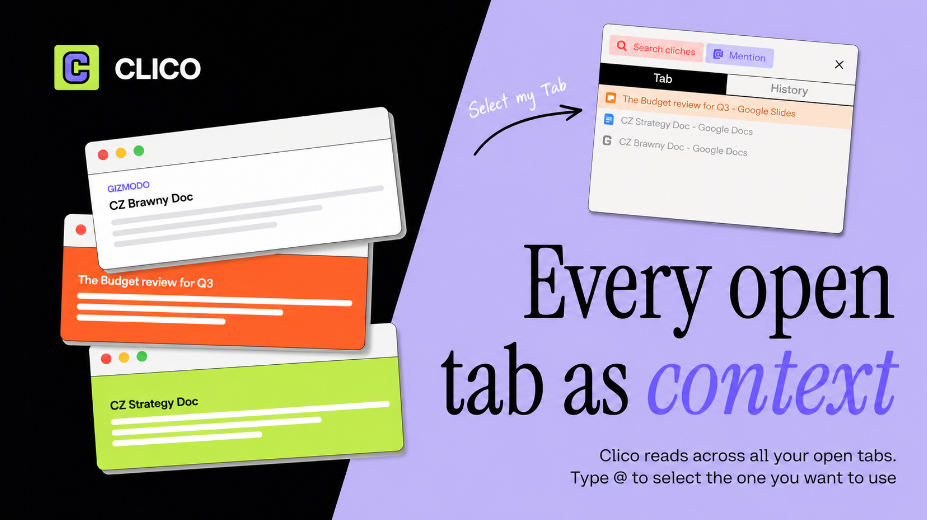
As writing needs continue to evolve, tools that integrate seamlessly into everyday work are becoming increasingly important. Clico is designed around this concept. As an AI extension that brings the best AI to any page you visit, it allows users to access intelligent writing support without constantly switching between different platforms. Rather than functioning as a standalone destination, it becomes part of the browsing and content creation experience itself.
This flexibility can be especially useful when working across:
- online documents
- web-based editors
- email platforms
- research pages
- content management systems
Because assistance is available wherever users are already working, productivity remains uninterrupted.
The Rise of Integrated AI Writing Experiences
One of the biggest frustrations many writers face is constantly switching between applications.
A common workflow might involve:
- researching information in a browser
- drafting content in a document editor
- using a separate writing tool
- copying content between platforms
These interruptions can break concentration and reduce productivity. This is where integrated solutions are becoming increasingly valuable.
Instead of requiring users to move content into separate applications, modern tools are designed to provide assistance directly within existing workflows.
By reducing context switching, users can maintain focus while receiving support exactly when they need it.
Why Many Users Explore a Grammarly Alternative
The search for a Grammarly alternative is often driven by changing workflow requirements rather than dissatisfaction with grammar checking itself.
Many professionals now want tools that can help with:
- rewriting content
- improving readability
- simplifying complex information
- generating content ideas
- summarizing information
- refining tone
These capabilities help users manage larger writing workloads more efficiently. The need for broader support is backed by research into workplace communication more generally — a business communication study found that nearly 9 in 10 leaders say poor communication has directly hurt their organization’s performance, and estimated that workers lose over 7 hours a week to the fallout from unclear writing and messaging.
As AI technology continues to advance, expectations are shifting from simple proofreading toward comprehensive writing support.
This evolution is changing how writers choose productivity tools.
Making Content Creation More Efficient
Writing often involves several stages before content is ready for publication or distribution.
These stages may include:
- research
- outlining
- drafting
- editing
- final review
Each step requires time and attention.
AI-powered writing tools can help streamline many of these processes by reducing repetitive work and accelerating revisions.
Instead of manually reworking multiple versions of a document, users can quickly improve content quality while maintaining their own voice and intent.
This efficiency becomes particularly valuable for professionals who create content regularly.
Supporting Different Types of Writers
Writing requirements vary significantly depending on the user.
Business Professionals: Reports, proposals, presentations, and client communications require accuracy and clarity.
Content Creators: Articles, newsletters, and marketing materials often demand strong readability and audience engagement.
Students: Assignments and research projects benefit from improved structure and organization.
Freelancers: Managing multiple projects often requires faster drafting and editing workflows.
Remote Teams: Collaboration becomes easier when written communication remains clear and consistent.
Modern AI-powered writing tools help support these different needs without forcing users into rigid workflows.
The Future of AI-Assisted Writing
Writing technology continues to evolve rapidly.
Future tools will likely focus even more on helping users communicate effectively rather than simply correcting errors.
Areas of growth may include:
- contextual writing assistance
- content organization
- workflow integration
- intelligent summarization
- faster document creation
As these capabilities improve, the distinction between writing assistance and productivity assistance will continue to blur.
The goal is no longer simply producing error-free content. It is creating better content more efficiently.
Building Better Writing Habits
The most effective writing tools are those that reduce friction without disrupting creativity.
When users spend less time switching applications, reformatting text, and making repetitive edits, they gain more time to focus on ideas, strategy, and communication.
Modern writing workflows increasingly depend on solutions that support productivity throughout the entire content creation process rather than only during final proofreading.
This shift is helping writers work more efficiently while maintaining quality standards.
Final Thoughts
The growing demand for a Grammarly alternative reflects changing expectations around digital writing. Today’s professionals need more than grammar correction alone. They need flexible tools that support content creation, editing, organization, and productivity within a single workflow.
Clico aligns with this evolution by bringing advanced AI capabilities directly into the pages and platforms where users already work. By reducing workflow interruptions and providing writing support throughout the content creation process, it helps writers stay focused while producing clearer, more effective communication.
As writing continues to play a central role in modern work, integrated AI-powered solutions will become increasingly valuable for individuals and teams looking to create better content with greater efficiency.