
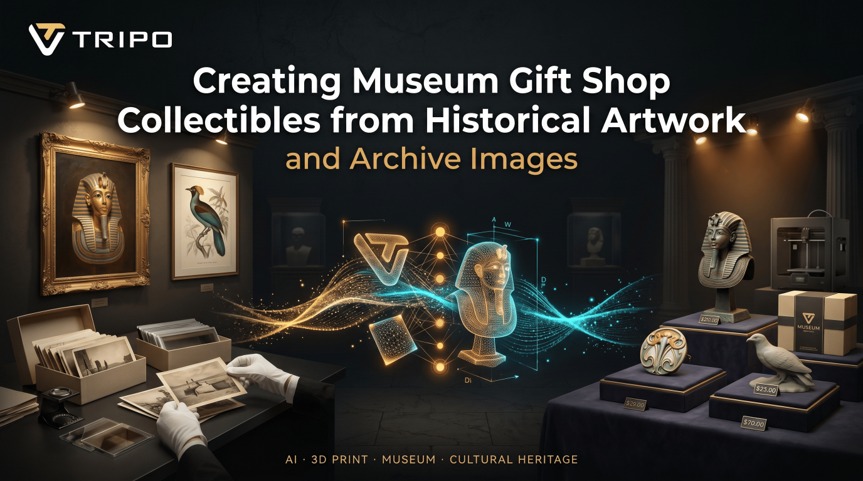
Gift Shops at Museums provide a means to continue the exhibition experience after visitors have left the gallery. Visitors who purchase miniature reproductions of artifacts, models of famous people from History, or collectible items based on great collections can take home a small part of history, art, or culture and establish a relationship with those items they have just interacted with in person.
Collecting items like this used to be difficult because creating a new sculptural prototype was required. With the advent of AI and Tripo 3D technology, Museums and Cultural organizations can transform into collectible items for visitors to purchase and use.
This article will examine how Museums are using 3D AI technology to produce and sell unique collectible items created from historical works of art.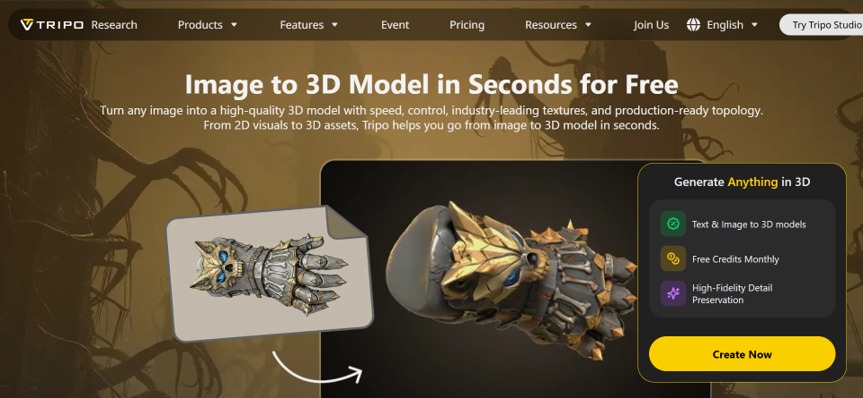
When centuries old artwork becomes collectible souvenirs
Museums hold a massive amount of artwork, sketches, engravings, historical photos, manuscripts and artifact data to inspire creative gift shop items. Traditionally, it would have taken a lot of effort, time and design skills to transform historical images into something visitors can hold and purchase.
Today Tripo 3D allows museums and institutions to transform these visual materials into something that is easy to collect and enjoy.
Why customers collect historically accurate artwork souvenirs
Visitors to museums look for items that they connect with after seeing them in the museum. A generic t-shirt or postcard just will not do, instead, visitors want something that they can look at and say “that is the artwork I saw”.
Historical artworks can spark deep emotional connections and museums are increasingly turning to such artwork for inspiration when it comes to gift shop items.
Museums bringing archival collections outside of the gallery
Museum collections often hold significantly more artifacts than can be put on display in an exhibit. Often this valuable visual information will remain out of public view, instead the collection will rely solely on those images included in exhibits. However, turning these archives into collectible items can allow a museum to showcase the entire collection in new ways that are both unique and appealing to visitors.
Tripo 3D can convert your historical artwork into a 3D asset that museums can use to develop their collectible items.
Museums developing collectible items as a way to connect visitors to the exhibit
What visitors take from an exhibition goes beyond what they simply see. Collectibles based on actual museum pieces give visitors a chance to connect more closely to an exhibition while giving the museum the chance to tell a richer story.
Museums are partnering with Tripo 3D to support cultural preservation while innovating their business practices.
Museums have long sought to balance the preservation of cultural artifacts with the accessibility of these artifacts for new audiences. AI offers an efficient way to use historical images in order to build new items that will both encourage interest in a collection and help the museum’s bottom line.
Tripo 3D makes these high-quality collectibles easier than ever before, bringing cultural artifacts into the hands of eager consumers while upholding the values of the museum.
STL makes producing collectibles quick and easy
Producing traditional merchandise items like souvenirs has historically been complicated, time-consuming, and required a significant amount of technical knowledge. Producing these new souvenir types are much easier using 3D conversion methods that simplify the image to STL workflow.
This makes it easy for creative teams to spend less time on production and more time on curation, stories and visitors.
Merchandise without creating an entirely new collection of artifacts
Creating a new set of merchandise items may seem like a lot of work, however museums can easily begin creating a unique set of gift shop items based on their existing collection.
Historical artwork from their collection is ideal for transforming into figurines, replicas, educational items and special edition prints.
Transforming historical artworks into collectibles with Tripo 3D
After selecting an artwork from the collection, a museum can easily turn it into a collectible using these 4 steps.
Step 1: Select input & upload
Select your preferred method and then upload your historical artwork by either selecting a file or dragging and dropping. Clear reference materials ensure better results.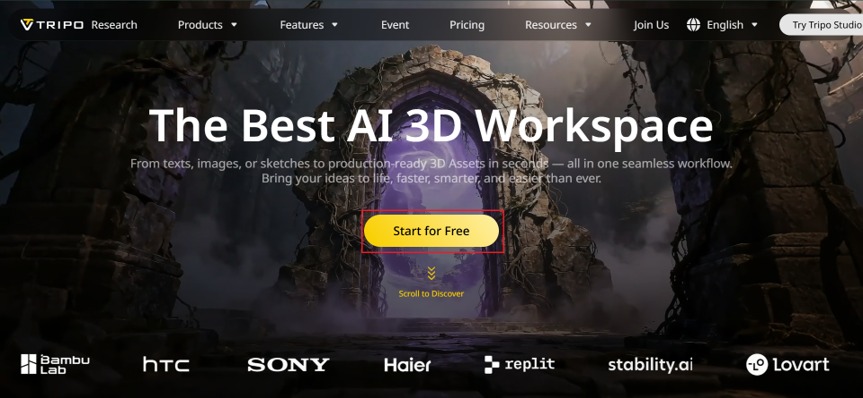
Step 2: Adjust settings
Depending on your project requirements, you can select from a variety of mesh quality and texture resolution options. Better quality can make it easier to retain more artistic detail and result in higher-quality collectibles, making them great for both displays and retail purposes.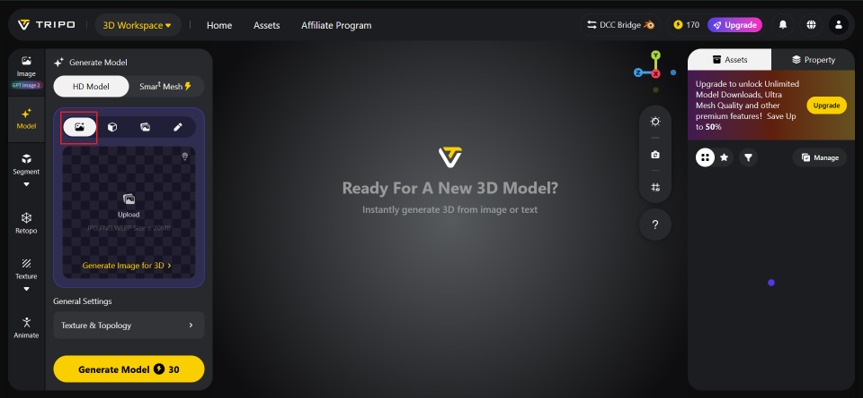
Step 3: Edit model
Edit your generated model until it matches your artistic intentions for your collectible item. You can use a magic brush, asset editor to split up your model, and any number of refinement options to best recreate the look of the original artwork.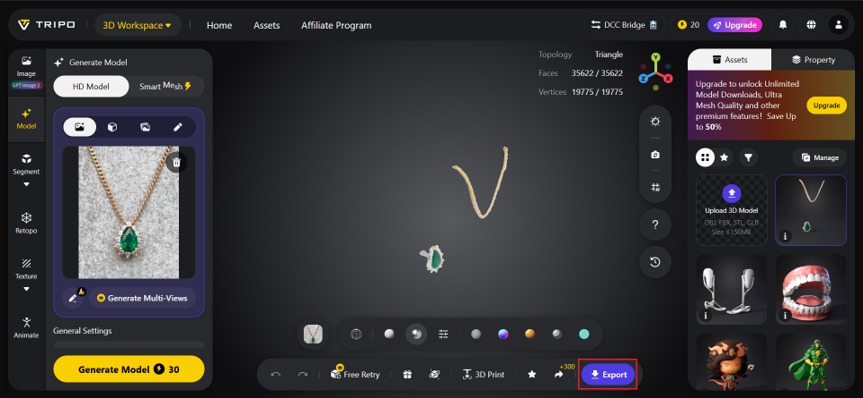
Step 4: Download
Download the file in a variety of different file types based on your personal workflow. Whether you will be using a 3D printer or have different software, you can export STL, OBJ, FBX, GLB, and USD.
Museums can provide tangible memories that people want to take home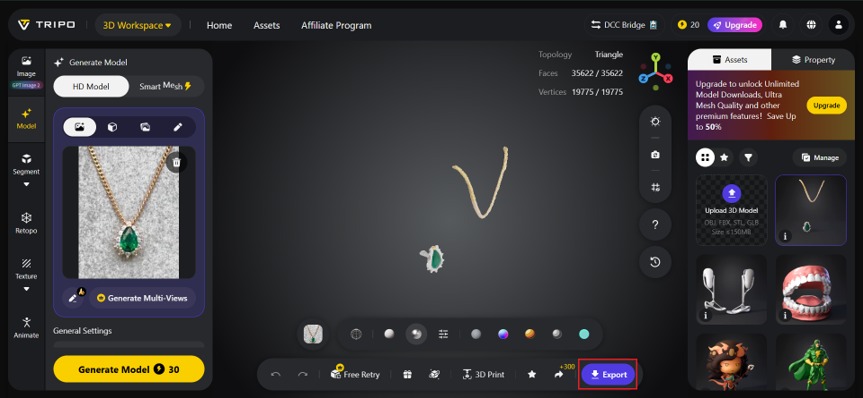
Portraits, sculptures, blueprints, sacred items, or other artifacts from your collection may serve as excellent starting points for new merchandise designs.
By creating an image to 3D conversion model, you can convert these artifacts into collectible items and allow customers to leave with a tangible remembrance of what they experienced.
Educational storytelling through collectible items
Every collectible artifact can tell a story. The history behind the item or the artistic trends of its time are easily shared through merchandise. These collectible items are a great way for the museum to reinforce its educational mission and enrich the visitor’s overall experience.
Tripo 3D will help museums create items that customers can enjoy both commercially and educationally.
Museums using 3D AI to give historical artwork
Artwork held within a museum holds historical and artistic value; that value may only be increased by using the image to create new items to give to visitors, new educational items to offer at exhibits, and even sales for a profit. Tripo 3D has developed a new workflow for generating collectible items, creating artifacts in the form of souvenirs, figures, models, or prints that are highly unique.
Ready to transform historical artwork and archive images into collectible products? Start creating with Tripo 3D today and discover how AI-powered 3D modeling can help bring cultural heritage into the hands of your visitors.