
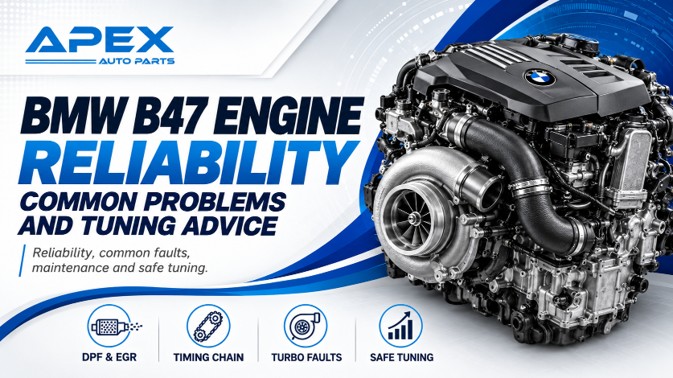
The BMW B47 is a modern four-cylinder diesel engine known for strong torque, good fuel economy, and relaxed motorway performance. It replaced the older N47 engine and has been fitted to many BMW models, including versions of the 1 Series, 2 Series, 3 Series, 4 Series, 5 Series, X1 and X3.
For many drivers, the B47 offers a useful balance between performance and running costs. It produces good pulling power at low engine speeds, so the car does not need to be pushed hard during normal driving. However, it is still a modern diesel with a turbocharger, high-pressure fuel system, and several emissions control parts. Proper servicing and the right driving conditions are essential.
Is the BMW B47 a Reliable Engine?
BMW B47 reliability is generally seen as an improvement over the earlier N47 engine. BMW made changes to the design, including updates to the timing system. However, this does not mean every B47 will be trouble-free.
Reliability depends on oil quality, service intervals, driving habits, and how quickly faults are repaired. A B47 used for regular motorway journeys may remain healthy at high mileage because the engine reaches its correct temperature and the exhaust system can complete its cleaning cycles.
A lower mileage car used only for short trips may have more problems. Repeated cold starts and interrupted journeys can affect the engine oil, battery, EGR system, and diesel particulate filter.
Service history is therefore more important than mileage alone. A high mileage BMW with regular oil changes and clear invoices may be a better purchase than a lower mileage example with missing records.
Why Is the BMW B47 Fuel Efficient?
The B47 produces strong torque at relatively low engine speeds. This allows the car to maintain motorway speeds without using high revs. The turbocharger also helps the engine produce more power from its 2.0-litre capacity.
Many B47 versions use common rail fuel injection. This system controls the timing and amount of fuel entering each cylinder very accurately. When the engine and its support systems are working correctly, this can provide smooth power and good fuel economy.
Actual fuel consumption depends on the model, gearbox, tyres, driving style and journey type. A lightweight 1 Series will normally use less fuel than a larger X3 fitted with a similar engine.
A sudden drop in the economy can be an early warning sign. A weak thermostat, restricted air filter, injector fault, blocked DPF, or inaccurate sensor may cause the engine to consume more fuel.
EGR Valve and EGR Cooler Problems
The exhaust gas recirculation system sends a controlled amount of exhaust gas back through the intake. This reduces certain emissions, but it also allows carbon and oil deposits to collect inside the valve and intake system.
A restricted EGR valve may cause hesitation, rough running, poor fuel economy, or reduced power. The engine warning light may appear if airflow readings move outside the expected range.
The EGR cooler also carries coolant. A leak may cause unexplained coolant loss, a sweet smell, or overheating. Some BMW vehicles have been included in EGR-related recalls, so owners should check the VIN through BMW’s official recall service.
An airflow fault code does not automatically prove that the EGR valve has failed. Intake leaks, damaged wiring, dirty sensors, and boost problems can create similar readings. Testing should always come before replacement.
Diesel Particulate Filter Blockage
The diesel particulate filter captures soot from the exhaust. When conditions are suitable, the engine raises the exhaust temperature and burns much of the trapped soot. This process is known as regeneration.
Regular short journeys can interrupt regeneration because the exhaust does not remain hot enough. Over time, the driver may notice a DPF warning, frequent cooling fan operation, higher fuel use or reduced performance.
A blocked filter may also be the result of another problem. A weak thermostat can stop the engine from reaching its correct temperature. Failed glow plugs, injectors, exhaust sensors, or EGR components can also prevent successful regeneration.
Cleaning or replacing the filter without finding the cause may only provide a temporary repair. Diagnostic data should be checked to understand the soot level, exhaust pressure, and recent regeneration history.
Can the BMW B47 Develop Timing Chain Wear?
Timing chain problems are less strongly associated with the B47 than with the older N47, but wear can still happen. The chain, guides, and tensioner work every time the engine runs, so they should not be assumed to last forever.
Possible warning signs include a metallic rattle during a cold start, timing-related fault codes, or metal particles in the oil filter. These symptoms should be checked promptly.
A mechanic should confirm where the noise comes from because the auxiliary belt system, pulleys, and other moving parts can also rattle. If the timing chain is worn, delaying repair increases the risk of the chain jumping or breaking. This can allow the pistons and valves to collide and cause major internal damage.
Turbocharger and Boost System Faults
The turbocharger relies on clean oil, stable oil pressure, and unrestricted airflow. Delayed oil changes can allow deposits to damage the turbo bearings. Split boost hoses, loose clips, and leaking intercoolers can also reduce power.
Common warning signs include:
- Slow acceleration or reduced power
- A new whistle or siren sound
- Blue or black exhaust smoke
- Boost pressure fault codes
- Increased oil consumption
These symptoms do not always mean the turbocharger itself has failed. A small leak in a boost hose can make the car feel weak and may produce the same fault code as a damaged turbo.
A mechanic should check the hoses, intercooler, actuator, vacuum control, and oil supply before ordering an expensive replacement. If the turbo has failed, the original cause must be corrected before the new unit is fitted.
Cooling System and Thermostat Problems
The thermostat helps the engine reach and maintain its correct working temperature. If it remains open, the engine may run too cool. This can reduce fuel economy and make DPF regeneration more difficult.
A failed water pump, damaged hose, or leaking housing can cause coolant loss and overheating. Owners should watch for changes in heater performance, coolant warnings, or dried marks around cooling system connections.
Repeatedly topping up the coolant is not a proper repair. Some leaks appear only when the engine is hot, and the cooling system is under pressure. A pressure test can help locate them.
If a serious temperature warning appears, the safest response is to stop driving. Continued use can damage the cylinder head, head gasket, and other expensive components.
Injector and Fuel System Faults
B47 injectors operate at very high pressure and must deliver a precise amount of fuel. A worn or damaged injector can cause difficult starting, rough idle, diesel knock, smoke, or poor economy.
However, the same symptoms can come from low fuel pressure, wiring problems, EGR trouble, or poor compression. Replacing all injectors based only on a rough idle can create a large and unnecessary bill.
Injector correction values, rail pressure readings, and leak-back tests can help identify the real problem. Only the components confirmed as faulty should be replaced.
Is BMW B47 Tuning Safe?
BMW B47 tuning can increase power and torque, but it also places more demand on the turbocharger, fuel system, gearbox, clutch, and cooling system.
Before tuning, the car should receive a diagnostic scan and mechanical inspection. The engine oil, coolant, boost system, fuel pressure, and DPF condition should all be checked. Adding power to an engine with an existing boost leak or blocked filter can make the fault worse.
A mild software adjustment from a responsible specialist may improve mid-range performance. More aggressive tuning may require supporting hardware and stronger cooling.
Removing the DPF or disabling emissions systems can make a road car illegal and may create MOT, insurance and resale problems. Any engine modification should also be declared to the insurer.
Choosing the Correct BMW B47 Parts
B47 components can differ according to model, production date, power output, and emissions standard. The vehicle badge alone is not enough to confirm compatibility.
Before ordering, check the registration, VIN, engine code, and existing part number. Apex Auto Parts can use these details to help match BMW engine components to the correct vehicle, reducing the risk of incorrect orders and repeated labour.
Part matching should follow proper diagnosis. A fault code identifies the system that noticed a problem, but it does not always identify the failed component.
Final Thoughts
The BMW B47 can be a dependable and economical diesel engine when it receives clean oil, correct servicing and regular longer journeys. Its main concerns include EGR deposits, DPF blockage, cooling faults, injector issues, turbo problems and possible timing chain wear.
Drivers should respond quickly to warning lights, unusual noises, coolant loss or changes in performance. Early testing usually costs less than replacing parts through guesswork. For motorway drivers who maintain their vehicle properly, the B47 remains a strong choice.