
Key Takeaways
- A cooling system fault does not set P0332 directly, but a coolant leak can.
- P0128 means the engine is not reaching thermostat regulating temperature in the expected time.
- P0332 means the PCM sees low voltage on the Bank 2 knock sensor circuit.
- On engines with knock sensors under the intake manifold, leaking coolant can soak and corrode the knock sensor harness.
- Fix the coolant leak first, then repair the knock sensor circuit, then address the thermostat.
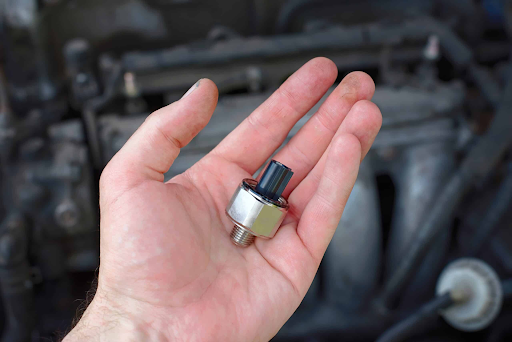
A cooling system problem can cause P0332, but only indirectly. A thermostat that sticks open will not change knock sensor voltage. A coolant leak is different. On many V6 and V8 engines, the knock sensors sit in the valley under the intake manifold, right below coolant passages and gaskets. When coolant leaks into that area, it can soak the knock sensor connector and harness, corrode the terminals, and pull the signal circuit low. That same leak can also drop the coolant level and help set P0128.
What P0128 and P0332 Mean
The two codes come from different sensors and different monitors. Understanding each one helps you see where they overlap.
P0128 coolant thermostat below regulating temperature
The PCM watches the engine coolant temperature (ECT) sensor during warm-up. If the engine takes too long to reach the expected temperature, P0128 sets. The most common cause is a thermostat stuck partly open. Low coolant, a faulty ECT sensor, and a cooling fan that runs all the time can also set the code.
P0332 knock sensor 2 circuit low (bank 2)
The knock sensor produces a small voltage when it detects vibration from detonation. The PCM also watches the circuit for faults. P0332 sets when voltage on the Bank 2 knock sensor circuit stays below the expected range. That usually means an open or shorted circuit, a corroded connector, or a failed sensor, not actual engine knock.
How a Coolant Leak Links the Two Codes
A single external leak can explain both codes, which is why it should be your first suspect. A leaking intake gasket, coolant crossover, or heater hose fitting can drip coolant into the engine valley.
The coolant pools around the knock sensors and wiring. Over time, it corrodes the terminals and can create a path to ground, which reads as low voltage and sets the knock sensor code.
The leak also lowers the coolant level. When the level drops, air can collect around the ECT sensor, and the sensor reads temperature poorly during warm-up. Combined with a weak thermostat, that can set the thermostat code. If the vehicle arrives with both codes, a low coolant level, and signs of an external leak, treat the leak as the lead suspect.
How to Diagnose P0128
Start with the simple checks before replacing parts. Most thermostat codes can be confirmed with a scan tool and a thermometer.
Check the coolant level and look for leaks
Check the level cold, then pressure test the cooling system. Look closely at the intake gasket area, the rear of the engine, and heater hose connections. Coolant residue or a sweet smell around the intake points to a leak that may reach the knock sensors.
Compare ECT readings to actual temperature
Start the engine cold and graph ECT on the scan tool. Compare the reading to an infrared thermometer at the thermostat housing. A sensor that reads well below actual temperature can set the code on its own.
Test the thermostat
Watch the warm-up curve. Temperature should rise steadily, then level off once the thermostat opens. A slow climb or a reading that never reaches normal points to a thermostat stuck open. Replace it with one rated to the correct opening temperature for that engine.
How to Diagnose P0332
Once the leak is found, turn to the knock sensor circuit. Work from the harness to the sensor, since wiring faults are more common than failed sensors.
Inspect the harness and connector
On engines with sensors in the valley, you will often need to remove the intake manifold. Look for coolant in the valley, green corrosion on terminals, and damaged insulation. Many knock sensor harnesses are sold as a separate part and are often replaced along with the sensor when corrosion is present.
Test the circuit
Check the signal circuit for continuity back to the PCM and for a short to ground. Some knock sensors include an internal resistor, so measure sensor resistance against the manufacturer’s specification rather than a general value.
Install the sensor correctly
Clean the mounting surface and torque the sensor to the exact specification. Knock sensors rely on firm contact with the block, so over-tightening or under-tightening can change their output and cause new codes.
Why Guessing Gets Expensive Here
Both codes tempt technicians to replace the cheapest part first. A new thermostat will not stop coolant from soaking the knock sensor harness, and a new knock sensor will fail again if the leak continues. Confirm the leak location, the harness condition, and the thermostat behavior before you write the estimate, so the customer pays for one repair instead of three.
Repair Order That Prevents Comebacks
The right repair order stops the same codes from returning. Fix the coolant leak first, since it can corrode a new knock sensor harness and keep dropping the coolant level.
Next, repair the knock sensor circuit while the intake is off. Replace the thermostat last and refill the system, bleeding all air. Then clear the codes and complete a full warm-up to confirm both monitors pass.
Find the Pattern Before You Pull the Intake
Removing an intake manifold is a big job, so confirming the cause first matters. Identifix Direct-Hit shows confirmed fixes for P0128 and P0332 on the exact make, model, and engine, including known leak points and harness failures. Check Direct-Hit before you quote the job, so your estimate covers the gaskets, harness, and thermostat the vehicle is most likely to need.