
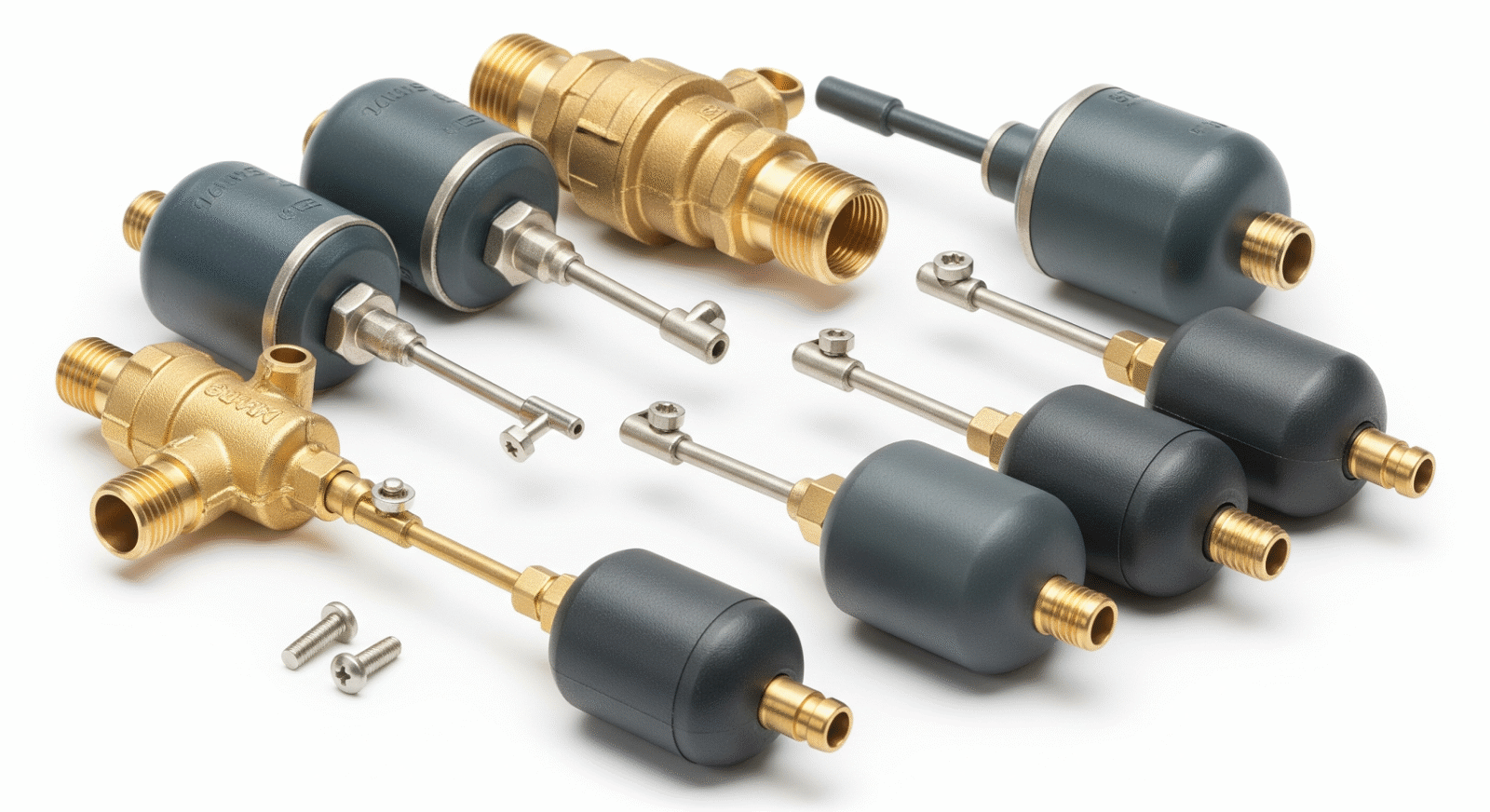
Procurement decisions in pipeline operations carry a different kind of weight than most purchasing decisions. When a valve fails mid-operation, when a fitting is dimensionally inconsistent across a batch, or when lead times shift without warning, the downstream effects are rarely contained to a single department. Downtime compounds. Schedules shift. Costs climb. And the buyer who signed the contract is the one answering for it.
The problem is that many procurement teams evaluate manufacturers the same way they might evaluate any vendor — through pricing, availability, and a catalog that looks comprehensive enough to satisfy the checklist. That approach tends to work well enough until it doesn’t. And in pipeline operations, the moment it doesn’t work is almost always at the worst possible time.
Vetting a pipeline equipment manufacturer properly requires looking past what a company presents in a sales conversation and examining how it actually performs under real operating conditions. This means asking different questions, requesting different documentation, and understanding what warning signs tend to get overlooked during a standard qualification process. The checklist below is built around that premise.
Understanding What "Qualified" Actually Means in This Industry
The term "qualified supplier" gets used loosely in procurement conversations, often to describe any manufacturer that has filled out the right forms or passed an initial review. In pipeline applications, qualification has a more specific meaning — one tied directly to whether a manufacturer can consistently produce components that perform within the tolerances and conditions your operation requires, not just once, but across every order, every batch, and every delivery window.
Buyers who want a clearer picture of what separates a capable supplier from a marginal one should start by reviewing how pipeline equipment manufacturers are evaluated within industry supply chains, including how traceability, material certification, and third-party inspection requirements are typically structured for pipeline-grade components. Resources that outline these distinctions help set realistic expectations before you start requesting documentation from vendors.
The practical definition of "qualified" includes several dimensions that don’t always appear in vendor scorecards:
- Consistent quality performance across multiple order cycles, not just a clean record on the first purchase
- Documented material traceability that connects each component to its source material and production batch
- Third-party certifications that are current, verifiable, and applicable to your specific application environment
- A quality management system that is actively maintained rather than assembled for audit purposes
- Communication practices that reflect operational transparency, not just responsiveness during the sales process
Establishing this baseline before you begin formal evaluation keeps the process grounded and reduces the likelihood of approving a manufacturer based on incomplete signals.
Why First-Order Performance Is Not Enough
A manufacturer can deliver a flawless first order for reasons that have nothing to do with their standard operational performance. They may have prioritized your order because you were a new account. They may have pulled from a clean inventory batch that isn’t representative of their usual output. They may have assigned their strongest quality control staff to your shipment to make a good impression.
None of that tells you what happens on order number six, or what happens when your volume increases and their capacity is under pressure. Before formalizing a supplier relationship, ask for references from buyers who have been purchasing from that manufacturer for at least two years and who have experienced at least one significant order — either by volume or by urgency. The conversations you have with those references will give you a more accurate picture than any first-order review.
Certification Review: Reading Beyond the Certificate
Most pipeline equipment manufacturers carry some form of certification, whether that’s an ISO 9001 quality management certification, API product licensing, or compliance documentation tied to specific material or pressure standards. The presence of these certifications matters, but how they’re maintained and what they actually cover matters considerably more.
ISO 9001, for instance, as defined by the International Organization for Standardization, establishes a framework for quality management systems but does not itself certify the performance of any specific product. A manufacturer can hold a valid ISO 9001 certificate and still produce components that fail to meet the application requirements of a given pipeline environment. Understanding the scope of any certification — what processes it covers, which facilities it applies to, and when it was last audited — is more informative than confirming that a certificate exists.
API Licensing and Application Specificity
American Petroleum Institute product licenses are more product-specific than general quality management certifications, but they still require careful reading. An API license covers a defined category of products manufactured under defined conditions. If your application requires components that fall outside the exact parameters of a manufacturer’s licensed product range, that license doesn’t apply — even if the product looks similar on paper.
When reviewing API documentation, ask the manufacturer to specify exactly which product lines and specifications are covered under their current license. Request documentation showing the most recent audit date and any corrective actions that were issued. Manufacturers who are genuinely comfortable with their certification status will provide this without hesitation. Those who push back or redirect the conversation are telling you something worth noting.
Material Certification and Mill Traceability
Material certifications are a foundational element of pipeline component qualification and one of the areas where inconsistency is most likely to surface under operational pressure. A mill test report documents the chemical composition and mechanical properties of the raw material used to produce a component. Without that documentation, you have no independent means of confirming that the material in your hands matches what was specified in the order.
The key question isn’t whether a manufacturer provides material certifications — most will confirm they do. The key question is how those certifications are structured, stored, and retrievable. Ask how long they retain traceability records and what their process is for providing documentation if a component needs to be traced back during a warranty claim or incident review. Manufacturers with strong material management practices can answer this clearly and quickly.
Production Capacity and Lead Time Honesty
One of the most consistent failure points in supplier relationships isn’t quality — it’s lead time. A manufacturer who quotes accurate lead times during a normal production period may not be able to maintain those commitments when order volumes increase, raw material availability tightens, or their production floor encounters scheduling pressure. This is particularly relevant for pipeline operations where project schedules have defined windows and delays in equipment delivery can hold up work that involves multiple contractors and significant mobilization costs.
The goal of capacity assessment isn’t to find a manufacturer with unlimited availability — that’s not realistic. The goal is to find a manufacturer who is honest about their constraints and communicates proactively when those constraints are likely to affect your delivery. A vendor who provides optimistic lead times during the sales process and then requests extensions after the order is placed is a consistent pattern in buyer complaints across industrial procurement. It’s also a pattern that’s largely preventable through direct questioning before a contract is signed.
How to Assess Lead Time Reliability Before Committing
Ask the manufacturer how they calculate lead times and what factors they account for when providing a quote. Ask what their process is when a lead time needs to change after an order is placed, and who is responsible for communicating that to the buyer. Ask how they handled lead time commitments during periods of material shortage or production disruption in the past two years.
These questions are not combative — they’re operational. A manufacturer with solid lead time management practices will welcome the conversation because it sets clear expectations on both sides. A manufacturer who becomes defensive or vague when asked about their production communication practices is signaling that those practices are not well-structured.
After-Sale Support and the Reality of Warranty Claims
Warranty policies look straightforward in a contract, but their practical value depends entirely on how a manufacturer handles a claim when one is submitted. The process of raising a warranty issue, providing documentation, returning failed components, and receiving replacement parts or compensation can be efficient and professionally managed — or it can be slow, bureaucratic, and structured in a way that discourages buyers from pursuing legitimate claims.
Before signing a contract, request information on how warranty claims are processed. Ask how many claims have been filed in the past year, what the average resolution time has been, and what documentation is required to initiate a claim. Ask whether replacement parts are shipped before the failed component is returned, or whether the buyer must wait for inspection before any resolution is initiated. These details tell you a great deal about how a manufacturer views its post-sale obligations.
Technical Support as an Indicator of Manufacturer Depth
The quality of a manufacturer’s technical support team reflects something real about the company’s internal knowledge base. If technical questions about product specifications, installation requirements, or compatibility with specific operating conditions are routed to sales staff who then have to escalate internally, that signals a gap between what the manufacturer sells and what they understand about how their products are actually used.
Manufacturers who have invested in technical expertise will connect you directly to engineers or application specialists who can answer detailed questions without preparation time. That capability matters when a field issue arises and you need a rapid, informed response — not a follow-up call scheduled for the following week.
Closing Considerations Before You Sign
Vetting a pipeline equipment manufacturer thoroughly takes time, but the investment is proportionate to the risk involved in a poorly matched supplier relationship. The checklist approach outlined here is not about finding a perfect manufacturer — those don’t exist. It’s about identifying manufacturers whose operational practices, communication standards, and quality systems align closely enough with your requirements that the relationship is likely to remain functional under pressure.
The most reliable signal you can get from any manufacturer evaluation is consistency — consistency in how they answer questions, how they provide documentation, how their references describe their performance over time, and how they respond to the harder questions about capacity, warranty, and technical support. Manufacturers who perform consistently in those conversations are more likely to perform consistently once a contract is signed.
Price and availability will always factor into procurement decisions. But in pipeline operations, where the consequences of component failure or supply disruption extend well beyond a single line item, the factors that rarely appear in a quote — quality culture, communication practices, and institutional knowledge — are often the ones that determine whether a supplier relationship holds up over the long term. Those are the factors worth spending time on before any agreement is formalized.