
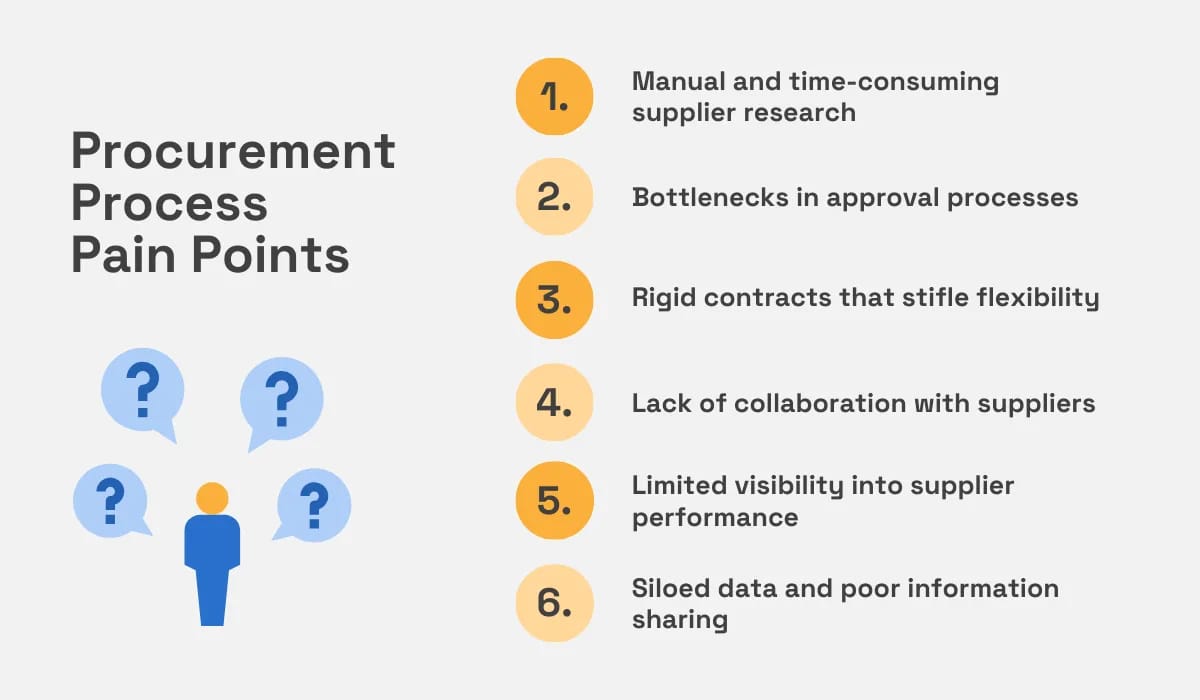
Most purchasing delays don’t come from a bad decision. They come from a request sitting somewhere invisible, stuck in a manager’s inbox, waiting on a step nobody’s tracking, with no one able to say exactly where it is or why it stopped moving. A traditional purchasing process often runs on a fixed, linear sequence: submit, wait, approve, wait again, order. When that sequence breaks down, there is no visibility into where the request is. Instead, there is just a vendor asking for a status update that nobody can give.
Agile workflow thinking offers a genuinely useful fix, and not because purchasing needs to run sprints or hold standups. What agile actually contributes is a different way of structuring work: short, visible stages instead of one long fixed plan, with everyone able to see exactly where a request sits at any moment. That single shift, from opacity to visibility, eliminates most purchasing bottlenecks before they ever become a problem.
Why Traditional Purchasing Processes Stall
A conventional purchasing process typically moves through a rigid, linear chain: request submitted, department approval, budget check, procurement review, vendor selection, final sign-off, and order placed. Each step depends on the previous one finishing cleanly. If any single link goes quiet because an approver is traveling or a budget check gets deprioritized, the entire chain stalls.
The deeper problem is not the number of steps. It is that nobody outside the person currently handling the request can see where it actually stands. Status updates require someone to actively check in, and by the time a delay is noticed, valuable time has already been lost.
What Agile Workflow Thinking Actually Changes
Agile workflows are built around a different core idea. Work moves through short, visible stages on a shared board, such as Backlog, In Progress, Review, and Done, so everyone, not just the person handling the request, can see exactly where work stands without asking.
Applied to purchasing, that structure changes the experience of the process itself. Instead of a request disappearing into someone’s inbox, it sits visibly in a “Pending Approval” or “Awaiting Budget Check” stage on a shared board. Anyone, including the requester, procurement team, or finance department, can immediately see where things stand without sending follow-up emails. Because agile workflows commonly use work-in-progress limits, purchasing teams can also identify when too many requests are accumulating in one stage before the backlog becomes a serious problem.
Where This Removes Real Bottlenecks
Visibility replaces status chasing. The biggest source of wasted time in many purchasing processes is people asking where a request is. A visual, stage-based workflow answers that question automatically because the board displays the status for everyone.
Work-in-progress limits expose bottlenecks early. If ten requests remain in Budget Review while only two move through Approved each week, the imbalance becomes immediately visible on a Kanban-style board instead of being discovered weeks later when vendors begin asking about delayed orders.
Escalation happens automatically, not through memory. In agile workflows, a request that remains in one stage for too long can automatically trigger an escalation. This removes one of the most common reasons purchasing slows down: an unavailable approver with no backup process in place.
Iteration replaces rigid planning. Purchasing requirements change over time. New vendor policies, revised approval thresholds, or changing business priorities require workflows that can adapt quickly instead of forcing every exception through a fixed process.
Applying Agile Principles Without Running Full Scrum
Purchasing teams do not need sprint planning, story points, or Scrum Masters to benefit from agile thinking. The principles that matter most apply directly to procurement.
- Map the purchasing process onto a visual board with stages such as Submitted, Budget Check, Approval, Vendor Selection, and Ordered.
- Limit the number of requests in each stage so bottlenecks become visible before they create delays.
- Automate escalations for requests that remain inactive beyond a predefined timeframe instead of relying on manual follow-up.
- Review the workflow regularly and refine approval stages or business rules based on actual purchasing activity.
- Keep workflow visibility available to everyone involved, including requesters, approvers, procurement teams, and finance.
None of these practices require software built specifically for software development teams. They require a workflow platform that supports visual tracking, intelligent routing, and automated escalations to keep purchasing activities moving efficiently.
Why This Matters as Purchasing Volume Grows
A small purchasing team can often manage requests through informal communication because bottlenecks are easy to identify. That approach becomes unsustainable as purchasing volumes increase across departments and suppliers. Every delayed request can postpone projects, frustrate vendors, or leave budgets unnecessarily tied up.
Agile visibility provides a scalable solution because it no longer depends on someone remembering to check the status of a request. The workflow itself highlights delays as soon as they begin, allowing procurement teams to resolve issues before they affect business operations.
Conclusion
Eliminating bottlenecks in the purchasing process does not require adopting every agile practice. The real value comes from applying its core principles: visible workflows, stage-based progress, automated escalations, and clear limits on where work can accumulate. When purchasing teams embrace these ideas, they replace inbox-driven approvals and constant status checks with a transparent process where everyone can instantly see where every request stands and where action is needed before delays become costly.