
For a long time, the rule was one ring per finger and one statement piece per hand. That rule is gone. Stackable diamond rings let you build a look out of several thin bands worn together, adjust it by mood or occasion, and add to it over years instead of buying everything at once.
The appeal is practical as much as aesthetic. A single wide diamond band is one decision and one price tag. A stack is a series of smaller decisions that add up to more sparkle, more texture, and more personal meaning. It also gives you room to grow the collection for anniversaries, births, and milestones without ever outgrowing what you already own.
Lab-grown stones made this style far more accessible. Building a stack means buying multiple pieces, and the savings on each one compound quickly.
Anatomy of a Good Stack
Start With an Anchor
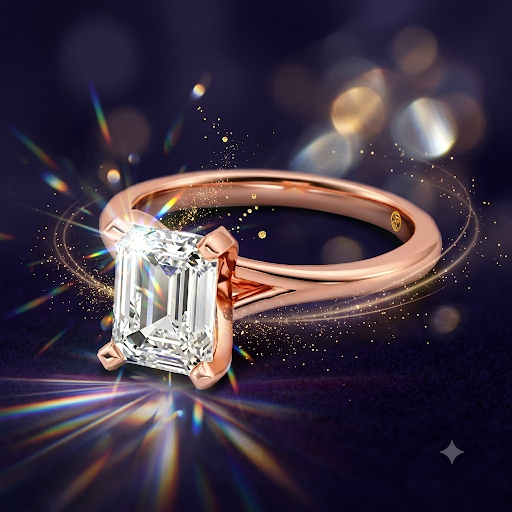
Every stack needs one piece that carries more visual weight than the rest. That is usually an engagement ring, a wider diamond band, or a single ring with a slightly larger stone. The anchor sets the metal color and the general style direction for everything else.
Without an anchor, a stack reads as clutter. With one, it reads as intentional.
Vary the Width
Three bands of identical width sitting together look like one thick band from a distance. Mixing widths creates rhythm. A common approach pairs one wider anchor with two or three thin bands, or alternates thin and medium widths across the finger.
Vary the Texture
This is what separates a stack that looks styled from one that looks accidental. Combine surfaces rather than repeating them:
- A pavé band with continuous small stones for shimmer
- A plain high polish band for a clean break between sparkle
- A twisted or rope band for movement
- A milgrain edged band for vintage texture
- A single bezel-set stone for a modern focal point
- A curved or chevron band to nest around a larger center stone
Three to five rings is the sweet spot for most hands. Beyond that, comfort and finger mobility start to suffer.
Mixing Metals the Right Way
Mixing yellow, white, and rose gold in one stack is completely acceptable and often looks better than matching everything. The trick is committing to it rather than doing it by accident.
Two approaches work reliably. The first is to let one metal dominate and use a second as an accent, roughly a two-to-one ratio. The second is to include a single ring that already combines two metals, which visually ties the whole stack together and makes every other pairing look deliberate.
What does not work is two metals in nearly equal amounts with no connecting piece. That reads as indecision rather than design.
Purity matters here too. 10K gold resists scratching best, which is worth considering since stacked rings rub against each other constantly. 14K is the standard for daily wear. 18K offers the richest color and the softest surface, so it shows contact wear a little faster in a stack.
Building Across Both Hands
Stacking does not have to happen on one finger. Splitting the collection across the ring finger, the index finger, and the middle finger creates a more balanced look and reduces wear between bands.
A simple structure many people land on:
- Anchor ring and one or two coordinating bands on the ring finger
- A single statement or bezel set band on the middle finger
- A very thin plain or pavé band on the index finger
That is one numbered list, and it is the only one you need. Everything else about stacking is flexible.
Sizing and Comfort
Multiple bands on one finger behave differently than a single ring. A few things to plan for.
Buy stacking bands in your true size rather than sizing up. Bands that are slightly loose spin, and spinning rings with stones on only part of the band end up sitting crooked all day.
Comfort fit interiors are worth the small premium. The rounded inner edge reduces the pinching feeling that stacked square-edged bands can create over a long day.
Eternity bands, meaning bands set with stones the entire way around, generally cannot be resized. If your fingers swell in heat or fluctuate seasonally, half eternity or three-quarter styles give you flexibility later.
Fingers also swell during the day. Try a stack on in the afternoon rather than first thing in the morning.
Caring for a Stack
Stacked lab-made rings touch each other constantly, and that contact is the main source of wear. A few habits keep everything looking sharp.
Rotate the order occasionally so the same two bands are not always rubbing the same spots. Take the whole stack off before the gym, before manual work, and before swimming in chlorinated water.
Clean the pieces together once a week. Warm water, mild dish soap, a fifteen-minute soak, and a soft brush around each setting. Rinse thoroughly and dry with a lint-free cloth. Grime collects fastest in the gaps between stacked bands, which is exactly where it is hardest to see and easiest to ignore.
Store the rings separately or in a lined case with individual slots. Piled loose in a dish, diamonds will scratch the polished metal of the bands beside them.
Have the settings checked professionally once a year. Pavé stones are small and set shallow, so a single loose stone is easy to miss until it is gone.
The La Joya Difference
Stackable diamond rings only work as a system if the quality is consistent across every piece. La Joya sets lab-grown stones chosen for cut performance into solid 10K, 14K, and 18K gold, so the fifth band you buy three years from now matches the first one you bought today.
Ethical sourcing is built in rather than bolted on, and guarantees plus care plans cover the prong checks and cleanings that keep a growing collection wearable for the long run.
Start Your Stack
The best stacks are built one piece at a time. Pick an anchor you love, add a contrasting texture, and let it grow from there.
Shop Now and start building a stack that tells your story.