
The first electric meter goes back to none other than Thomas Edison. He had set up power plants throughout the New York City area, and he needed a way to measure the electricity he was selling. On June 14, 1881, he was issued U.S. Patent No. 242,901 for an “Electric Meter.” Across town, his former protégé and now rival, Nikola Tessla, had different ideas. Ten years later, on June 30, 1891, Nikola was granted U.S. Patent No. 455,068 for an “Electrical Meter.”
The difference between the two meters was significant. Edison was a proponent of DC power, and that is what his power plants produced and sold. Tesla has developed AC current, so his meter measured AC. The battle between the two was more or less resolved when Tesla and his partner, George Westinghouse, won the contract to provide lighting for the Columbian Exposition in Chicago in 1893.
Metering has come quite a way in the last 120 years, and this month we cover four properties that address the latest technologies in metering. We use the term “properties” because three of them are issued patents, while one is a proprietary technology that is not patented.
U.S. Patent No. 8,295,986 for a “Net Metering Apparatus for Power Generation Systems” offers a hardware configuration from independent inventor Chandramouli Vaidyanathan. The patent describes a system that includes a power source, an energy-storage system and a meter apparatus that controls the power delivered to the grid so that the total amount of electrical power from the source and the energy-storage system does not exceed a prescribed power limit.
During periods in which power generated by a power generation unit exceeds a desired or legal power limit, the metering apparatus directs power from the power-generation unit to the grid up to the prescribed power limit, and directs excess energy to the storage system. During periods in which power from the power-generation unit is less than the prescribed power limit, the net metering apparatus directs power from the storage system to the grid by a process so that the sum of the power from the power-generation unit and the power from the storage system does not exceed the prescribed power limit.
U.S. Patent No. 9,047,757 for “Systems and Methods for Remotely Controlling an Advanced Metering Infrastructure” is a computer-implemented method for remotely controlling an advanced metering system from Florida Power & Light. The invention describes a system that collects event data from an Advanced Metering Infrastructure (AMI) controller module that is remotely controlled. A third module contains rules for the management, implementation and compliance regarding connect and disconnect orders. The third module applies the collected event data to the rules in it to aggregate, batch, filter and/or prioritize execution of individual connect or disconnect orders. It then communicates connect and disconnect orders and policy compliance verification information to the AMI controller module.
The Advanced Metering Infrastructure described in the patent differs from traditional Automatic Meter Readers in that they enable two-way communications between the meters and an AMI command and control system. An AMI command-and-control system is capable of receiving data from the AMI meter and communicating it over a network to remote locations, and the Advanced Metering Infrastructure covered by this patent includes command-and-control systems may can send data to electric meters to perform other tasks.
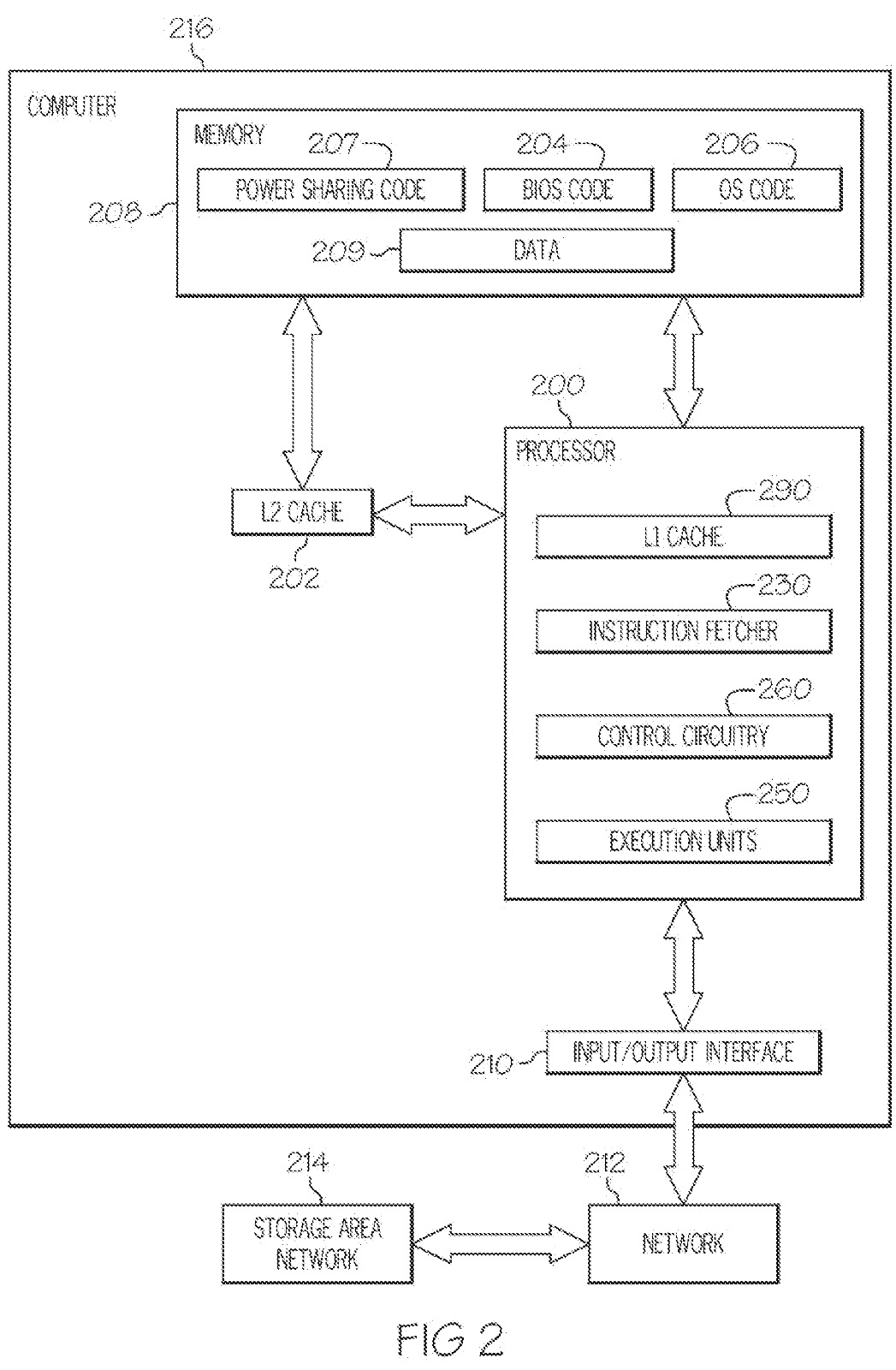
U.S. Patent No. 9,229,501 for “Distributed Grid-Interactive Photovoltaic-Based Power Dispatching” covers a system of computers that controls the distribution of surplus power among several utilities, and is assigned to none other than IBM. The invention covered by the patent includes several sites that may produce surplus power. All or some of the surplus power may be supplied to the grid according to an agreement among the power sources and the electric utility. A computer at the utility communicates with computers at each of the local power sources, and it applies the terms of the agreement to control the amount of power to be provided during a specified time of day by a power source to the utility.
There are several embodiments for this invention. The primary one is most likely a system for using power from distributed sources that is coupled to a power grid and a computer communications network. A power source generates electrical power from an alternate form of energy such as solar or wind. The computer at the distributed power source is in communication with a computer at the utility plant, and it controls the amount of power delivered from the distributed power source to the grid by controlling the output AC voltage of a converter. The system can also include a converter for producing output AC voltage to the grid from power produced by the alternate power source. The power delivered to the grid increases when the output AC voltage increases, and it decreases when the output AC voltage decreases, and the amount of power provided to the grid during a specified time of day is determined according to an agreement between the alternate power source and the utility.
The invention is an underground electric meter that can be installed pre-construction, used by the contractors during construction, and kept in place and used by the owner or tenant of the new building.
Alec Schibanoff is Vice President of IPOfferings LLC, a patent broker and IP consulting services provider.