
Cities are growing very fast in 2026. New homes are being built, and more people are moving into urban areas every day. But sometimes, roads, water systems, and services do not grow at the same speed. This creates problems like traffic, flooding, and poor services.
Think about a place where new houses are built, but roads are still small and broken. People get stuck in traffic every day. Water may not reach properly, and parks or schools may come years later. This is what happens when there is no proper planning.
This is where a priority infrastructure plan becomes very important. It helps cities grow in a smart and organized way. It makes sure that roads, water, and services are ready before people face problems.
In this article, we will explain everything about a priority infrastructure plan in very easy words. You will learn what it is, why it matters, and how it helps create better cities for everyone.
What Is a Priority Infrastructure Plan?
A priority infrastructure plan is a simple plan made by the government to decide what infrastructure is needed. It shows what to build, where to build it, and when it should be done. This helps cities grow in a clear and planned way.
Instead of building things randomly, this plan creates order. It connects roads, water systems, power, and public services in one system. Everything is planned step by step so that nothing is missed or delayed.
You can think of a priority infrastructure plan like a roadmap for a city. Just like a travel map shows your path, this plan shows how a city will grow in the future. It helps planners avoid confusion and make better decisions.
This plan also helps manage future needs. It looks at how many people will live in a city and what they will need. So, services are ready before problems start, not after.
Why a Priority Infrastructure Plan Is Important
A priority infrastructure plan is important because it prevents many daily problems. Without planning, cities face traffic jams, water shortages, and poor services. These problems make life stressful and slow.
Imagine going to work every day and getting stuck in traffic for hours. Or living in an area where water supply is not reliable. These issues happen when infrastructure is not planned properly.
With a priority infrastructure plan, cities can avoid these problems. Roads are built on time, water systems are strong, and services are ready. This makes daily life smoother and easier for everyone.
It also helps keep cities safe and healthy. Good drainage prevents flooding, and proper services protect people’s health. So, this plan is not just about buildings, but also about better living.
What Things Are Included in the Plan
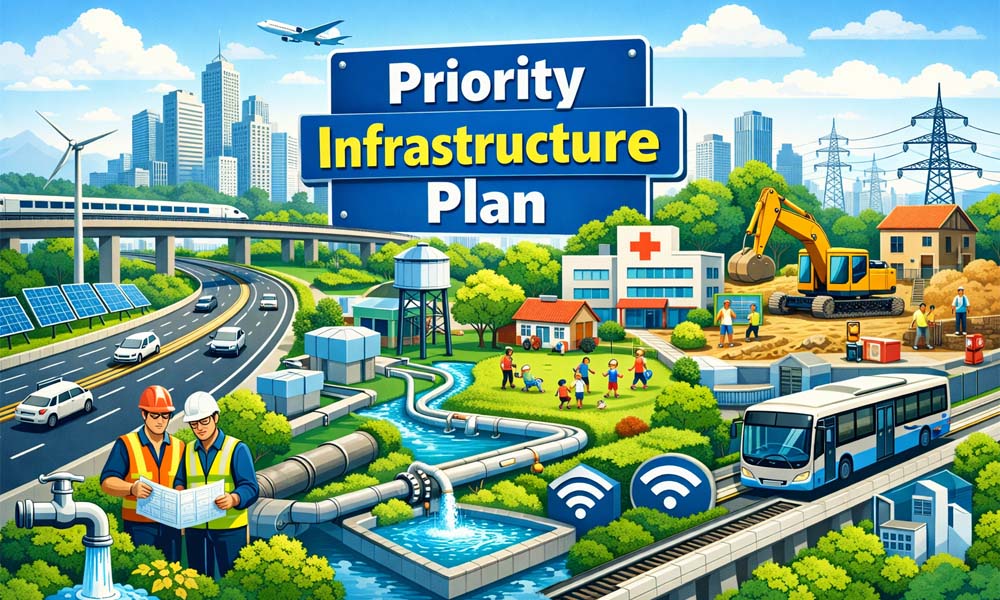
A priority infrastructure plan includes many important systems that people use every day. One of the main parts is transport, like roads, buses, and rail systems. These help people move easily from one place to another.
Water systems are also very important. These include clean water supply, drainage, and sewer systems. Without them, cities cannot function properly, and people may face serious health problems.
Energy and digital systems are also part of the plan. Electricity keeps homes and businesses running, while internet and digital systems support communication and modern work. In 2026, these systems are more important than ever.
The plan also includes social infrastructure like schools, hospitals, and parks. These places improve quality of life and help communities grow in a healthy way. So, the plan covers everything needed for a complete and balanced city.
Main Parts of a Priority Infrastructure Plan
A priority infrastructure plan is built using several important parts. One key part is population forecasting. This means estimating how many people will live in an area in the future. This helps planners understand future demand.
Another important part is land use planning. This shows where homes, businesses, and public spaces will be built. It helps decide where infrastructure is needed the most.
The plan also includes priority areas. These are places where development will happen first. Services are focused in these areas to make growth more efficient and organized.
Finally, the plan sets service standards and timelines. Service standards define how good the services should be, like water pressure or road capacity. Timelines show when projects will be completed, so everything happens on time.
How a Priority Infrastructure Plan Works (Step by Step)
A priority infrastructure plan works through a clear step-by-step process. First, planners collect data about the city. This includes population numbers, land use, and current infrastructure conditions.
Next, they study future growth. They try to understand how many people will move into the city and what services they will need. This helps them prepare for future demand.
After that, they find gaps in the system. For example, they check if roads are too small or if water systems are weak. Then, they decide which projects are most important.
Finally, they plan funding and start building projects step by step. Each step follows a clear plan, which reduces mistakes and delays. This makes the whole process smooth and effective.
How It Helps Cities Grow in a Better Way
A priority infrastructure plan helps cities grow in a smart and controlled way. Without planning, cities can grow too fast and become crowded. This leads to stress on roads and services.
With proper planning, growth happens in the right places. New areas are developed where infrastructure can support them. This keeps cities organized and easy to manage.
It also supports compact city design. This means homes, jobs, and services are closer together. People do not have to travel long distances, which saves time and energy.
In simple words, a priority infrastructure plan makes sure that cities grow in a balanced and efficient way. It helps create places where people can live comfortably without facing daily problems.
How It Improves Daily Life for People
A priority infrastructure plan makes everyday life much easier for people. When roads are planned well, traffic becomes smoother. People can reach work, school, and markets on time without stress.
It also improves basic services like water and electricity. Clean water reaches homes regularly, and power systems work better. This makes daily life safe and comfortable for families.
Think about living in a place with good parks, schools, and hospitals nearby. This is possible because of proper planning. People do not have to travel far for basic needs.
In short, a priority infrastructure plan improves quality of life. It saves time, reduces stress, and makes cities more enjoyable to live in.
How It Supports the Economy
A priority infrastructure plan plays a big role in growing the economy. When new roads, bridges, and systems are built, many jobs are created. Workers, engineers, and local businesses all benefit from these projects.
Good infrastructure also helps businesses grow. When transport is smooth and services are reliable, companies can work better. They can move goods faster and reach more customers without delay or extra cost.
Think about a business owner who depends on good roads and power. If roads are broken or power is unstable, work becomes slow. But with a priority infrastructure plan, these problems are reduced, and businesses can succeed.
In simple words, better infrastructure means a stronger economy. It supports jobs, attracts investment, and helps cities grow in a stable and healthy way.
How It Helps the Environment
A priority infrastructure plan also protects the environment. It helps cities use resources in a smart way. This means less waste, less pollution, and better use of energy and water.
For example, proper drainage systems can prevent flooding. Green spaces like parks and trees can reduce heat and improve air quality. These small changes make a big difference in daily life.
In 2026, climate change is a big concern. Cities face heavy rain, heatwaves, and other risks. A priority infrastructure plan helps prepare for these challenges by building strong and safe systems.
So, this plan not only supports people but also protects nature. It helps create cleaner, safer, and more sustainable cities for the future.
Who Plans and Manages Infrastructure
A priority infrastructure plan is created and managed by different groups. Governments play the biggest role. They make rules, plan projects, and ensure everything runs smoothly.
Urban planners and engineers also help a lot. They study data, design systems, and make sure everything works properly. Their job is to turn ideas into real projects.
Private companies and investors can also be part of the process. They may help build or fund projects. This makes it easier to complete large and costly developments.
Community members are important too. People share their ideas and problems. This helps planners understand real needs and create better solutions for everyone.
How Infrastructure Projects Are Funded
Building infrastructure needs a lot of money. A priority infrastructure plan helps manage this money in a smart way. Governments use public funds to start and support many projects.
Developers also contribute money. When new buildings are made, developers may pay charges. This helps cover the cost of roads, water systems, and other services.
Sometimes, private companies work with the government. This is called a partnership. It helps share costs and risks, making projects easier to complete.
In simple words, funding comes from many sources. A priority infrastructure plan makes sure money is used wisely so projects can be completed on time.
Problems and Challenges in Planning
Even with a good priority infrastructure plan, challenges can still happen. One common problem is lack of funding. If money is not enough, projects may be delayed or stopped.
Another issue is poor coordination. Different agencies may not work well together. This can cause confusion and slow down progress.
Fast population growth can also create pressure. Cities may grow faster than expected, making it hard to keep up with demand. This can lead to gaps in services.
However, a strong priority infrastructure plan helps reduce these problems. It gives clear direction and helps manage risks in a better way.
New Trends in Infrastructure Planning (2026)
In 2026, infrastructure planning is changing fast. A priority infrastructure plan now includes smart technologies. Cities use data and digital tools to improve planning and services.
Artificial intelligence is also being used. It helps predict future needs and improve decision-making. This makes planning faster and more accurate.
Clean energy is another big trend. Cities are focusing on solar power and other green energy sources. This helps reduce pollution and protect the environment.
Digital systems like internet and data centers are also growing. A modern priority infrastructure plan must include these systems to support today’s digital world.
Real Examples of Infrastructure Planning
Many cities around the world use a priority infrastructure plan to improve life. Smart cities use technology to manage traffic, energy, and services more efficiently.
Some countries invest heavily in roads, transport, and energy systems. These projects help support growing populations and improve daily life for citizens.
In some places, old areas are redesigned with better infrastructure. This includes new roads, parks, and modern services. These changes make cities more attractive and livable.
These real examples show how planning makes a difference. A good priority infrastructure plan can transform cities in a positive way.
Conclusion
A priority infrastructure plan is one of the most important tools for modern cities. It helps plan roads, water, energy, and services in a clear and organized way.
Without proper planning, cities can face serious problems like traffic, flooding, and poor services. But with a strong plan, these problems can be avoided.
This plan supports people, businesses, and the environment together. It helps create cities that are safe, clean, and easy to live in.
In the end, a priority infrastructure plan is not just about building systems. It is about building a better future for everyone.
(FAQs)
What is a priority infrastructure plan in simple words?
A priority infrastructure plan is a simple guide made by the government to decide what things like roads, water systems, and services should be built first. It helps cities grow in a planned and organized way so people do not face problems later.
Why is a priority infrastructure plan important for cities?
A priority infrastructure plan is important because it prevents problems like traffic, flooding, and poor services. It makes sure everything is ready before people need it, which helps cities stay clean, safe, and easy to live in.
What things are included in a priority infrastructure plan?
A priority infrastructure plan includes roads, transport systems, water supply, drainage, electricity, internet, schools, hospitals, and parks. These are all the basic things people need for daily life in a city.
Who creates a priority infrastructure plan?
A priority infrastructure plan is usually created by government planners, engineers, and experts. They also take ideas from local people to understand real problems and make better decisions.
How does a priority infrastructure plan help daily life?
A priority infrastructure plan makes daily life easier by improving roads, water supply, and services. It saves time, reduces stress, and helps people live comfortably with better access to schools, hospitals, and parks.
How is a priority infrastructure plan funded?
A priority infrastructure plan is funded through government budgets, developer payments, and sometimes private companies. All these sources help collect enough money to build and maintain infrastructure projects.
How long does a priority infrastructure plan last?
A priority infrastructure plan usually covers around 10 to 15 years. However, it is updated regularly to match new changes, population growth, and future needs.
Can a priority infrastructure plan help reduce traffic problems?
Yes, a priority infrastructure plan helps reduce traffic by planning better roads, public transport, and travel routes. It makes sure transport systems are ready before traffic becomes a big problem.
What challenges can affect a priority infrastructure plan?
A priority infrastructure plan can face challenges like lack of money, poor planning, fast population growth, or delays in projects. But good planning helps reduce these risks and keeps projects on track.
Why is a priority infrastructure plan important in 2026?
In 2026, a priority infrastructure plan is very important because cities are growing fast. It helps manage new technology, climate change, and rising demand for services, making cities smarter and more future-ready.
You may also read: Merfez: Why Everyone Is Talking About This Modern Lifestyle Trend