
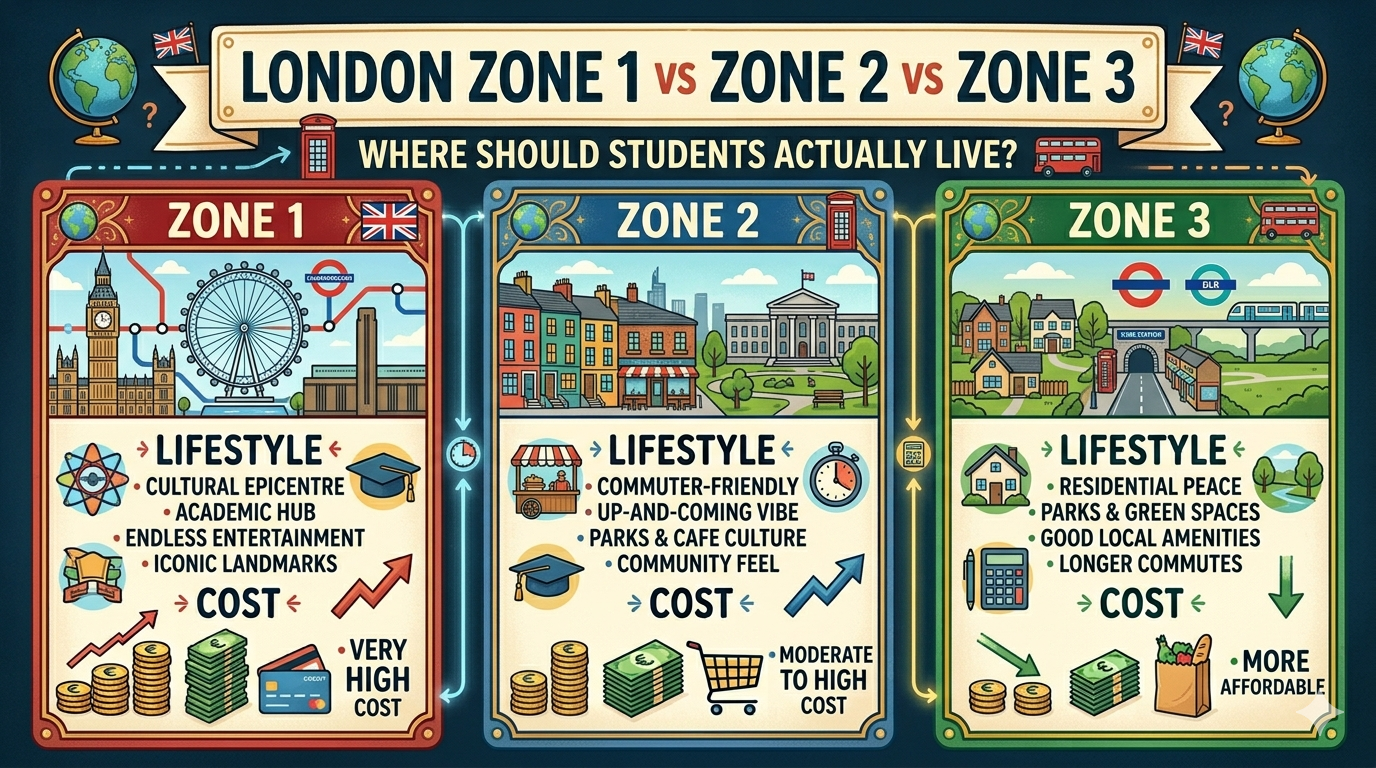
Heading to London for higher education is an exciting experience. But at the same time, it also highlights the importance of understanding the geographical and transportation systems of the city. That is why London is divided into different Transport for London (TfL) zones. They act like circles that are spreading out from the city centre.
The biggest decision for people searching for student accommodation London usually comes down to choosing between Zone 1, Zone 2, or Zone 3 areas. And this is what we are going to talk about. Furthermore, to make the best choices, students can opt for platforms like University Living to compare properties and understand which zone best suits their lifestyle and budget. Let’s get into it!
Zone 1: The Heart of the Action (Premium Luxury)
Zone 1 is known for covering central London areas such as Bloomsbury, Kings Cross, Shoreditch, and Holborn. Being here usually means that you will be surrounded by famous landmarks, museums, theatres, restaurants, and nightlife.
1. The Student Lifestyle
Those who are living in Zone 1, get to enjoy the convenience of being close to several top universities such as University College London (UCL), King’s College London (KCL), and the London School of Economics (LSE). The majority of students here walk or cycle to the lectures. This helps them save a lot of commute time and makes it easier to enjoy London nightlife without worrying about late-night transport.
2. Financial Reality and Stats
Zone 1 is the most expensive area for students but it is also one of the best London Zone for students. Rents here usually range between £1,000- £1,600+ per month, while luxury private student studios can cost between £350 and £550+ per week. Rent prices in London also increased by 5.5% last year, making Zone 1 affordable mainly for students with higher budgets.
Zone 2: The Ultimate Sweet Spot (Balance & Culture)
Zone 2 includes popular areas of central London such as Brixton, Camden, Finsbury Park, Stratford, and Greenwich.
1. The Student Lifestyle
For those living in Zone 2 student housing, they get a perfect balance between affordability and city life. One will often find themselves surrounded by strong local communities, multicultural food spots, vintage markets, music venues, and nightlife. Moreover, students also enjoy green spaces like Finsbury Park and Greenwich Park, while still staying close to universities through Tube connections.
1. Financial Reality and Stats
Once you are a bit outside central London, it will help you lower your rent cost significantly. Shared accommodation and en-suite rooms in Zone 2 generally cost around £160-£220 per person per week. And in areas like Stratford and Bethnal Green, monthly student rent averages around £650-£900. Students also spend around £115-£186 monthly on a TfL Student Travelcard for Zones 1-2, but the lower rent usually balances out transport costs.
Zone 3: The Budget Haven (Space & Savings)
Zone 3 usually includes more residential areas such as Wembley, Acton, Walthamstow, and Forest Gate.
1. The Student Lifestyle
This Zone is especially popular among students who are looking for affordable rent but more living space. That is why the accommodation here often includes larger bedrooms, bigger kitchens, and even gardens. The environment here is quieter and more relaxed than inner London. However, one will often find themselves spending more time commuting, especially after late-night social events.
2. Financial Reality and Stats
Zone 3 student rooms offer the lowest costs. Their rents usually range between £140- £180 per person per week. Another thing to note here is, the demand for co-living spaces in Zone 3 has increased by 18% year-on-year as you will often find students looking for cheaper alternatives to central London. However, commuting costs can increase if students travel to central campuses daily.
The Final Verdict: Where Should You Live?
| Factor | Zone 1 | Zone 2 | Zone 3 |
| Average Rent / Month | £1,200+ | £700 – £1,000 | £550 – £800 |
| Travel Commute | 0 – 15 mins | 15 – 30 mins | 35 – 50 mins |
| Vibe / Environment | Busy & Touristic | Trendy & Cultural | Calm & Residential |
Conclusion
Finding student accommodation UK, especially in London usually requires careful planning. There is no single “best” zone here as the right choice is completely dependent on your budget, university location, and lifestyle. Zone 1 offers luxury living and almost no commute but comes with very high rent prices. On the other hand, Zone 3 gives students larger and cheaper rooms but requires longer travel times. And lastly, for most students, Zone 2 offers the best balance between affordability, social life, and convenient commuting.
Before booking accommodation, students should compare rent, transport costs, and travel times carefully. Booking early is also important because London’s student housing market is highly competitive and prices rise quickly during peak intake seasons.