
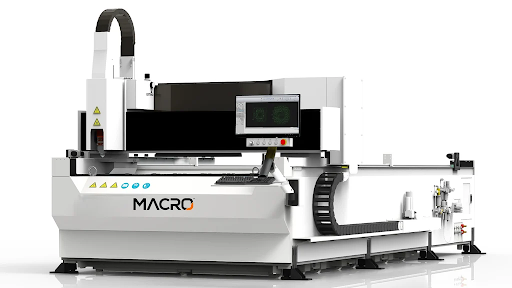
In the modern manufacturing landscape, the fiber laser machine has emerged as a pivotal technology transforming the way industries approach cutting and engraving tasks. Offering unparalleled precision, speed, and versatility, fiber laser machines are increasingly adopted across various sectors to enhance productivity and product quality.
One of the primary advantages of a fiber laser machine is its ability to deliver high-quality cuts on a wide range of materials, including metals like steel, aluminium, and copper. This capability makes it an indispensable asset in fabrication, metalworking, and manufacturing industries where precision is paramount.
Understanding Fiber Laser Technology
Fiber laser machines utilize a solid-state laser source whereby the laser light is generated within a flexible optical fibre that is doped with rare-earth elements such as ytterbium. This configuration allows for highly efficient laser generation with minimal energy loss, contributing to superior operational efficiency and lower maintenance requirements compared to traditional lasers.
The coherent light emitted by the fiber laser is focused into a fine, high-energy beam capable of melting or vaporising materials with extreme accuracy. The beam’s small spot size allows for intricate and detailed cuts, which are essential in industries requiring tight tolerances and clean edges.
Key Advantages of Fiber Laser Machines
Precision and Quality
The high beam quality of fiber lasers results in minimal heat-affected zones on the material being processed, reducing deformation and preserving the integrity of the workpiece. This precision ensures that complex shapes and patterns can be produced consistently without compromising structural strength.
Speed and Efficiency
Fiber laser machines operate at high cutting speeds, enabling faster production cycles. The technology also offers rapid start-up times and reduced downtime, which significantly improves overall operational efficiency and throughput in manufacturing environments.
Cost-Effectiveness
Due to their high electrical efficiency and low maintenance needs, fiber laser machines often present a lower total cost of ownership compared to CO2 lasers. These savings, combined with increased productivity, position fiber laser technology as an economically sound investment for businesses.
Applications in Various Industries
Fiber laser machines are highly adaptable, finding applications across numerous sectors. For example, in the automotive industry, they are used for manufacturing components that require exact dimensions and smooth finishes. In aerospace, the technology supports the fabrication of parts with stringent quality standards and lightweight requirements.
Additionally, the electronics industry benefits from the ability to make clean, precise cuts on delicate components, while the medical field utilises fiber laser machines for manufacturing surgical instruments and devices that demand exceptional accuracy.
Choosing the Right Fiber Laser Machine
Selecting an appropriate fiber laser machine depends on several factors including the types of materials to be processed, required thickness capabilities, and the desired cutting speed. Furthermore, considerations such as machine size, software compatibility, and after-sales support should be taken into account to ensure optimal integration into existing manufacturing lines.
Maintenance and Operational Best Practices
To maximise the lifespan and performance of a fiber laser machine, regular maintenance is crucial. This includes ensuring that the optical components are clean, checking for proper cooling system function, and verifying alignment of the laser beam. Operators should also be trained to monitor machine parameters and respond to any anomalies promptly.
Implementing these maintenance strategies not only reduces the likelihood of unexpected downtime but also preserves cutting precision and consistency over time.
Environmental and Safety Considerations
Fiber laser machines generally consume less energy compared to conventional laser cutters, reflecting positively on the environmental footprint of manufacturing operations. Nonetheless, safety precautions are vital when operating such equipment due to the high-energy laser beams involved.
Appropriate protective gear, such as safety glasses designed for laser wavelengths, must be worn. Enclosures and interlocking systems help prevent accidental exposure to laser radiation, safeguarding personnel from potential harm.
Future Trends and Innovations
Research and development in fiber laser technology continue to drive innovation, with advancements focused on increasing power outputs, improving beam quality, and integrating smart automation features. These developments promise to further enhance the capabilities of fiber laser machines, making them even more integral to sophisticated manufacturing processes.
Furthermore, integration with Industry 4.0 enables real-time data analytics and predictive maintenance, optimising production workflows and reducing operational costs.
Conclusion
The fiber laser machine represents a significant evolution in laser cutting technology, offering exceptional precision, efficiency, and adaptability across diverse industry applications. Its ability to handle complex tasks with speed and accuracy makes it an essential tool for manufacturers seeking competitive advantage through innovation and quality.
Businesses considering automation in their fabrication processes will benefit greatly from incorporating fiber laser machines, capitalising on their reliability, cost-effectiveness, and environmental advantages.