
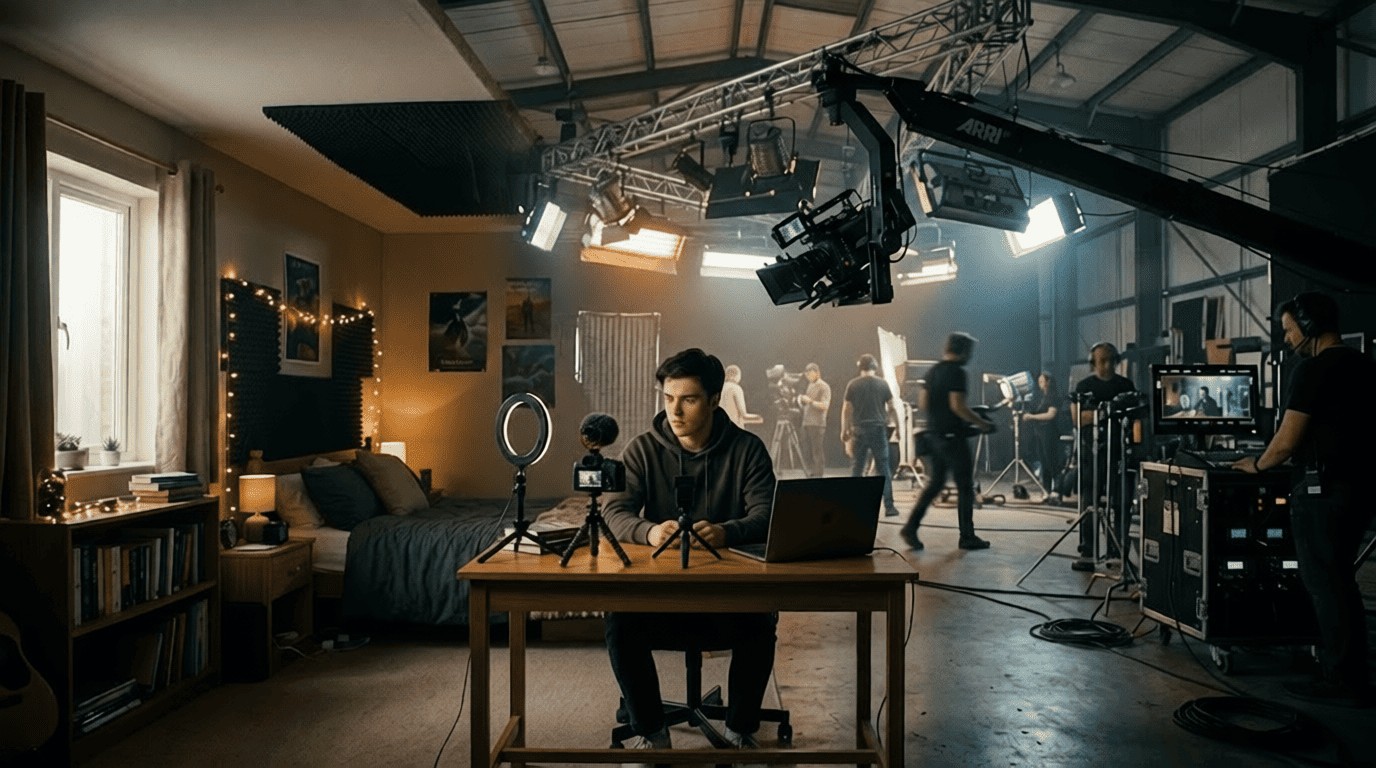
YouTube has always been a game of consistency, creativity, and timing. For years, creators had to balance ambition with practical limits. Costs of equipment, editing and production complexity often determined how frequently someone could publish. Even the most committed creators had a limit on the amount of video content they could actually create.
The ceiling is shifting. The growth of an AI video generator isn’t just improving the way videos are created. It is changing the economics of content creation itself. The old model of investing a lot of money and time can now be approached with a more flexible and scalable mindset. Creators are no longer bound by the same production constraints, and that is changing how channels grow.
Output Volume Is No Longer Limited by Production
One of the major innovations is the capability to boost output while reducing efforts at the same time. Traditionally, creating more videos meant investing more time, hiring additional help, or lowering quality.
An AI video generator changes this equation. It allows creators to create videos faster, and maintain a constant quality. Higgsfield plays a crucial role in this process as it allows creators to have more control over how their videos are constructed, rather than just generating random outputs.
This is especially relevant considering how growth functions on YouTube. Channels that consistently publish are more successful in the long run. The more uploads, the better chances for engagement, discovery and retention of the audience.
Many creators are thinking differently about the size of their work. Instead of focusing on how many contents they can handle, they are now asking how efficiently they can create it.
This is where the concept of YouTube creator — output volume and cost angle. Increasing output without increasing cost at the same pace changes the entire growth strategy.
Cost Structures Are Becoming More Flexible
Video production has traditionally required upfront investment. Cameras, lighting, editing software, and even location costs added up quickly. For many creators, these expenses limited experimentation.
An AI video generator reduces that barrier. Instead of relying on physical resources, creators can focus on digital workflows. Higgsfield supports this by offering a workspace where video creation, refinement, and iteration can happen without switching between multiple environments.
This does not just reduce costs. It changes how creators think about risk. Trying new formats, testing different styles, or launching new content series becomes more accessible.
When the cost of experimentation drops, creativity tends to increase. Creators are more willing to explore ideas because the downside is smaller.
Creative Control Is Replacing Trial and Error
Speed alone is not enough to improve results. Without control, faster production can lead to inconsistent content. That is where direction becomes essential.
An AI video generator provides the foundation, but tools like Higgsfield allow creators to guide the output with precision. Features such as Cinema Studio 3.0 introduce real optical physics, while Motion Control enables detailed animation that can extend up to 30 seconds.
This level of control allows creators to move beyond guesswork. Instead of generating multiple versions and hoping one works, they can shape the outcome from the beginning.
This reduces wasted effort and improves efficiency. Over time, that efficiency compounds, allowing creators to focus more on storytelling and less on fixing inconsistencies.
Scaling a Channel Without Expanding a Team
Scaling content has always been tied to team size. More videos usually meant more editors, more planning, and more coordination. For many creators, this created a natural limit on growth.
An AI video generator changes that relationship. It allows creators to scale output without proportionally increasing team size. Higgsfield supports this by bringing multiple capabilities into a single environment, reducing the need for separate tools and workflows.
Collaboration also becomes more streamlined through features like Higgsfield Chat, where teams can work together in real time. This helps maintain alignment while still allowing for faster production.
The result is a more efficient content pipeline. Creators can produce more without the complexity that usually comes with scaling.
Consistency Drives Long-Term Growth
YouTube rewards consistency, both in publishing frequency and visual identity. Channels that maintain a clear style and predictable output tend to build stronger audience connections.
An AI video generator makes it easier to maintain that consistency, but only when combined with structured workflows. Higgsfield helps creators maintain visual continuity through features like Soul ID, which ensures consistent character creation across videos. This is particularly important for channels that rely on recurring formats or recognizable visual elements.
Creators who focus on consistent output and identity often see stronger long-term performance. Resources like video marketing strategies highlight how consistency and frequency work together to improve engagement.
New Opportunities for Smaller Creators
One of the most interesting shifts is how these tools level the playing field. Smaller creators can now compete more effectively with larger channels.
An AI video generator reduces the gap between resources and output. Higgsfield allows creators to produce content that feels polished and intentional without requiring large teams or expensive setups.
This creates new opportunities for niche creators, educators, and independent storytellers. They can focus on ideas and execution rather than being limited by production constraints.
As a result, the barrier to entry continues to lower, but the quality standard continues to rise.
Rethinking What It Means to Be a Creator
The role of a creator is evolving. It is no longer just about recording and editing. It is about directing, structuring, and optimizing content.
An AI video generator supports this shift by handling repetitive tasks, while Higgsfield enables creators to focus on higher-level decisions. This includes pacing, narrative flow, and visual coherence.
Creators are becoming more like directors. They are guiding the process rather than simply executing it.
This shift also changes how success is measured. Instead of focusing only on production effort, creators can focus on outcomes such as engagement, retention, and growth.
Conclusion
The costs of YouTube production are evolving in meaningful ways. Production is getting more efficient. Costs are changing to be more flexible. Production is growing, but not with the same amount of effort.
An AI video generator is a key element in this process, however the true impact is the combination of generation and direction. Higgsfield enables creators to take control of their workflows, maintain consistency, and scale their content more effectively.
As these changes continue to evolve, the benefit will go to creators who know how to utilize these tools in a strategic manner. The aim is not simply to produce more videos. The goal is to make videos efficiently, consistently and with a clear purpose.