
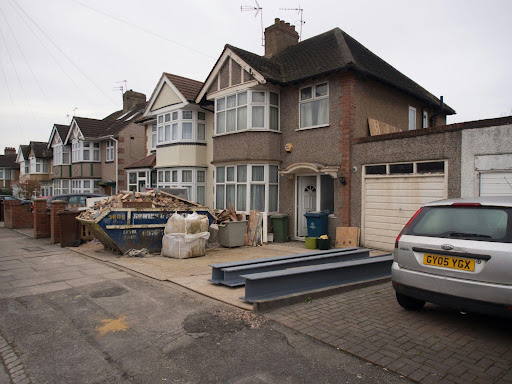
Every homeowner who has been through a renovation has a version of the same story. The project was progressing well, the trades were on schedule, and then something slowed everything down that had nothing to do with the work itself. In a significant proportion of those stories, the something was waste. Accumulated demolition debris blocking the area where the next trade needed to work. A skip bin that filled on day three of a two-week project. Materials that needed to go somewhere before the installation could begin and nowhere ready to receive them.
Renovation waste is one of the more reliably underestimated variables in a home improvement project, and it’s one of the few variables that affects every phase of the work rather than only the specific phase that generates it. Getting it right doesn’t require significant additional budget or complex logistics. It requires treating waste as a planned input rather than an afterthought, and making a small number of decisions before the project starts that would otherwise be made reactively when the problem is already present.
Why Waste Accumulates Faster Than Most Homeowners Expect
The volume of waste that a renovation generates is almost always larger than the pre-project estimate, and the rate at which it accumulates is almost always faster. Both of these realities stem from the nature of demolition and construction rather than from poor planning, but understanding them before the project begins allows the waste management approach to be calibrated to the actual volume rather than the imagined one.
Demolition is the most dramatic waste-generating phase of any renovation, and its output is immediate and substantial. The kitchen that was stripped back to the walls in a single day of work leaves a pile of cabinetry, benchtops, appliances, plasterboard, and flooring that represents the entirety of what the room contained. There is no gradual accumulation across the demolition phase. There is a kitchen, and then there is a pile of everything that was a kitchen, and both conditions exist on the same day. The waste management infrastructure that was going to be organised tomorrow needs to have been organised yesterday.
The installation phase generates a different kind of waste that accumulates more gradually but no less significantly. Packaging from appliances, fixtures, and materials arrives with every delivery. Off-cuts from timber, tiling, and flooring accumulate at every workstation. Materials that were ordered with appropriate overage remain after the job is complete. This is lighter and less immediately dramatic waste than demolition debris, but it occupies significant volume across the installation phase and requires a destination throughout the work rather than only at its end.
The overlap between phases adds to the accumulation rate in ways that a sequential project plan doesn’t fully capture. In most renovations, demolition in one area overlaps with installation in another, which means waste from both phases is being generated simultaneously. The bin that was sized for the demolition waste may already be significantly occupied when the installation off-cuts begin arriving.
The Specific Ways Waste Slows a Renovation Down
The ways in which accumulated renovation waste creates friction across a project are specific enough to be worth naming, because they’re the outcomes that waste planning prevents rather than manages after the fact.
Trade productivity is the most direct casualty. A trade that arrives to work in a space that contains waste from the preceding phase has to make a decision before they can start work: move the waste themselves, ask someone else to move it, or work around it. None of these options costs nothing. Moving waste takes time that wasn’t in the schedule. Asking someone else to move it requires coordination that the project manager didn’t plan for. Working around it reduces the quality and speed of the work and creates conditions for errors that a clear workspace wouldn’t have produced.
Sequential dependency is the mechanism that turns trade productivity into project delay. Renovation projects are sequenced so that each phase creates the conditions for the next. When waste from one phase occupies the space where the next phase needs to work, the sequence breaks down at exactly the point where it needs to flow. The electrician who can’t start the first fix until the demolition waste has been cleared is an electrician whose start time is determined by the waste logistics rather than the project schedule.
Site access is a practical dimension of waste accumulation that affects the renovation beyond the specific work areas. Waste that occupies the path between the street and the work areas reduces the efficiency of every delivery, every material movement, and every tool transfer across the project. In tight residential sites where access is already constrained, waste in the access path doesn’t just slow delivery. It stops it until the path is cleared.
Safety obligations create mandatory pauses when accumulated waste has created hazards that the principal contractor or the homeowner is responsible for addressing before work can continue. These pauses aren’t discretionary. They’re responses to conditions that can’t be ignored without liability consequences, and they arrive at the point where the renovation is generating the most waste and the most pressure to keep moving.
Booking skip bins for renovation waste through a provider with same-day delivery, a full range of bin sizes from two cubic metres through to hook bins for larger projects, and online booking in under two minutes removes the coordination overhead that managing waste across multiple phases would otherwise require. The infrastructure is in place from day one, waste moves off the site progressively rather than accumulating, and the project proceeds without the friction that an undersized or late-arriving bin consistently produces.
The Simple Planning Steps That Prevent the Problem
The waste planning decisions that produce a renovation that runs without waste-related friction are fewer and more straightforward than the problems they prevent, and all of them are most effective when they’re made before the project starts rather than in response to a bin that’s full or a site that’s blocked.
The bin arrives before the demolition begins. This is the single most impactful waste planning decision and the most commonly deferred. The renovation that has a bin in place on day one has somewhere for the demolition output to go from the first hour of work. The renovation that orders a bin after the demolition has begun has waste that has already accumulated before the destination for it exists, and that waste creates friction for every subsequent day until it’s resolved.
The bin size is chosen based on the project’s actual waste profile rather than a conservative estimate designed to minimise the hire cost. The difference between a bin that suits the project and one that fills on day three is the cost of a second hire versus the cost of a renovation that paused while the waste situation was resolved. The larger bin consistently represents better value for projects of any significant scale, not because the additional capacity is always needed but because the cost of needing it and not having it is consistently more than the cost of having it and not needing all of it.
The collection schedule is planned to align with the project’s phase transitions rather than left to chance. A collection timed to clear the demolition waste before the installation trades begin gives those trades the clear working environment they need without requiring the homeowner or project manager to coordinate an emergency collection at the moment when everything else on the project is also demanding attention.
Prohibited materials are identified before the bin is loaded rather than discovered when the provider rejects the load at collection. The materials that can’t go in a standard skip bin, old insulation, fibro cement sheeting, asbestos, chemicals, and gas bottles, are worth identifying during the pre-renovation inspection rather than during the demolition when they’re already in hand and the project timeline is running.
Why Planned Waste Removal Produces a Different Project Experience
The renovation that planned for waste from the outset is a renovation where the project manager and the homeowner are focused on the work rather than the waste throughout the project’s duration. The trades have the working conditions that allow them to work efficiently. The schedule progresses as planned because the sequential dependencies between phases aren’t interrupted by waste that needed to be somewhere before the next phase could begin. The site is safe because waste isn’t accumulating in areas where it creates hazards.
None of these outcomes requires significant additional effort or budget relative to the renovation as a whole. They require the specific decisions described above, made before the project starts rather than after the problems they prevent have already arrived. The bin before the demolition. The size that suits the project. The collection schedule that serves the phases. The prohibited materials identified in advance.
The renovation that got the waste right from the beginning runs differently. The waste doesn’t appear in the account of how the project went because it was never the problem the project had to solve. That absence is the most accurate measure of waste planning done well: the thing that would have been the bottleneck didn’t become one, and nobody remembers it because there was nothing to remember.