
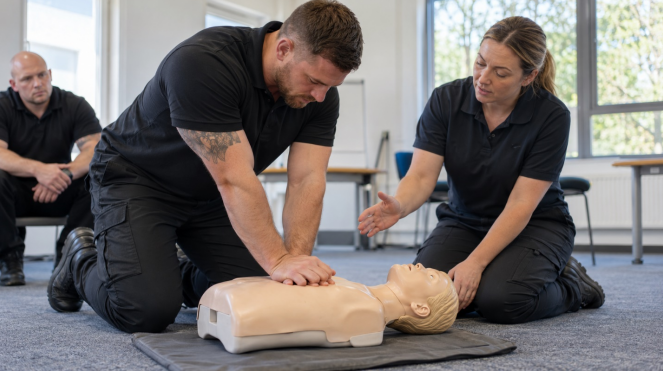
For experienced door supervisors, licence renewal can feel like another task to fit around shifts. Yet booking an SIA door supervisor refresher course with first aid is also an opportunity to revisit the decisions that matter when an ordinary evening becomes an emergency. From recognising a vulnerable customer to responding when someone collapses, the role demands more than controlling entry.
A busy venue can change within seconds. A customer who appears intoxicated may be experiencing a medical problem. Someone sitting alone outside may need assistance rather than an instruction to move on. A disturbance can leave an injured person surrounded by a crowd, making communication and access difficult.
These situations explain why first aid and door supervision belong in the same conversation. Security staff need to recognise when a situation requires urgent help and respond within their training.
What Has Changed for Door Supervisor Renewals?
Since 1 April 2025, door supervisors renewing their SIA licence have needed the relevant refresher qualification. They must complete an Emergency First Aid at Work qualification, or an accepted equivalent, before taking the refresher training.
For licence holders, this means checking training requirements before choosing a renewal date. Holding an existing licence does not remove the need to meet the current criteria.
The practical distinction is between completing training and obtaining a licence. Passing a course provides the required qualification; the licence application remains a separate process that involves SIA checks.
Leaving everything until the final weeks creates unnecessary pressure. Course availability, assessment results and application processing all need space in the diary.
Experience Helps, but Practical Skills Need Revisiting
An experienced door supervisor may be comfortable managing queues, explaining entry policies and recognising the early signs of conflict. However, confidence in routine duties does not necessarily translate into confidence during a medical emergency.
Some skills may rarely be used between training courses. Revisiting them gives learners an opportunity to practise, ask questions and correct details they may have forgotten.
Consider a customer who suddenly becomes unresponsive near a venue entrance. The team must manage several priorities: getting appropriate assistance, communicating clearly, keeping access available and supporting the person within the limits of their training.
A refresher session provides a controlled setting in which to examine those responsibilities. It also lets staff consider how their actions fit into the wider response.
The useful question is not simply, “Have I learned this before?” It is, “Could I apply it calmly during my next shift?”
Why Combining First Aid and Refresher Training Can Help
For someone who needs both qualifications, arranging first aid alongside refresher training can make the booking process easier to manage. It provides a clearer schedule and an opportunity to confirm that the first aid element takes place before the training that requires it.
Providers such as SecurexPS.co.uk offer a combined door supervisor refresher and first aid option in London. Learners considering this route should check the timetable, entry requirements, and any required preparation before attending.
The value of a combined booking depends on the learner’s circumstances. Someone with an existing first aid certificate should ask whether it meets the course requirements before paying for another qualification.
Useful questions include:
- Is my existing first aid qualification acceptable?
- What identification and certificates should I bring?
- Is there any online learning or workbook to complete beforehand?
- Which practical assessments are included?
- When should I expect results and qualification confirmation?
Getting these answers early helps prevent avoidable problems on the first day.
Recognising Vulnerability Is Part of the Job
Door supervision involves frequent contact with people whose circumstances are unclear. A person may be distressed, separated from friends, affected by alcohol or struggling to explain what has happened.
Making an immediate assumption can lead to a poor response. Staff should pay attention to what they can observe, communicate with colleagues and follow the venue’s procedures for seeking assistance.
Imagine a customer who becomes confused and unsteady after appearing well earlier in the evening. The priority is to take the change seriously, rather than dismissing it as inconvenient behaviour.
Refresher learning can help staff reconsider familiar situations through a safeguarding lens. Who needs help? What information should be passed on? Is the person safe while assistance is being arranged?
These questions are relevant across nightlife venues, hospitality settings and events.
Employers Need a Renewal Plan Too
Although licence holders have personal responsibilities, employers benefit from knowing when team members need training and renewal.
If several staff members leave their arrangements until the same month, managers may face pressure on rotas. Planning ahead makes it easier to release people for training while maintaining appropriate staffing.
A simple record can include:
| Item to monitor | Why it matters |
| Licence expiry date | Identifies when renewal planning is needed |
| First aid qualification details | Helps staff check course entry requirements |
| Training booking and completion | Supports rota planning |
| Qualification confirmation | Helps learners prepare their application |
| Renewal application progress | Flags issues that may affect future shifts |
Employers can also use team briefings to connect training with the workplace. Staff should know how to summon help, where first aid equipment is kept and how emergency access is maintained at their particular venue.
Give Renewal Enough Time
The SIA allows licence holders to apply for renewal up to four months before their current licence expires. Its guidance also explains that renewing early does not mean losing the remaining time on the existing licence.
That window provides a useful starting point for planning backwards: confirm the requirements, arrange training, allow time for results and prepare the application.
For door supervisors, the strongest reason to take refresher training seriously extends beyond paperwork. The next emergency will not wait for a quieter shift. Keeping first aid knowledge and professional judgement current helps staff approach difficult situations with a clearer understanding of their responsibilities.