
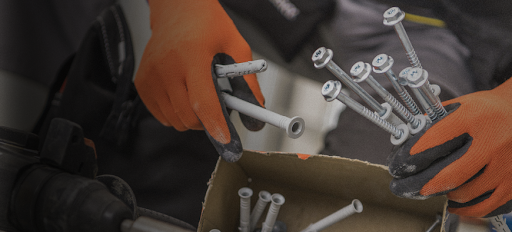
Industrial fasteners are fundamental components used extensively across various sectors to secure parts together efficiently and reliably. These vital items range from screws and bolts to nuts and washers, each playing a crucial role in assembling machinery, structures, and equipment. Understanding the variety, applications, and quality considerations of industrial fasteners is essential for industries aiming to maintain robust and long-lasting assemblies.
Industrial fasteners serve diverse purposes in manufacturing, construction, automotive, aerospace, and electronics industries. Selecting the appropriate fastener type and material is key to ensuring safety, durability, and performance in specific environmental conditions.
Types of Industrial Fasteners
The classification of industrial fasteners includes mechanical fasteners such as bolts, screws, nuts, washers, rivets, and clips. Each type offers different fastening methods, load capacities, and installation techniques. Bolts and screws often feature threaded shafts for strong clamping force, whereas rivets provide permanent fastening solutions, especially in metal fabrication.
Specialised fasteners like studs, pins, and anchors expand the application range further. Studs are employed to join two components by threading into one and nutting from the other side, while pins assist in locating or locking parts in place without threads.
Materials and Coatings
Industrial fasteners are manufactured from a variety of materials including stainless steel, carbon steel, alloy steel, brass, aluminium, and plastics. The choice of material profoundly influences the corrosion resistance, mechanical strength, and thermal stability of the fastener.
To enhance durability and resistance against environmental factors such as moisture, chemicals, and temperature fluctuations, various surface coatings like zinc plating, galvanisation, black oxide, and phosphate finishes are applied. These treatments provide protection against corrosion and wear, extending the service life of fasteners.
Applications in Industry
The realm of industrial fasteners spans numerous applications. In construction, they are used to secure steel frameworks, concrete reinforcements, and fixtures. In automotive manufacturing, fasteners play a vital part in assembling engines, chassis, and body panels.
Similarly, in aerospace, fasteners must meet stringent safety and performance standards due to extreme operating conditions. Electronic industries require smaller precision fasteners for assembling delicate components without damaging circuitry.
Selecting the Right Fastener
Choosing the correct industrial fastener involves assessing several factors: load requirements, environmental exposure, mating materials, installation process, and cost efficiency. For high-stress applications, high-strength alloy fasteners are preferable, while corrosion-prone environments necessitate stainless steel or coated fasteners.
Furthermore, compatibility with the assembly materials is critical to prevent galvanic corrosion or mechanical failure. The installation method – whether manual, pneumatic, or automated – also influences fastener design selection.
Industry Standards and Regulations
Industrial fasteners must comply with international and regional standards such as ISO, DIN, ANSI, and ASTM to ensure quality and interchangeability. These standards specify dimensions, mechanical properties, testing procedures, and marking requirements.
Adherence to these regulations guarantees safety and performance consistency, which is especially critical in sectors like aerospace, nuclear, and defence where failures can result in severe consequences.
Quality Assurance and Testing
Quality control for industrial fasteners includes dimensional inspection, tensile and torque testing, hardness measurement, and corrosion resistance evaluation. Manufacturers implement these tests during production to verify compliance with specifications and to identify defects.
Non-destructive testing methods such as ultrasonic or magnetic particle inspection can detect internal flaws or surface cracks, further ensuring reliability.
Advantages of Using High-Quality Industrial Fasteners
Employing high-quality industrial fasteners contributes to enhanced structural integrity, longer maintenance intervals, and reduced downtime. Their robustness supports the overall safety of machinery and infrastructure.
Moreover, high-grade fasteners maintain performance under varied operational conditions, including temperature extremes, vibrations, and mechanical stresses, which is indispensable for critical applications.
Challenges in the Industrial Fastener Sector
Challenges include managing supply chain complexities, sustaining material quality, and innovating to meet evolving industry requirements. The demand for environmentally friendly coatings and lightweight materials is rising due to global sustainability initiatives.
Advancements in manufacturing technologies and materials science continuously drive the development of fasteners capable of addressing these challenges effectively.
Conclusion
Industrial fasteners are indispensable elements in the functioning and advancement of numerous industries. Their appropriate selection, quality assurance, and adherence to standards play a pivotal role in construction, manufacturing, and technological development.
Reliable sources and suppliers are vital for accessing a wide range of premium fasteners tailored to specific industrial needs. Considering material properties, environmental resistance, and engineering requirements ensures optimal performance and longevity of assembled products.