
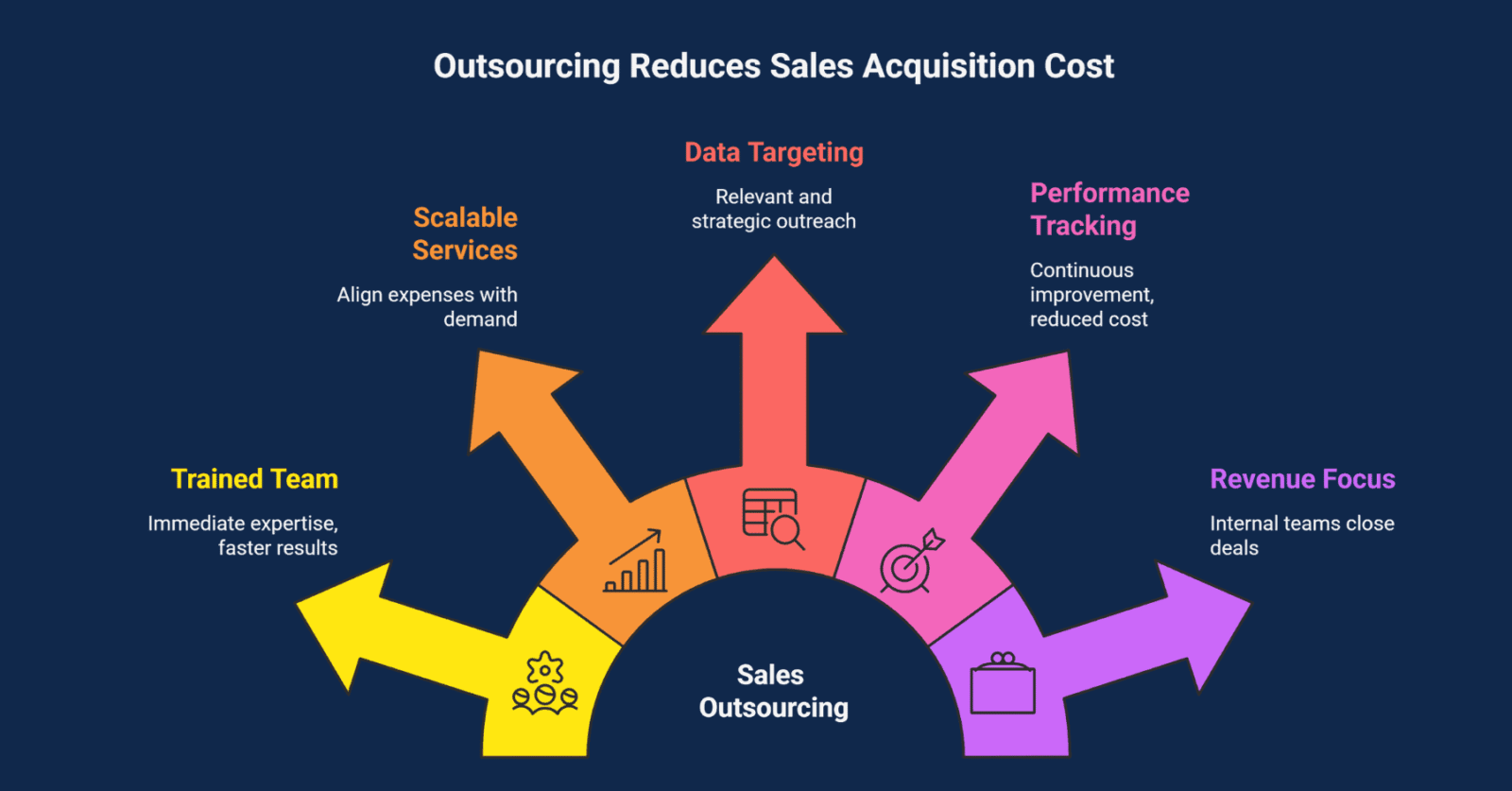
Something has shifted in how American businesses approach their revenue operations. It is not a dramatic pivot or a sudden crisis response — it is quieter than that. Across industries ranging from professional services to manufacturing to B2B technology, companies that once kept sales strategy entirely in-house are now looking outward. They are bringing in outside expertise not because their sales teams have failed, but because the internal structures guiding those teams have not kept pace with how buying decisions actually happen today.
The reasons behind this shift are operational, not cosmetic. Sales cycles have grown more complex. Buyer committees have expanded. The window between initial contact and a signed agreement has widened in some sectors while compressing in others, depending on deal size and stakeholder involvement. Internal teams are often well-trained in their product or service but are working from sales processes that were designed years ago and have not been formally revisited since. That gap — between how the process was built and how the market now behaves — is where revenue consistently gets lost.
This article examines why outsourcing revenue strategy is becoming a practical business decision for US companies in 2025, what is driving that demand, and what organizations typically discover when they bring in an outside perspective on how their sales function actually operates.
What Sales Process Consulting Actually Involves
Sales process consulting is the structured examination and redesign of how a company moves a potential buyer from initial awareness through to a closed agreement. It is not sales training, and it is not coaching individual reps on performance. It operates at a higher level — analyzing the stages of the sales cycle, identifying where deals stall or drop off, and establishing clearer criteria for how opportunities should be managed, handed off, and prioritized across the organization. Businesses that engage with sales process consulting typically discover that their existing process is informal in ways they did not realize. Reps may be following personal habits rather than a shared methodology. Handoffs between marketing and sales, or between sales and account management, may lack defined triggers. Leadership may be forecasting based on gut instinct rather than consistent stage definitions. These are not failures of talent — they are failures of structure, and structure is precisely what the consulting engagement is designed to address.
The Difference Between Activity and Process
One of the most common findings in a sales process review is that companies confuse high activity with a functioning process. A team can be busy — logging calls, sending proposals, attending meetings — while still lacking a repeatable sequence that reliably produces consistent results. Activity is visible and measurable in the short term. Process is what determines whether that activity compounds into revenue or simply sustains a cycle of effort without predictable outcomes.
When there is no shared process, each salesperson essentially runs their own version of the sales cycle. This creates wide variation in close rates, deal sizes, and sales cycle length — not because of talent differences, but because there is no common framework holding the approach together. External consultants are trained to identify this pattern quickly because they are not embedded in the day-to-day operations and can see the variation without the organizational assumptions that make it invisible to insiders.
Why Internal Teams Struggle to Reform Their Own Process
There is a structural reason why companies find it difficult to overhaul their own sales processes without outside help. The people best positioned to evaluate the process — senior sales leaders and experienced reps — are also the people most invested in how it currently works. They built it, or they succeeded within it, which creates a natural resistance to questioning its foundations, even when the evidence suggests it needs revision.
Beyond that, the daily pressure to close business leaves very little time for the kind of systematic analysis that process reform requires. It is genuinely difficult to examine a process while you are simultaneously expected to operate within it. External consultants carry no quota obligations and no internal history with the process. That independence is not just convenient — it is functionally necessary for an honest evaluation.
The Business Conditions Driving Outsourcing in 2025
The current environment has made the cost of an inefficient sales process more visible than it was in previous years. When markets were expanding and demand was relatively forgiving, companies could absorb process inefficiency because volume compensated for it. That buffer has thinned in many sectors. Deal competition has increased, buyer scrutiny has intensified, and the margin for error in how a sale is managed has narrowed.
At the same time, the cost of hiring, onboarding, and retaining senior sales talent has risen substantially. Companies that might have previously solved a sales performance problem by adding headcount are now questioning whether the issue is actually a capacity problem or a structural one. Adding more people to a broken process does not fix the process — it scales the inefficiency. That recognition is one of the primary drivers pushing businesses toward consulting rather than hiring.
The Role of Technology in Exposing Process Gaps
CRM platforms and sales intelligence tools have made it easier than ever for companies to generate data about their sales activity. Ironically, this has also made it easier to see where the process is failing. When a company can track that sixty percent of deals are stalling at a specific stage, or that average deal size drops significantly after a particular handoff, that data demands an explanation — and the explanation almost always points back to process, not people. According to research published by Harvard Business Review, the structure of how a sale is managed has a measurable impact on conversion rates that often exceeds the impact of individual rep skill. This finding, which has been replicated across industries, reinforces why companies are investing in process reform rather than purely in performance management. The data visibility that modern sales tools provide has essentially made it harder to ignore structural problems and easier to justify the investment in addressing them.
Buyer Behavior Has Outpaced Internal Assumptions
Many companies built their sales processes during a period when buyers had fewer resources for independent research and relied more heavily on salespeople for information early in the process. That dynamic has changed significantly. Buyers now arrive at first contact with a clearer sense of their options, a more defined set of questions, and less patience for a process that treats them as if they are at the beginning of an education they have already completed. Sales processes that were designed around educating the buyer from scratch are often misaligned with how modern purchasing decisions are actually made. A process review conducted through sales process consulting will typically examine where the current approach makes assumptions about buyer readiness that are no longer accurate, and how the process needs to be restructured to meet buyers where they actually are rather than where the process assumes they should be.
What Organizations Typically Find During a Process Review
While every engagement produces findings specific to the company involved, certain patterns appear consistently across industries and business sizes. Understanding these common findings helps explain why the consulting model is gaining traction and what the return on that investment looks like in practical terms.
Stage definitions are almost always a starting point. Most companies have named stages in their CRM but have not written down what criteria must be met for a deal to move from one stage to the next. Without those criteria, stage movement reflects salesperson optimism rather than buyer behavior, which makes forecasting unreliable and makes it difficult for managers to identify where specific deals need intervention.
- Qualification criteria are often too broad, meaning teams spend time on opportunities that do not fit the company’s actual capacity to serve the customer well, creating churn risk even when deals close.
- Handoff points between functions — particularly between marketing-generated leads and sales follow-up — lack defined ownership, which creates gaps where interested buyers fall out of the process entirely.
- Proposal and pricing conversations happen too early in many processes, before sufficient trust or clarity has been established, which drives unnecessary discounting and extends cycle length. • Follow-up cadences after a proposal are inconsistent, left entirely to individual reps, which means the company’s behavior toward a buyer in a critical decision window is unpredictable.
- Win-loss analysis is rarely conducted in a structured way, meaning the company is not systematically learning from the deals it loses and is repeating the same patterns in subsequent cycles.
How Companies Are Structuring These Engagements
The format of sales process consulting engagements varies, but the most effective approaches share a common structure. They begin with a diagnostic phase that involves interviews with sales leaders, individual contributors, and often customers or former prospects. This phase is designed to surface the gap between how leadership believes the sales process works and how it is actually experienced by the people inside it and the buyers going through it.
Following the diagnostic, the consulting engagement moves into process design — establishing clear stage definitions, qualification criteria, handoff protocols, and follow-up standards. This is not a generic playbook imposed from outside. It is built around the specific context of the business, its customer base, its deal complexity, and its existing team structure.
Implementation support is increasingly part of these engagements as well. A documented process that no one uses is not a solution. Firms providing sales process consulting are now often involved in helping companies embed the new process into their CRM configuration, training their managers on how to inspect and reinforce it, and establishing the reporting framework that will tell leadership whether the process is being followed and whether it is producing better outcomes over time.
Conclusion: The Structural Case for Outside Perspective
The growth in outsourced revenue strategy is not a trend driven by novelty or executive preference for external expertise as a concept. It is driven by a straightforward recognition that building and maintaining an effective sales process requires a kind of detached, structural analysis that is genuinely difficult to produce from within an organization that is simultaneously trying to meet its revenue targets.
For US companies in 2025, the question is rarely whether their sales process needs review. The data most of them already have — in their CRM, in their win-loss ratios, in their sales cycle lengths — usually answers that question clearly. The more relevant question is whether the organization has the internal capacity and the structural distance to conduct that review honestly and implement the changes it surfaces.
When the answer to that question is no, bringing in an outside perspective is not a sign of weakness in the sales function. It is a reasonable operational decision. The companies that are doing this successfully are not abandoning ownership of their revenue strategy — they are investing in giving that strategy a clearer foundation.