
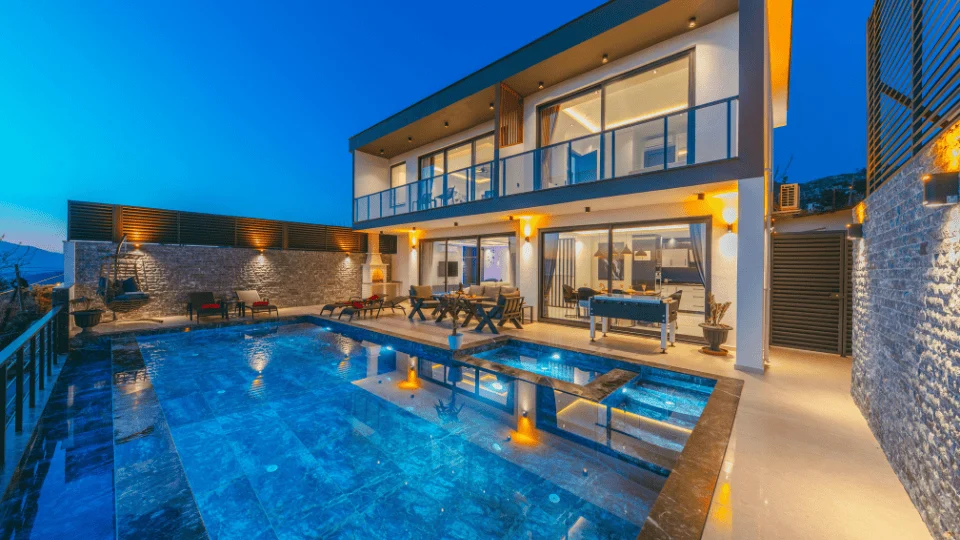
Building a high-end custom home is one of the most financially significant and operationally complex undertakings a private individual or family can pursue. Unlike standard residential construction, luxury projects operate under a different set of demands — custom materials with long lead times, specialized subcontractors, intricate design coordination, and a client base with high expectations and limited tolerance for disruption. The margin for error is narrow, and the consequences of poor planning or weak oversight are measured not just in dollars, but in months of delays and strained relationships.
In 2025, the environment surrounding luxury home construction has grown more demanding. Material costs have remained volatile, skilled labor continues to be unevenly distributed across regional markets, and clients are better informed than ever about what responsible project management should look like. For anyone commissioning a luxury home — or involved in delivering one — understanding how construction management actually works in practice is no longer optional. It is the foundation upon which every decision about timelines, budgets, and builder relationships must rest.
What Luxury Residential Construction Management Actually Involves
Luxury residential construction management is the structured oversight of every phase of a high-end home build, from preconstruction planning through final delivery. It is not simply hiring a general contractor and stepping back. It is an active, ongoing process of coordinating design intent with field execution, tracking financial commitments against actual expenditure, managing subcontractor schedules, and ensuring that every material, system, and finish meets the standard agreed upon at the outset. A clear framework for luxury residential construction management is what separates projects that finish close to schedule and budget from those that unravel halfway through.
The distinction between managing a luxury build and a standard residential build lies in the density of decisions and the specificity of outcomes. In a high-end project, almost nothing is off-the-shelf. Fixtures are specified and ordered months in advance. Structural systems may accommodate features like home automation, climate-controlled wine rooms, or load-bearing cantilevered elements. Finishes require skilled tradespeople who may not be locally available. Each of these factors adds a layer of coordination that a construction manager must track continuously — not intermittently.
The Role of the Construction Manager Versus the General Contractor
Many clients conflate the construction manager with the general contractor, but the two roles carry different accountability structures. A general contractor is typically responsible for delivering the physical build — sourcing labor, managing subcontractors, and coordinating day-to-day site activity. A construction manager, by contrast, works on behalf of the client and holds a broader mandate: ensuring the project is built according to the design documents, that costs are being managed transparently, and that decisions made in the field align with what was agreed upon in planning.
In luxury projects, having both roles clearly defined — and ideally separated — provides a meaningful check on quality and cost. When the person responsible for controlling costs is the same person awarding subcontracts and approving change orders, there is an inherent conflict of interest. A construction manager who sits outside that dynamic can review costs independently, flag discrepancies, and represent the client’s interests without being financially entangled in the outcome.
Building a Realistic Timeline for a Luxury Home Project
Timeline planning in luxury construction is more an exercise in anticipating constraints than in projecting ideal sequences. Projects of this complexity rarely unfold in a straight line. Permit approvals vary by jurisdiction. Custom materials from European or specialty manufacturers may carry lead times of sixteen to twenty-six weeks. Structural inspections, design revisions during construction, and the simple reality of weather all affect sequencing in ways that generic Gantt charts do not capture.
The projects that stay closest to their original timelines are the ones that begin with an honest assessment of what is known and what is not. Experienced construction managers build float into critical-path activities — not as an afterthought, but as a deliberate planning tool. They identify which trades are dependent on preceding work being complete, which materials have the longest lead times, and where the design still has open questions that could generate rework if left unresolved.
Preconstruction as a Timeline Investment
The preconstruction phase is where the majority of luxury home timelines are either protected or compromised. When clients and builders move quickly through this phase to reach groundbreaking, they often do so at the cost of clarity — leaving questions about finishes, structural systems, or site conditions unresolved. Those questions do not disappear; they resurface during construction, where resolving them is slower and more expensive.
A well-executed preconstruction process includes completing construction documents to a level of detail that minimizes field interpretation, obtaining multiple subcontractor bids so pricing is grounded in the current market, confirming the lead times on all long-lead materials before the schedule is finalized, and resolving geotechnical or site utility questions before excavation begins. When these steps are completed systematically, the construction phase begins with a much cleaner foundation — and fewer of the surprises that generate delays and disputes.
Managing Schedule Changes Once Construction Begins
Even well-planned luxury projects encounter schedule changes. The question is not whether changes will occur, but whether they are managed in a way that limits cascading impact. This requires a construction manager who maintains an updated schedule, communicates changes to all relevant trades promptly, and documents how each change affects the critical path. A delay in one trade that sits on the critical path can push back final delivery by weeks if it is not identified and responded to quickly.
Clients should receive regular schedule updates that are honest about current status and projected completion. Vague assurances that the project is “on track” without supporting documentation are a warning sign. Legitimate construction managers can produce written schedule reports that show original dates, current projections, and the reasons for any variance.
Budget Transparency and Cost Control in High-End Builds
Budget management in luxury construction is a discipline that extends well beyond tracking invoices. It involves understanding the structure of the contract, monitoring the gap between estimated and actual costs as work progresses, managing the allowance system, and controlling the change order process — which, in luxury builds, is one of the most common sources of cost overrun.
Many luxury home budgets are established at a level of design development that is not yet fully resolved. Allowances are inserted for finishes, fixtures, or systems where no selection has been made. These allowances are frequently optimistic, and the difference between an allowance figure and the actual cost of what the client ultimately selects can be substantial. A cost management system that tracks allowance performance in real time — rather than reconciling at the end — gives clients the ability to make informed decisions before costs are committed rather than after.
Understanding the Change Order Process
Change orders are formal modifications to the original contract scope, price, or schedule. In luxury construction, they are frequent and often necessary — design changes, unforeseen site conditions, and client-driven additions are all legitimate reasons for a change order. The problem is not that change orders exist; it is when they are processed without adequate documentation, priced without competitive review, or approved verbally without a written record.
A well-managed change order process requires that every change be documented in writing before work begins, that pricing be reviewed against the market or previous contract rates, and that the client explicitly authorize each change with a clear understanding of its cost and schedule impact. Projects that allow changes to accumulate without formal documentation often experience significant budget overruns that come as a surprise at the end — even though the costs were being generated throughout the project.
Builder Accountability and Performance Standards
Holding a builder accountable in a luxury project requires more than a contract. It requires an active oversight structure, clearly defined quality standards, and a documentation process that creates a record of decisions, approvals, and inspections throughout the build. According to guidelines published by the American Institute of Architects, owner-contractor agreements for complex projects should include explicit provisions for inspection, submittal review, and change management — not simply a scope of work and a payment schedule.
Accountability begins during contractor selection. Reviewing a builder’s track record on projects of comparable scale and complexity, speaking with past clients about communication quality and how problems were handled, and examining how the builder structures their subcontractor relationships all provide insight into how they will perform on a new project. Selecting a builder based primarily on a low bid, without this level of evaluation, is a common precursor to project problems.
Establishing Quality Control During Construction
Quality control in luxury construction is an active process, not a final walkthrough. It requires scheduled inspections at defined milestones — before concrete pours, before framing is enclosed, before mechanical rough-ins are covered — so that any deficiencies are identified while they can still be corrected without significant rework. On projects where millwork, stonework, or specialty systems are involved, quality review may also extend to shop drawings and factory visits before materials are fabricated and shipped.
The documentation generated through quality control inspections — punch lists, inspection reports, photographs, correspondence — creates a project record that protects both the client and the builder. When disputes arise, as they sometimes do on complex builds, this documentation provides an objective reference point that written memory alone cannot replicate.
Selecting the Right Team for a Luxury Build
The quality of a luxury home project is largely determined before construction begins, through the decisions made about who is on the project team. This includes the architect, the construction manager or general contractor, the key subcontractors, and any specialty consultants. Each selection carries consequences — for quality, for communication, and for the overall reliability of the project delivery process.
Team composition matters beyond individual capability. A construction manager and architect who have worked together previously, who understand each other’s processes and communication styles, can resolve field issues more efficiently than a team assembled from strangers. Similarly, subcontractors with experience in high-end finishes and custom installations bring a level of craft consistency that general residential trades may not. Investing time in team selection at the outset is one of the highest-return activities in luxury project planning.
Conclusion
Managing a luxury residential construction project well is not a matter of applying more effort to the same approach used in standard home building. It requires a different structure — one built around transparency, systematic planning, clearly defined accountability, and a team selected for relevant experience rather than simply competitive pricing. Timelines that account for real-world constraints, budgets that track costs as they occur rather than after the fact, and a change management process that documents every decision are not premium features of luxury construction management. They are the baseline requirements for a project to finish with integrity.
In 2025, clients who approach luxury construction with a clear understanding of how these processes work are far better positioned to protect their investment and achieve the outcome they envisioned. The complexity of these projects is real — but it is manageable when the right structure is in place from the beginning.