
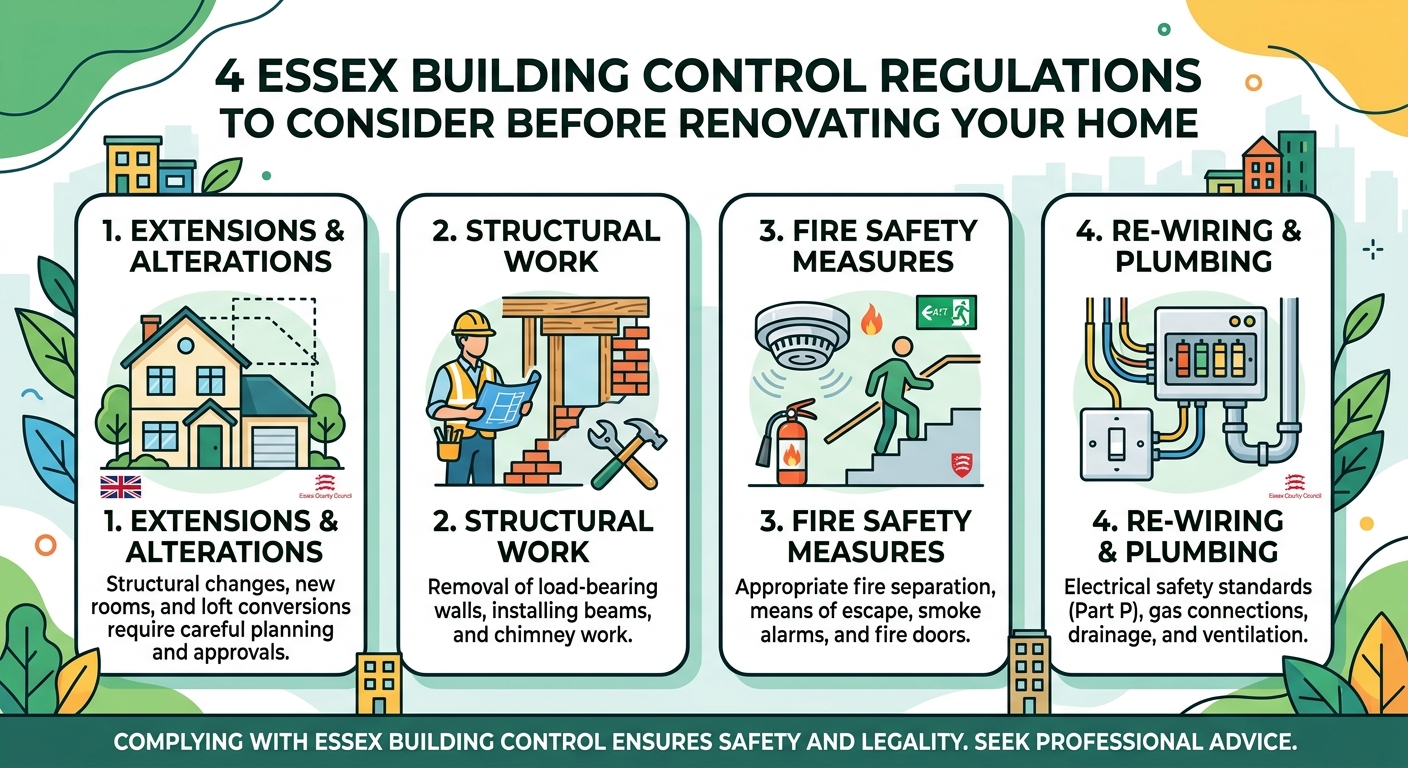
Essex building regulations establish minimum standards for the design and construction of new building projects and home improvement projects involving extensions and renovations. They may cover areas such as structural safety, fire protection, ventilation, energy efficiency, and accessibility. While renovating a home in Essex can be an exciting idea to create more space and improve comfort and functionality, not following the relevant building control laws can lead to legal issues and other problems that could inflate costs and cause delays. Essex property owners should always factor in building regulations before removing walls, installing new windows, or building an extension.
4 Essex Building Control Regulations to Consider Before Renovating Your Home
Here are some important areas to consider before starting your Essex renovation.
-
Structural Safety and Building Stability
Structural changes are among the most important aspects of building control. Renovations involving removing an internal wall, altering the roof, creating larger openings, or adding an extension may require you to demonstrate that the building remains structurally sound. A qualified structural engineer may need to calculate appropriate beams, supports, and foundations. Building control can also require inspections at relevant stages of the work.
-
Fire Safety and Escape Routes
Fire safety should be considered carefully when renovating Essex County residential structures. Building control requirements can cover fire-resistant construction, smoke alarms, protected escape routes, doors, and other measures designed to give occupants sufficient protection during an emergency. Essex renovations involving building work to which fire-safety requirements and current regulations apply may require a full-plans building control application.
-
Planning Permission and Building Control Approval
Planning permission concerns matters such as development, land use, and the external impact of a project, while building regulations focus on how the building is designed and constructed. Since a renovation can require both, homeowners should always check the requirements for their specific property with the relevant Essex building control local authority or a registered building control approver. Essex County Council directs homeowners seeking advice on extensions and alterations to their relevant local authority. Consulting experienced Essex residential architecture firms like HumphreysandSons can also help you navigate planning permission, party wall surveys, and other essential building control laws to ensure that your project is completed successfully.
-
Energy Efficiency and Insulation
Replacing roofs, walls, floors, windows, or other thermal elements can trigger requirements relating to insulation and energy efficiency. Good insulation can reduce heat loss and potentially lower household energy bills, while energy-efficient windows and doors can improve comfort throughout the year. Building regulations include technical requirements for energy efficiency, so discuss proposed changes with your building control body before construction begins.
You don’t have to start with demolition when renovating your Essex home. Considering building regulations regarding structural safety, fire protection, energy efficiency, electrical and plumbing work, and planning permission are all important first considerations. Getting professional advice before work starts can help prevent expensive mistakes, delays, and compliance problems. The Planning Portal provides current guidance and also allows homeowners to explore building control requirements for common home improvement projects. A well-planned project can give you the home you want while keeping the property safe, compliant, and valuable for years to come.