
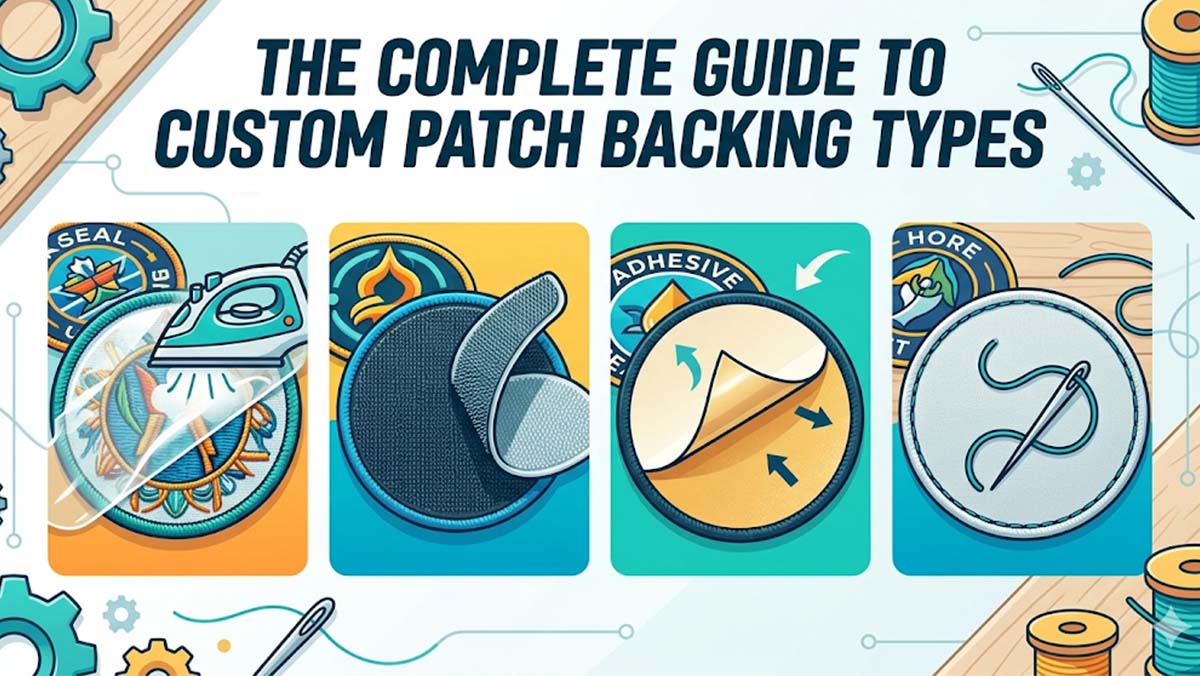
Most people spend hours perfecting their patch design, colors, and logo placement, then choose the backing option in seconds. Unfortunately, the wrong backing can shorten a patch’s lifespan, damage fabric, or make application frustrating. Whether you are ordering custom patches for uniforms, tactical gear, fashion apparel, or promotional merchandise, the backing type matters just as much as the patch itself.
This guide is designed as a practical reference to help buyers understand which backing works best for specific applications. A reliable American patch maker should always help customers choose the right option before production begins.
Iron-On Patches: Convenience With Conditions
How Iron-On Adhesive Works
Iron-on patches USA manufacturers use a heat-activated adhesive backing that bonds to fabric when pressed with high heat. This makes the application fast and beginner-friendly without requiring sewing skills.
Many customers choose custom iron-on patches because they are simple to apply at home using a household iron or heat press.
Best & Worst Fabric Types
Iron-on backing performs best on:
- Cotton
- Denim
- Canvas
- Heavy woven fabrics
However, it performs poorly on:
- Nylon
- Waterproof jackets
- Polyester performance fabrics
- Stretch-heavy materials
Heat-sensitive fabrics may warp or fail to bond correctly during application.
The Durability Reality
While convenient, the iron-on adhesive weakens gradually after repeated washing and heavy wear. Reinforcing the edges with stitching significantly improves long-term durability.
Best Use Cases
Iron-on patches are ideal for:
- Kids’ clothing
- Casual jackets
- Fashion accessories
- Seasonal apparel
- Lightweight branding projects
For temporary or fashion-focused use, iron-on backing remains one of the easiest solutions available.
Sew-On Patches: The Benchmark for Durability
Sew-on backing is considered the industry standard for long-term performance and reliability.
Why Sew-On Is Preferred for Professional Use
Unlike adhesive-backed patches, sew-on patches physically attach to garments using thread, creating a much stronger bond. This is why uniforms, workwear, and professional apparel often rely on sew-on construction.
These custom patch backing types are compatible with almost every fabric, including:
- Cotton
- Polyester
- Stretch fabrics
- Heavy-duty workwear materials
- Tactical fabrics
Machine Sewing vs Hand Sewing
Machine Sewing
- Faster application
- Cleaner stitching consistency
- Better for bulk production
Hand Sewing
- Greater placement control
- Useful for delicate garments
- Slower but more customizable
Long-Term Durability
Sew-on patches outperform most other backing methods in:
- Industrial laundering
- Heavy abrasion
- Outdoor exposure
- UV resistance
This durability makes them ideal for:
- Uniforms
- Team apparel
- Heritage denim jackets
- Heavy-duty embroidered patches
For buyers prioritizing longevity above convenience, sew-on remains the strongest option available.
Velcro (Hook-and-Loop) Patches: The Tactical Standard
For removable patch systems, nothing is more popular than hook-and-loop backing. Today, many organizations order custom patches with Velcro because they provide flexibility without permanent attachment.
Why Tactical Industries Prefer Velcro
Military and law enforcement agencies frequently need to swap patches depending on:
- Mission requirements
- Unit identification
- Rank updates
- Training exercises
This made hook and loop patches the standard for tactical applications.
How the System Works
The system uses two parts:
- Hook side attached to the patch
- Loop panel attached to the garment or gear
The patch can then be attached and removed repeatedly without sewing.
Best Fabric & Gear Compatibility
Velcro performs best on:
- MOLLE panels
- Plate carriers
- Tactical backpacks
- Outdoor equipment
- Utility vests
Durability Considerations
Although durable, the hook side can collect lint, dirt, and debris over time. Regular cleaning helps maintain proper grip strength.
Beyond Tactical Use
Modern tactical patches are no longer limited to military gear. Velcro-backed patches are also popular for:
- Everyday backpacks
- Sports bags
- Airsoft equipment
- Cosplay costumes
- Custom gear setups
Their removable nature makes them highly versatile for personalization and organization.
Other Backing Types: Adhesive, Plastic & Magnetic
Not every patch application requires sewing, ironing, or Velcro.
Pressure-Sensitive Adhesive (PSA)
PSA backing works similarly to a sticker and is best suited for:
- Temporary applications
- Event branding
- Packaging
- Hard surfaces
- Patch for hats, displays, and accessories
It is not ideal for repeated washing or long-term garment use.
Plastic Backing
Plastic-backed patches provide extra structure and stiffness. These are commonly used for:
- Display patches
- Collector patches
- Pin-on applications
- Structured emblems with merrowed or laser-cut borders
Magnetic Backing
Magnetic patches are useful when users want:
- No garment damage
- Easy repositioning
- Temporary branding for events or trade shows
They work especially well on delicate fabrics where stitching or adhesives could leave marks.
Compared to standard custom patch backing types, these alternatives serve more specialized applications.
Choose the Right Backing for Your Perfect Patches
A professional American patch maker should ask these questions before production starts. If a supplier skips these discussions entirely, it may be a sign that they are prioritizing speed over quality and functionality.
If you are planning to order custom patches, choosing the right backing from the beginning can save time, improve durability, and ensure your patches perform exactly as intended.
0